



Reference: 10074
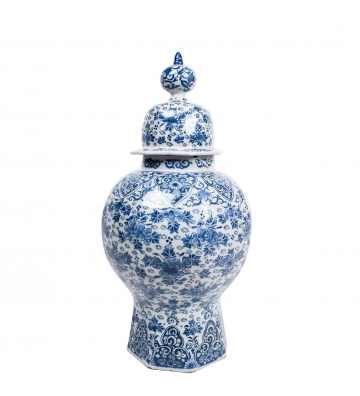
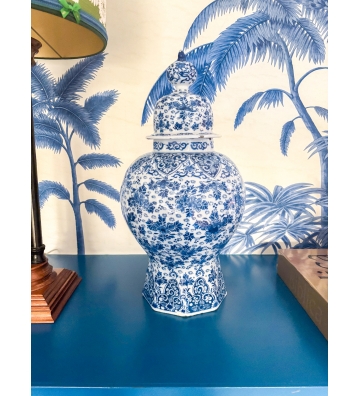
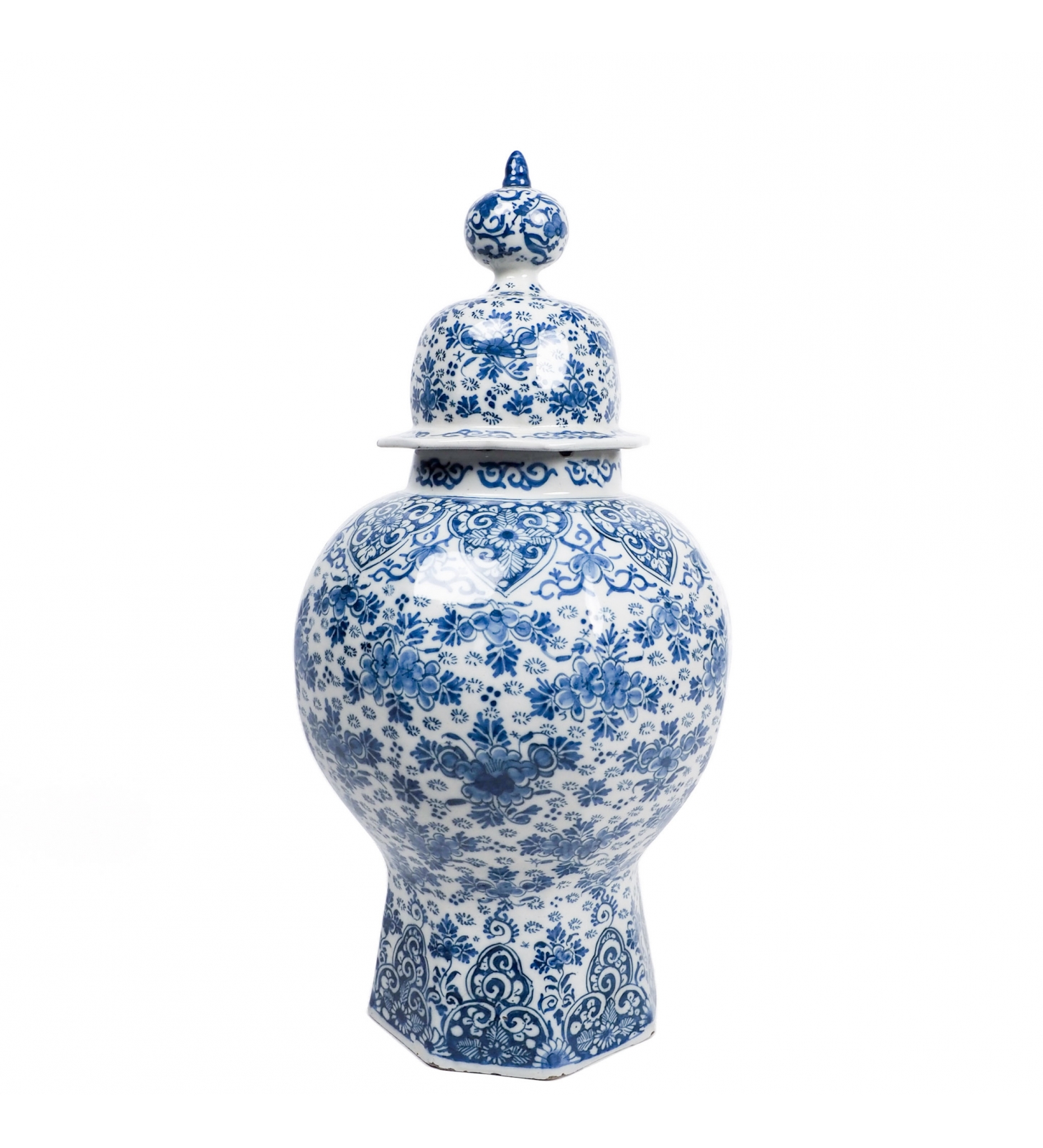
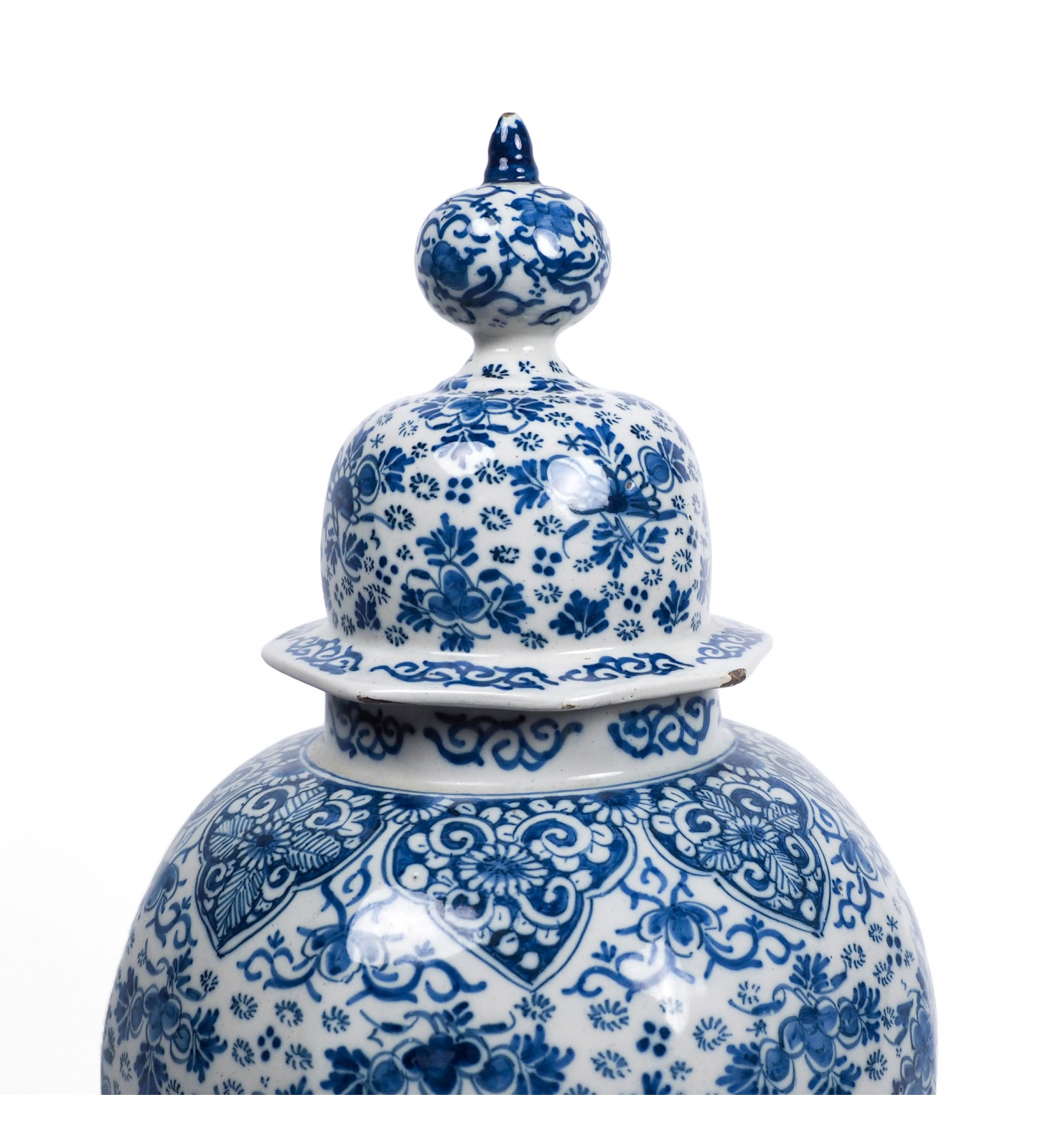
A Dutch Delft blue and white baluster vase painted with floral decoration, 18th century, around 1700-1720, Delft, Holland
Blue and White
Probably made by 'De Metaale Pot (1670-1775)' factory.
Dimensions: ca. 50 cm height.
 Secure payment
100% secure payment
 Worldwide shipping
Fast delivery
 Free shipping in EU
On all orders
 Professional packaging
Professional order packaging
In the 17th century, Europeans loved Chinese porcelain, but it was expensive and scarce. Delft potters therefore developed faience (tin-glazed earthenware) that imitated Chinese porcelain as closely as possible. The blue decoration came from cobalt oxide (just like in China) making Delftware surprisingly international in origin, but it still has a lot of various features and properties!
A typical dutch product.... this balluster vase with flower decoration depicts this story, although there are no Chinese figures depicted on!
Did you know this about Delft pottery?
Marks were often applied late, or not at all in the 17th century, a factory mark was not a trademark but an internal administrative tool for the pottery factory. Therefore, unmarked pieces from high quality workshops (such as De Grieksche A (1657-1818)) are quite common! Decoration style, painter's hand and sometimes even the clay are therefor just as important to a connoisseurs. Marks were applied more frequently in the 18th century than in the 17th century, especially after around 1720–1730, when competition increased and factories wanted to raise their profile. Unmarked Delftware was also very common in the 18th century, even from high-quality factories.
A Dutch Delft blue and white baluster vase painted with floral decoration, 18th century, around 1700-1720, Delft, Holland
Blue and White
Probably made by 'De Metaale Pot (1670-1775)' factory.
Dimensions: ca. 50 cm height.
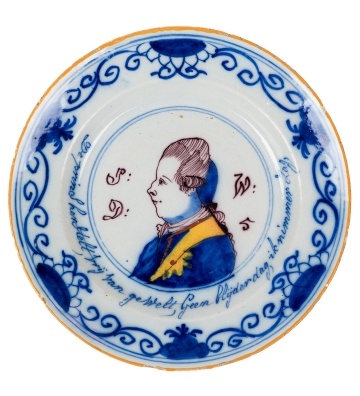
A larger Orangistic plate depicting stadtholder Willem V ‘en profil’, with a slogan referring to the recovery of his power, 18th century, around 1787, Delft, Holland.
Polychrome
Dimensions: 25,5 cm diameter.
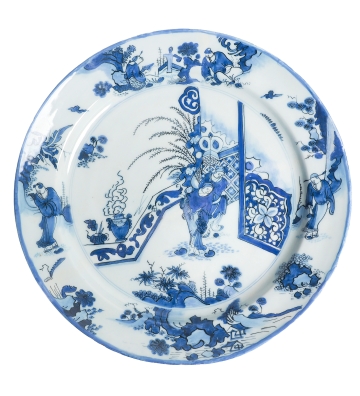
A large chinoiserie plate with Transition and Kangxi inspired decoration, 17th century, around 1680-1700, Delft, Holland.
Blue and white
Dimensions: 40 cm. diameter.
Signed D-PAUW for pottery factory ‘De Paauw / The Peacock’ (1651-1774).