
- Out-of-Stock
Reference: 10090
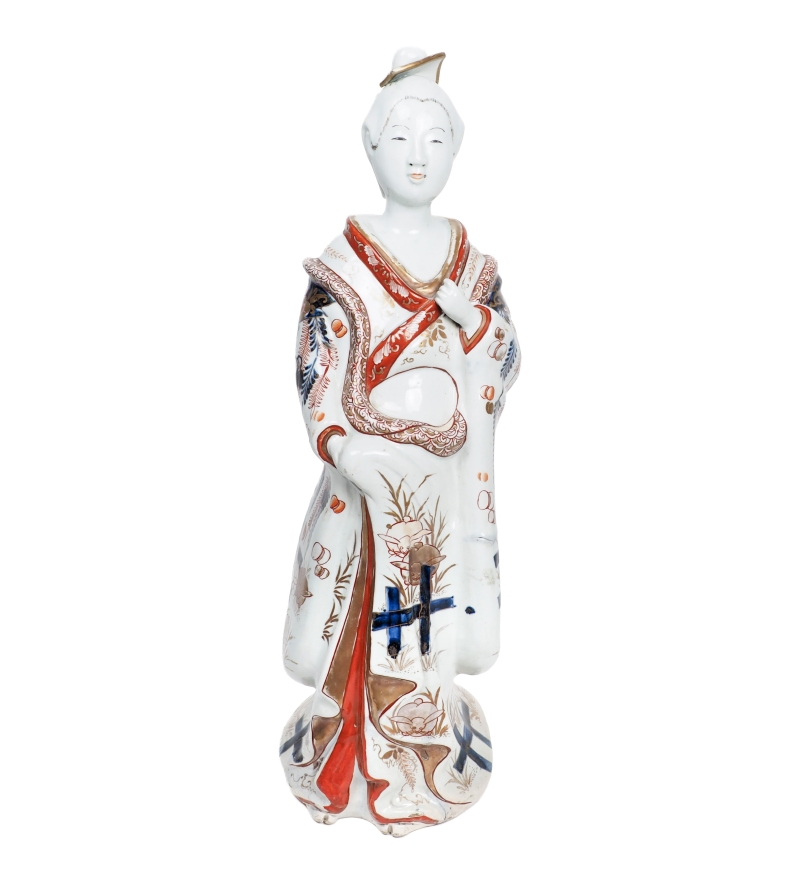
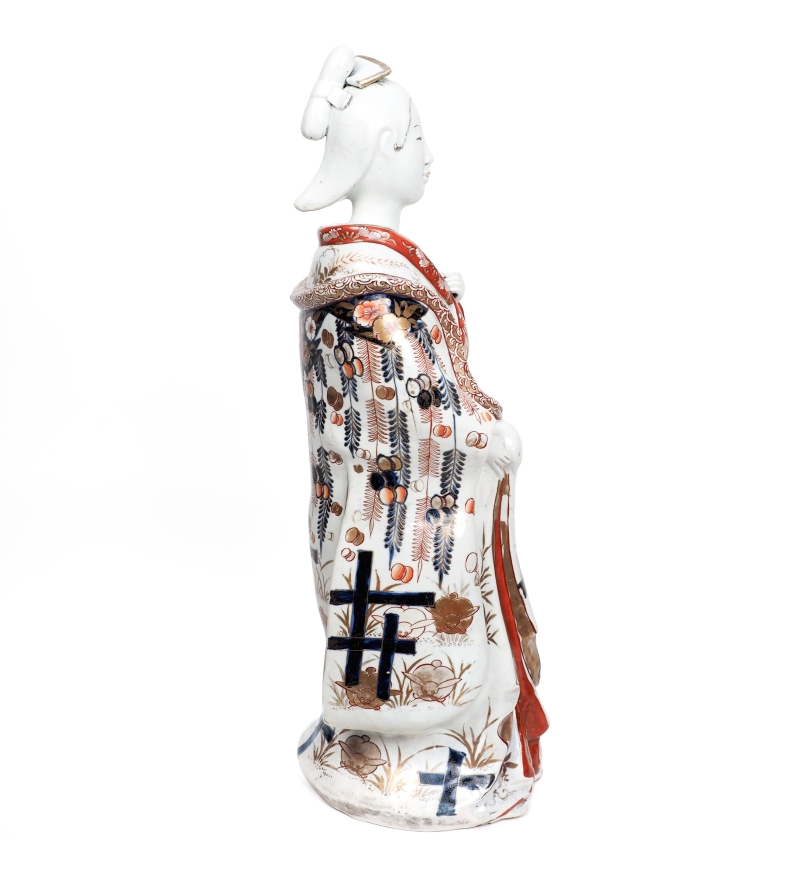
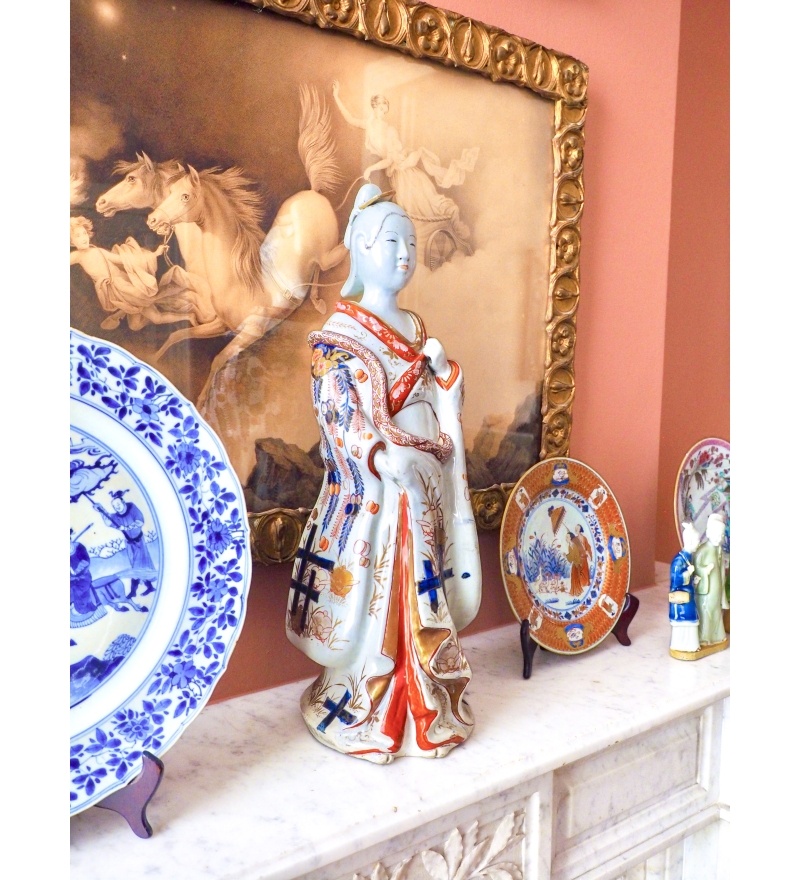
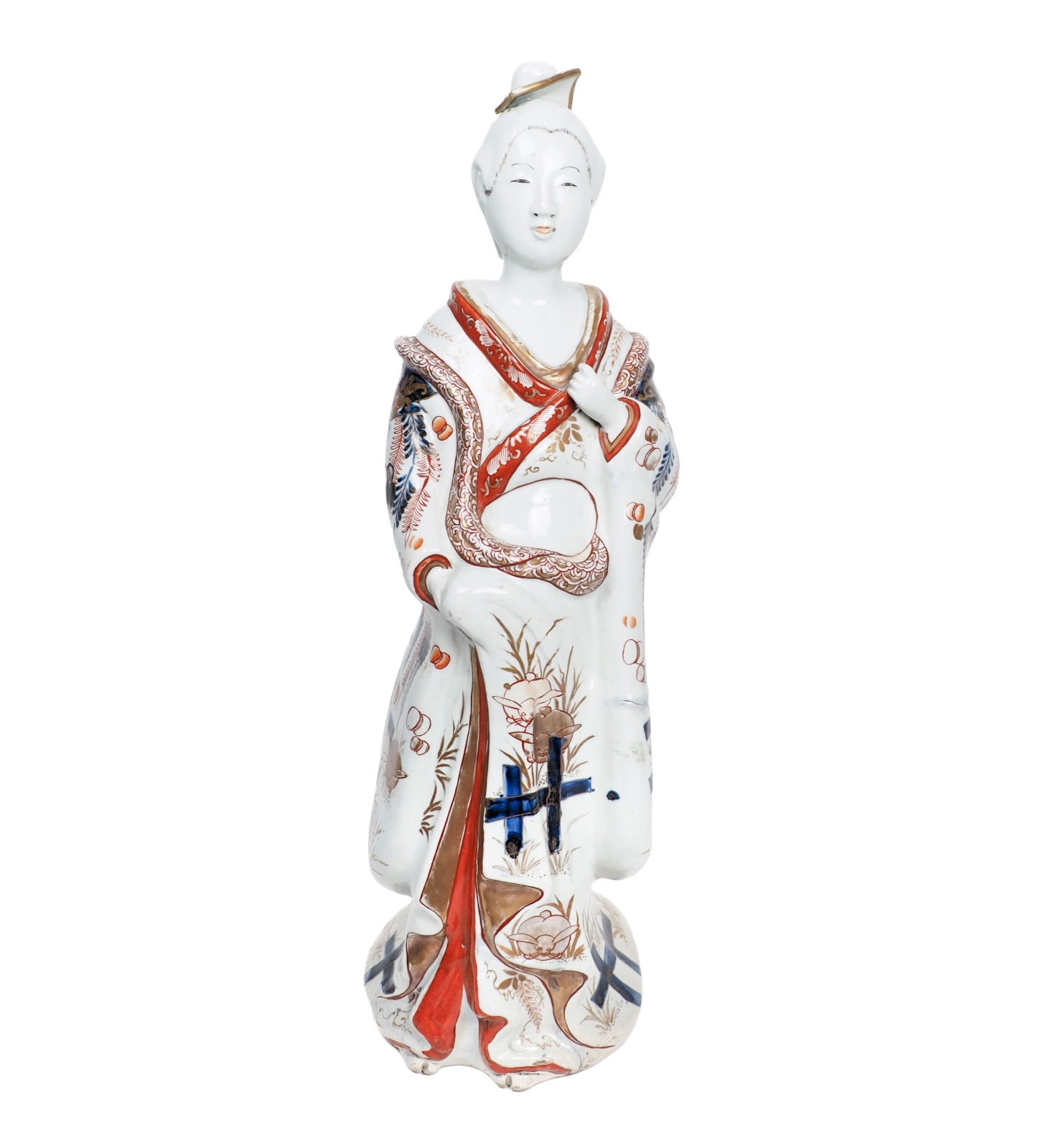
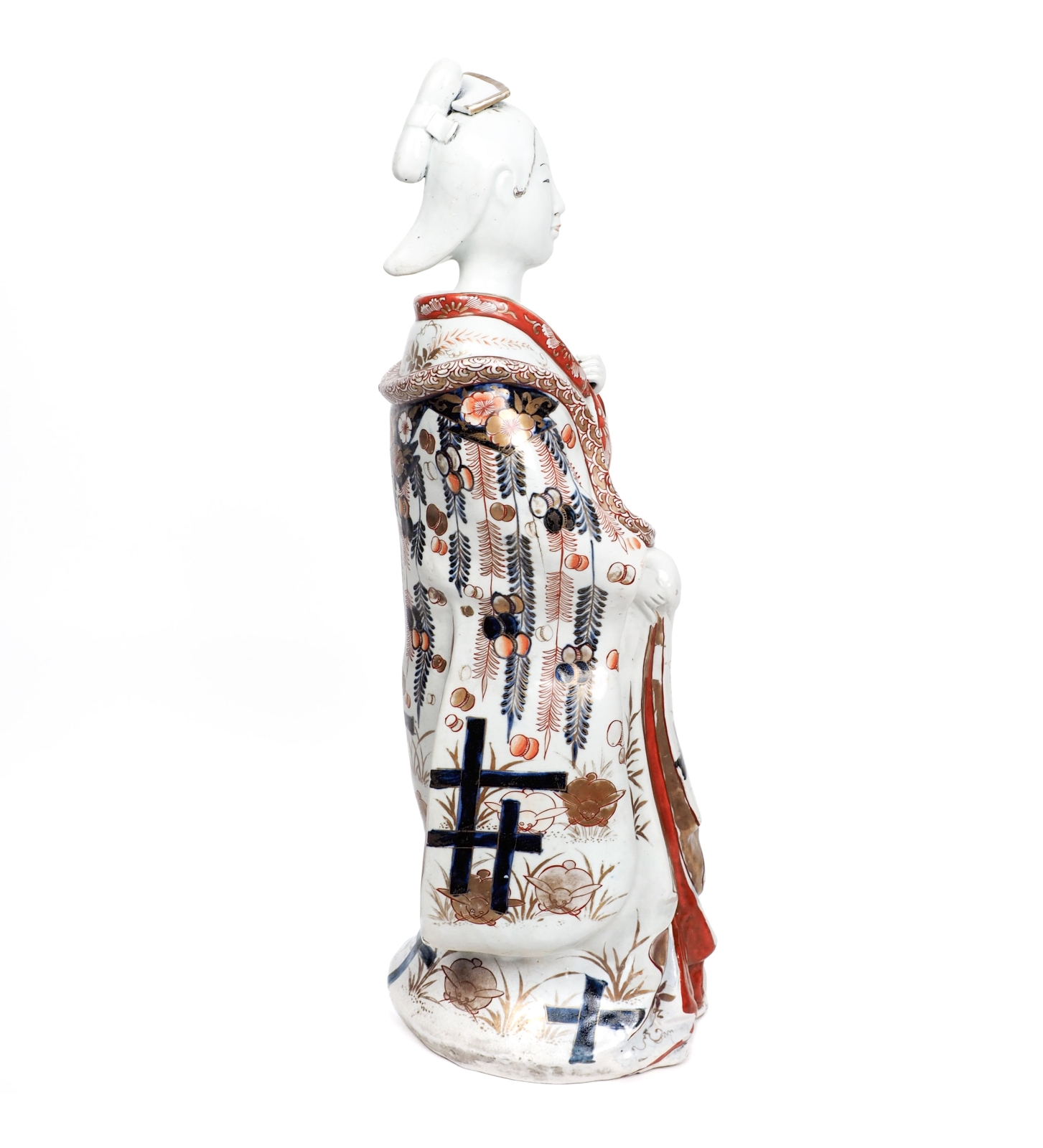
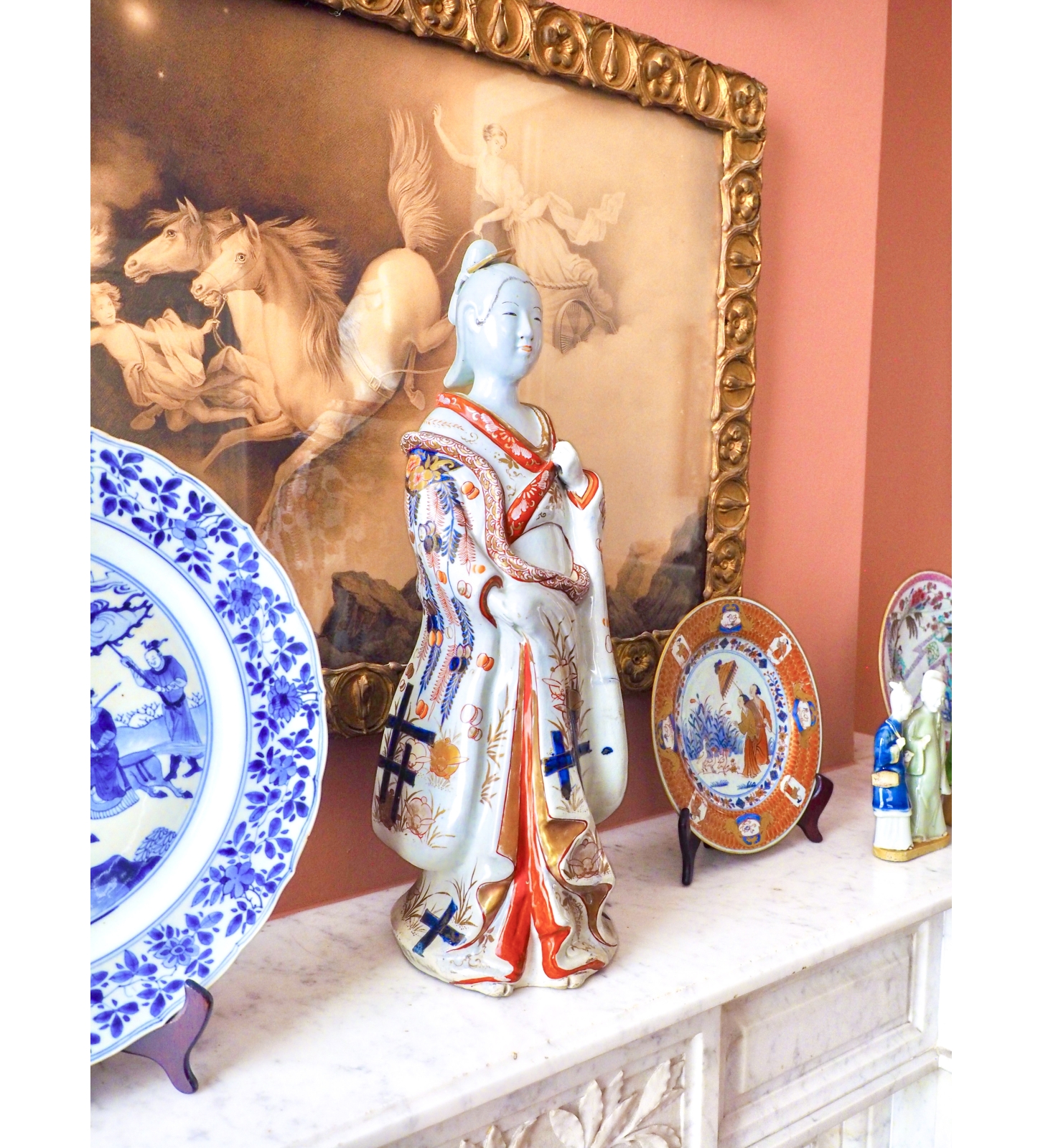
A large Japanese Imari Porcelain standing Bijin figure waering an elegant long-sleeved kimono, 17th century, around 1690, Arita, Japan.
Imari
Dimensions: ca. 54 cm height.
 Secure payment
100% secure payment
 Worldwide shipping
Fast delivery
 Free shipping in EU
On all orders
 Professional packaging
Professional order packaging
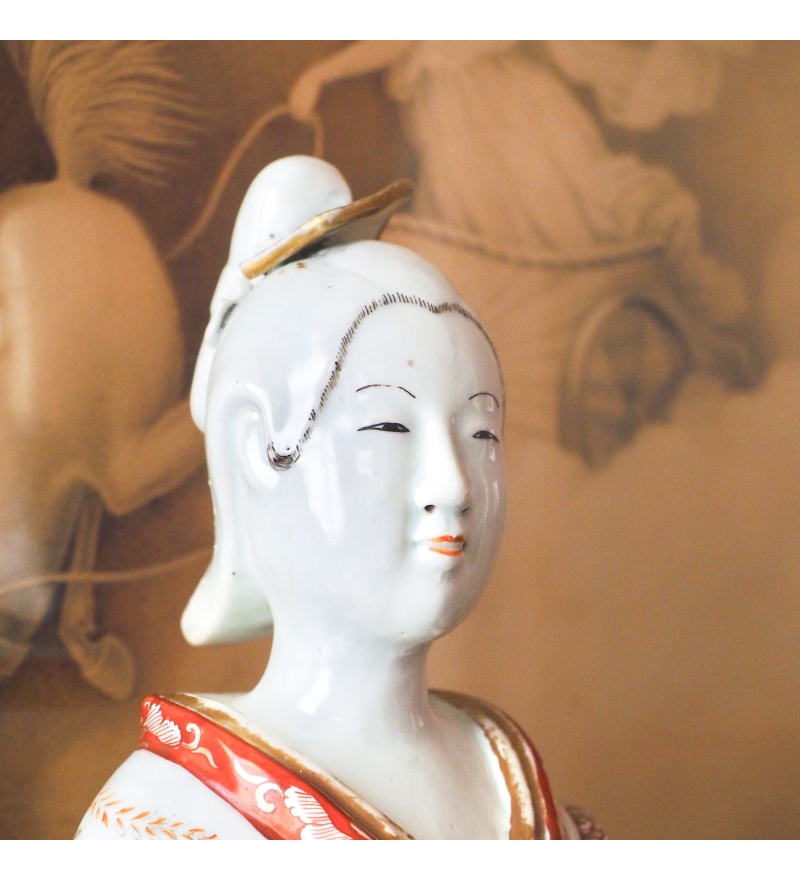
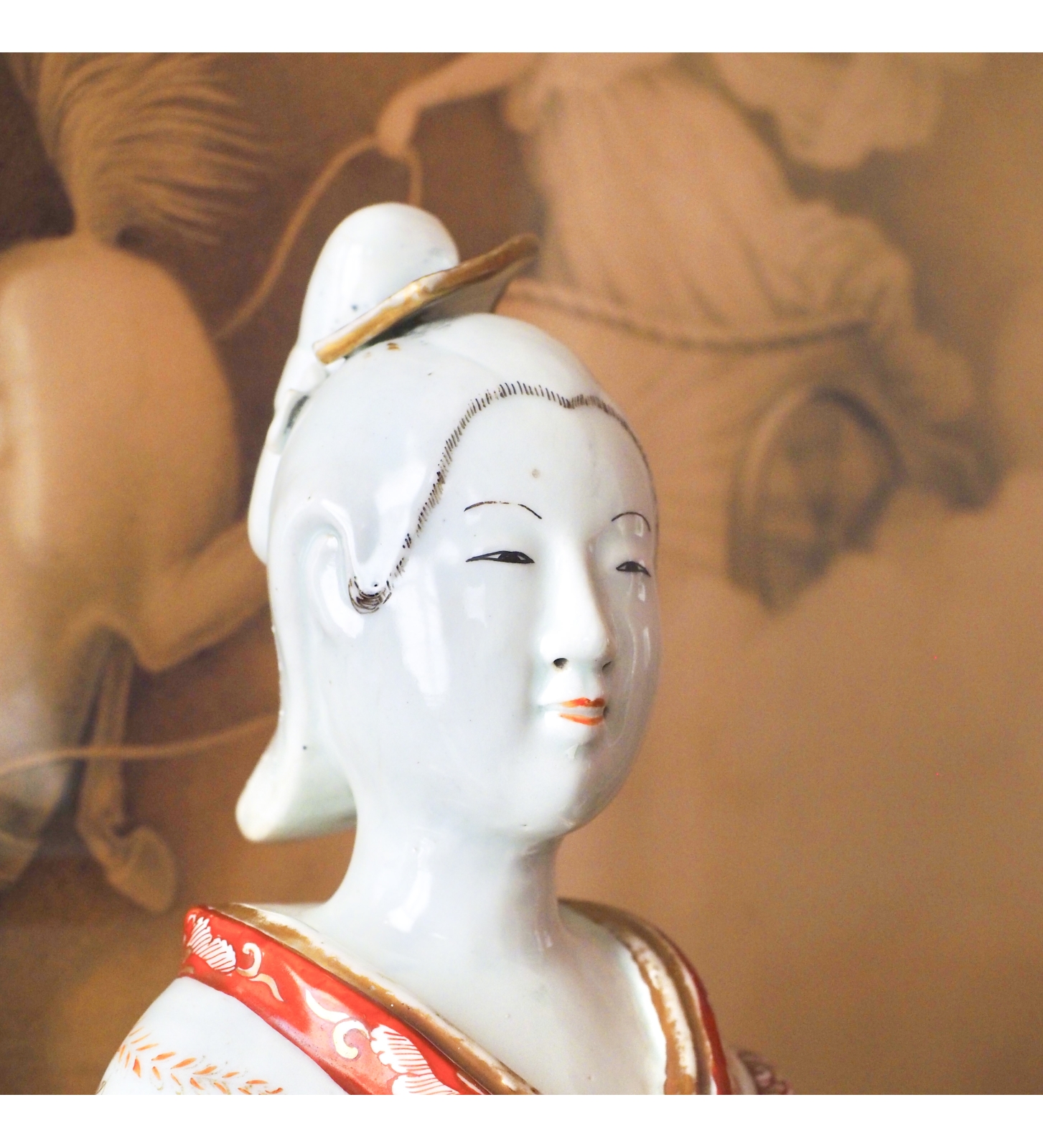
This finely modelled Japanese Imari porcelain figure depicts a Bijin (美人), or “beautiful woman,” one of the most celebrated subjects in the art of Japan’s Edo period. Standing gracefully with her head slightly raised, she wears an elegant long-sleeved furisode kimono, richly decorated with seasonal motifs including drifting maple leaves (momiji), bunnies, and cherry blossom. Her hair is arranged in a tall chignon and adorned with ornamental combs, reflecting the refined fashions of the late 17th century. The raised left hand suggests she originally held a delicate parasol, while the right hand gathers the folds of her robe. This Edo Period (1603-1868) example is specifically made in the Japanese Genroku era (1688–1704), known as the 'heigh-renaissance' of Japan.
Figures of beautiful women became increasingly popular during the Edo period, inspired by the culture of the ukiyo or “floating world” of theatre, fashion, and the pleasure quarters. Produced in the porcelain kilns of Arita, such figures were among the earliest Japanese export porcelains and were already being shipped to Europe by the Dutch East India Company (VOC) in the mid-17th century. As stated in the Paper 'Japanese Porcelain Figures 2022' by C.J.A. Jörg, in 1659 "100 various dolls" (diversche poppen) and "3 cranes" (craanvogels) were documented in early shipping and cargo lists for the import of by the VOC into Europe. These figurines and exotic animal objects marked the dawn of Japan's trade with the West.
Reference:
-Groninger Museum, object nr. 2022.0074 ; 2022.0075
(For comparable examples:)
-Shoteby's 17th of January 2018, Sale 18306 'Of Royal And Noble Descent', lot nr. 22.
-Princessehof Leeuwarden, inv. no. MPH 2004-014.
-The British Museum, object nr. 1964,0715.1
Source:
-C.J.A. Jörg, 'Japanese Porcelain Figures' 2022.
-Guest&Grey
A large Japanese Imari Porcelain standing Bijin figure waering an elegant long-sleeved kimono, 17th century, around 1690, Arita, Japan.
Imari
Dimensions: ca. 54 cm height.