Reference: 10084
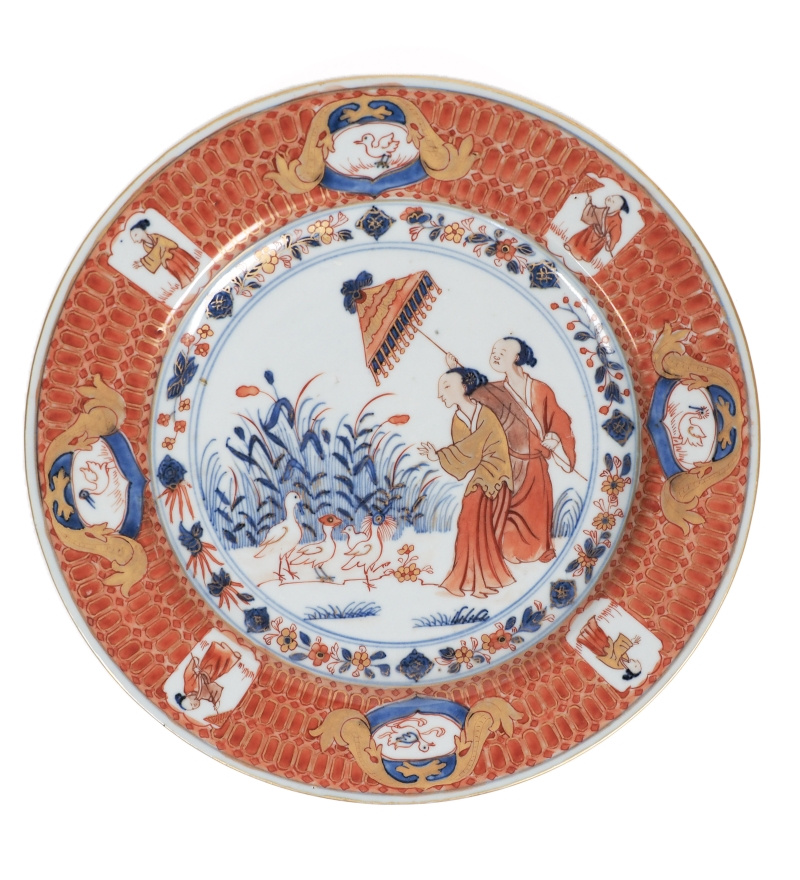
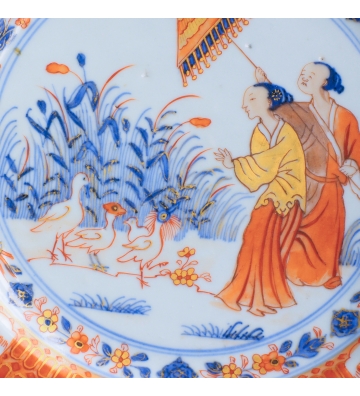
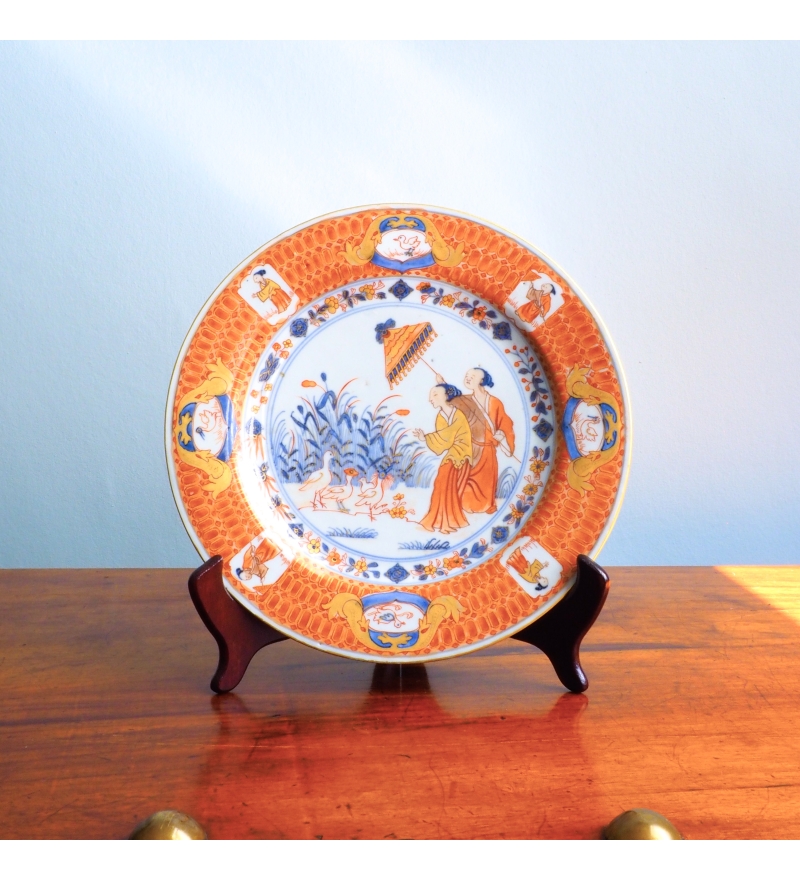
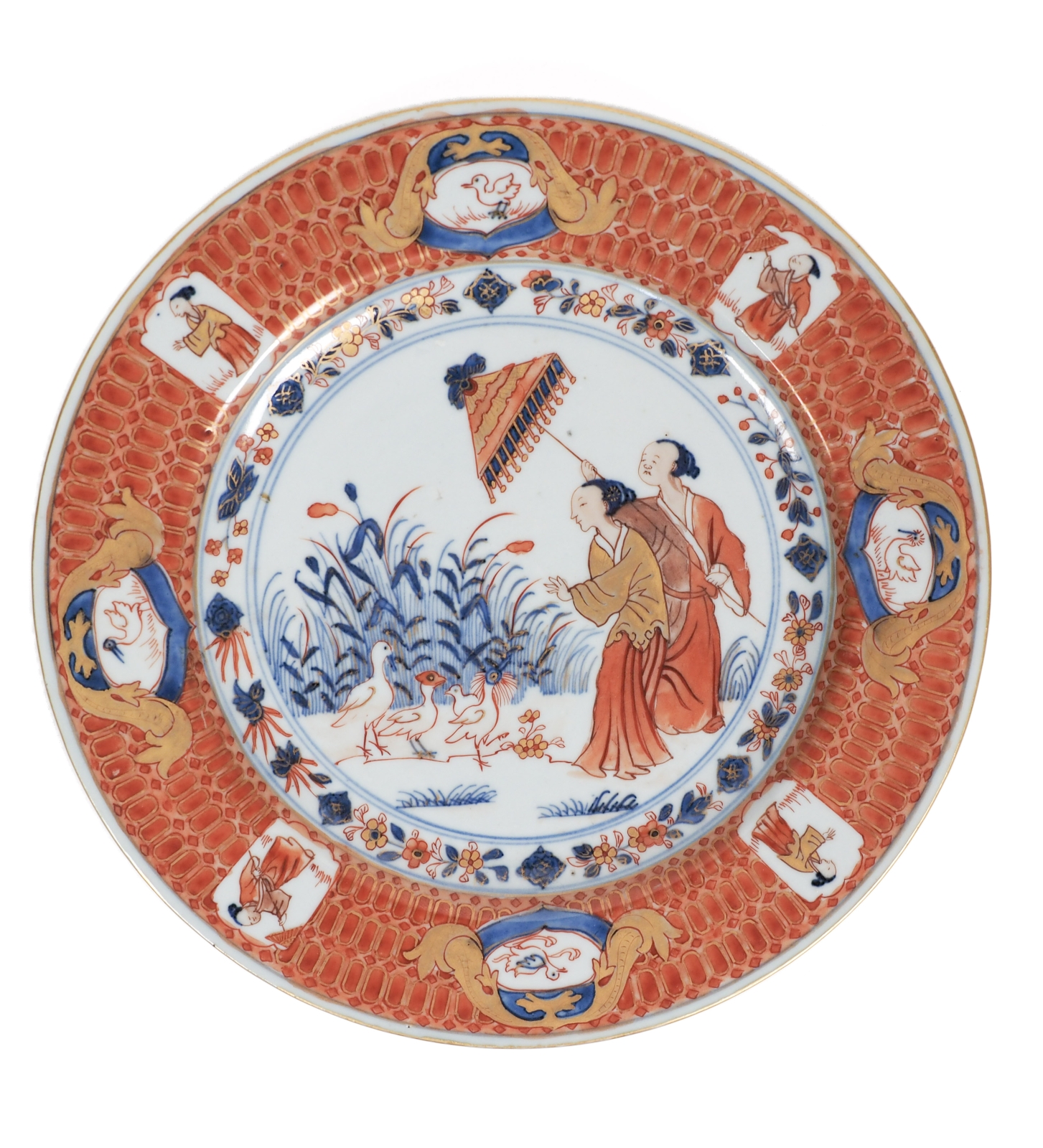
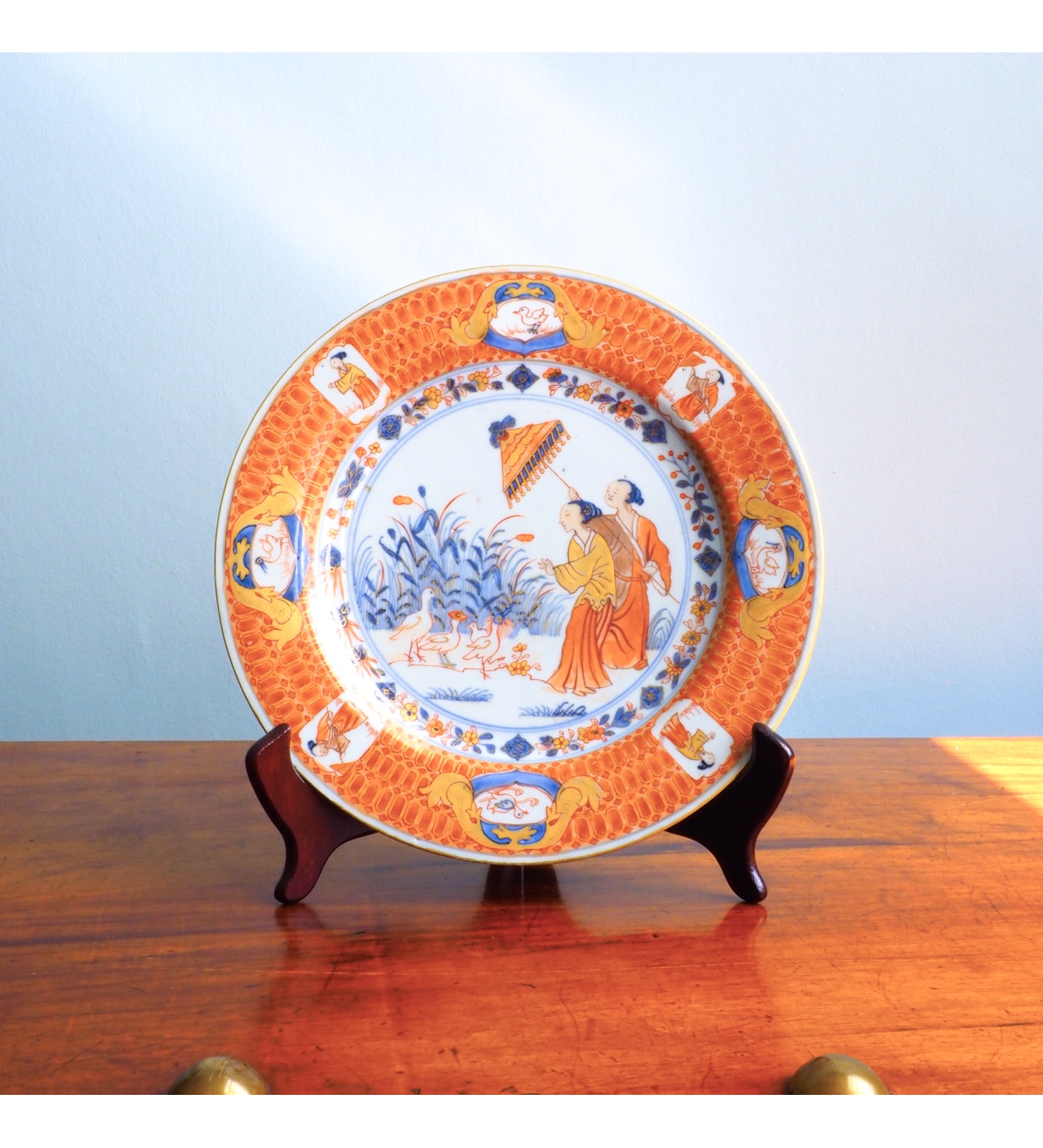
A Chinese Imari plate after the 'parasol ladies' design of Cornelis Pronk on the instructions of the Dutch East India Company, 18th century, around 1736-1738, China, Jingdezhen.
Dimensions: 23,5 cm. diameter.
 Secure payment
100% secure payment
 Worldwide shipping
Fast delivery
 Free shipping in EU
On all orders
 Professional packaging
Professional order packaging
Cornelis Pronk (1691–1759) was a Dutch artist from Amsterdam known for his precise drawings of towns, landscapes, and historic buildings. After training as a portrait painter under Arnold Boonen (1669-1729), he became especially respected for his detailed topographical drawings, many of which were later engraved and published. In addition to painting and drawing, Pronk also created decorative designs, including patterns for porcelain.
In 1734 the Dutch East India Company (VOC) commissioned Pronk to design porcelain that could be produced in China for the European market. He signed a three-year contract with the Company and received a salary of about 1,200 guilders per year. Each year he was required to produce a new design, including both the shape of the pieces and the decorative motifs. Several copies of the drawings were made so they could be sent on different ships to Asia. Some of these drawings are still preserved at the Rijksmuseum.
At that time Chinese goods such as tea, silk, and porcelain formed an important part of the VOC’s trade. After China reopened its maritime trade in 1684, Chinese merchants regularly sailed with large junks to Batavia. From 1729 onwards the Company also organised direct voyages to Canton in order to secure supplies for the European market. Pronk’s designs were sent to Asia and the VOC ordered a limited assortment including dinner services, tea services, vases with basins, and decorative mantelpiece sets. These were produced in several colour schemes, such as blue-and-white, enamel decoration, and the colourful Imari style with iron-red and gold.
The project was ambitious but complicated. The designs had to travel from the Netherlands to Asia before production could begin, and once finished, the porcelain had to be shipped back to Europe, a process that could take several years. Because of the cost and complexity, the quantities produced were relatively limited. Pronk ultimately supplied four series of designs during his collaboration with the VOC. Today “Pronk porcelain” is valued as an important example of early Chinese export porcelain designed for European taste, illustrating the close artistic and commercial connections between Europe and China in the 18th century.
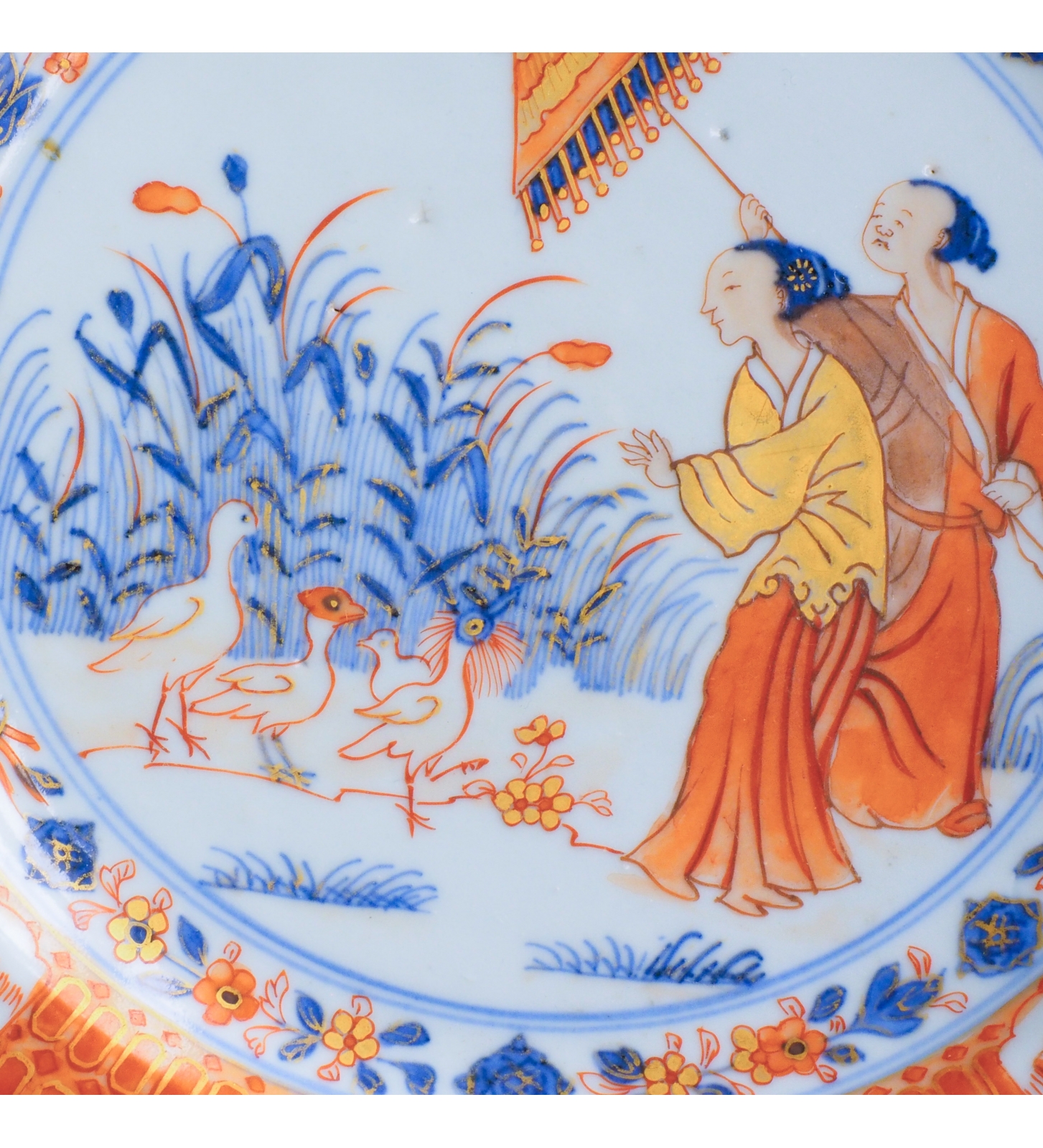
The design known as “The Parasol Ladies” is believed to be the first porcelain pattern created by Cornelis Pronk in 1734. The drawing reached Batavia in 1735 and was later sent to both China and Japan in 1736, making it the only Pronk design known to have been produced in porcelain in both countries. The scene depicts an elegant lady standing at the water’s edge, gesturing toward three birds on the ground in front of her. Slightly behind her stands a maidservant holding an elaborate parasol, emphasising the lady’s high status. In the water nearby a duck is swimming, while reeds and vegetation appear in the background, creating a calm landscape setting. The border decoration consists of alternating floral motifs and cartouches containing birds and small figures, some carrying parasols. Small insects are often painted on the reverse of the porcelain.
Although the VOC initially planned large orders, production proved difficult and expensive. Chinese merchants estimated that fulfilling the full order would cost about 64,000 guilders, roughly the same amount the Company normally spent annually on all porcelain purchases. As a result, only limited quantities were ordered. It is known that the Parasol ladies came to Holland with the VOC ship Magdalena (built 1719, out of service in 1743)
Attempts were also made to have the design produced in Japan, but negotiations failed because Japanese porcelain makers demanded even higher prices.
Only a small number of Japanese examples are known today, probably made privately by VOC merchants who used the drawings for personal commissions.
Provenance: The Dutch collection of J. Leegstra (1937-2025).
Similar plates are in the collection of:
-Rijksmuseum, intenvory nr. AK-NM-13677.
-Princessenhof Leeuwarden, NO 05560.
-The Metropolitan Museum of Art, object nr. 2002.447.122 (On view at The Met Fifth Avenue in Gallery 201: March 2026).
Condition: Perfect.
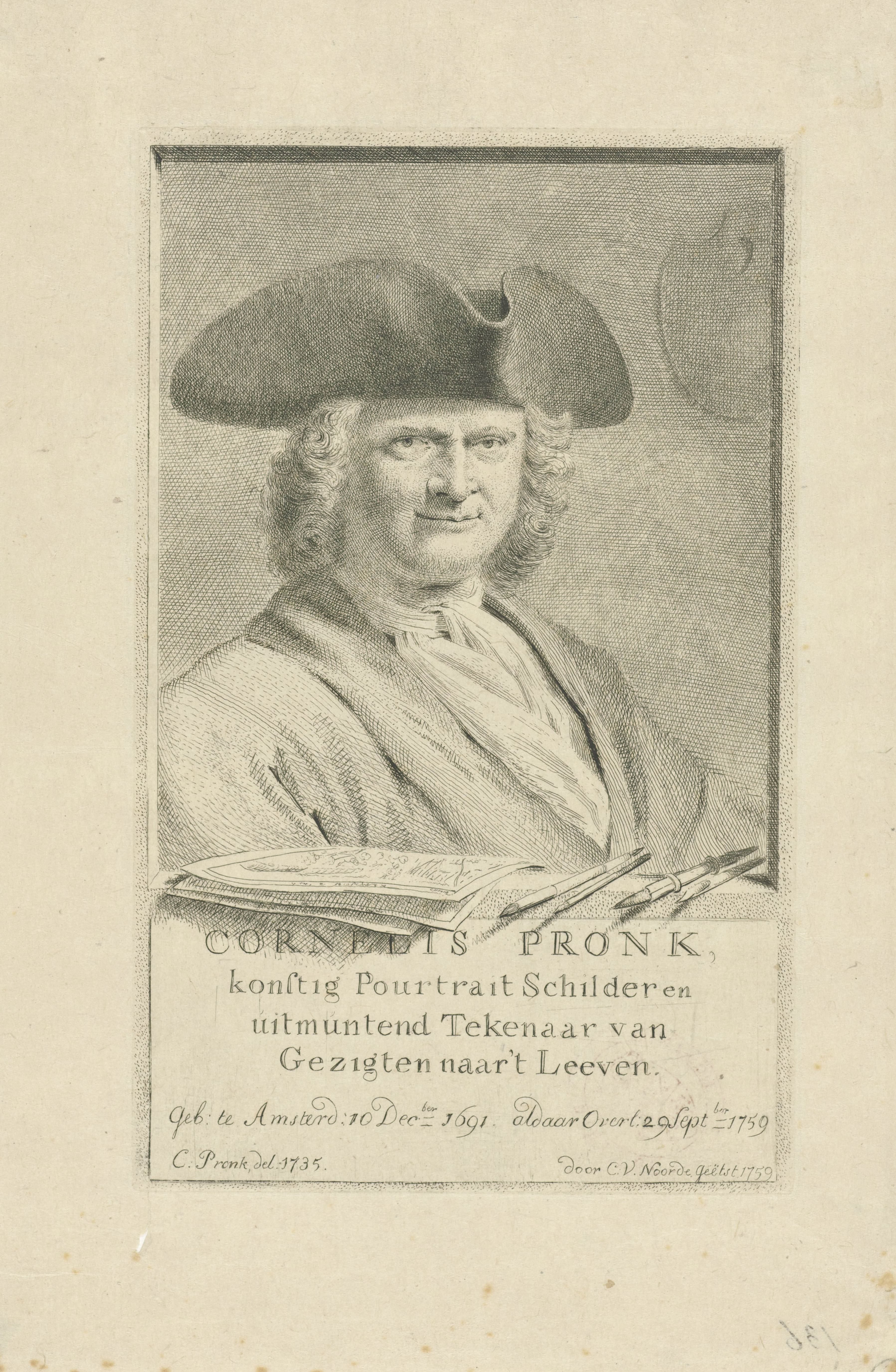
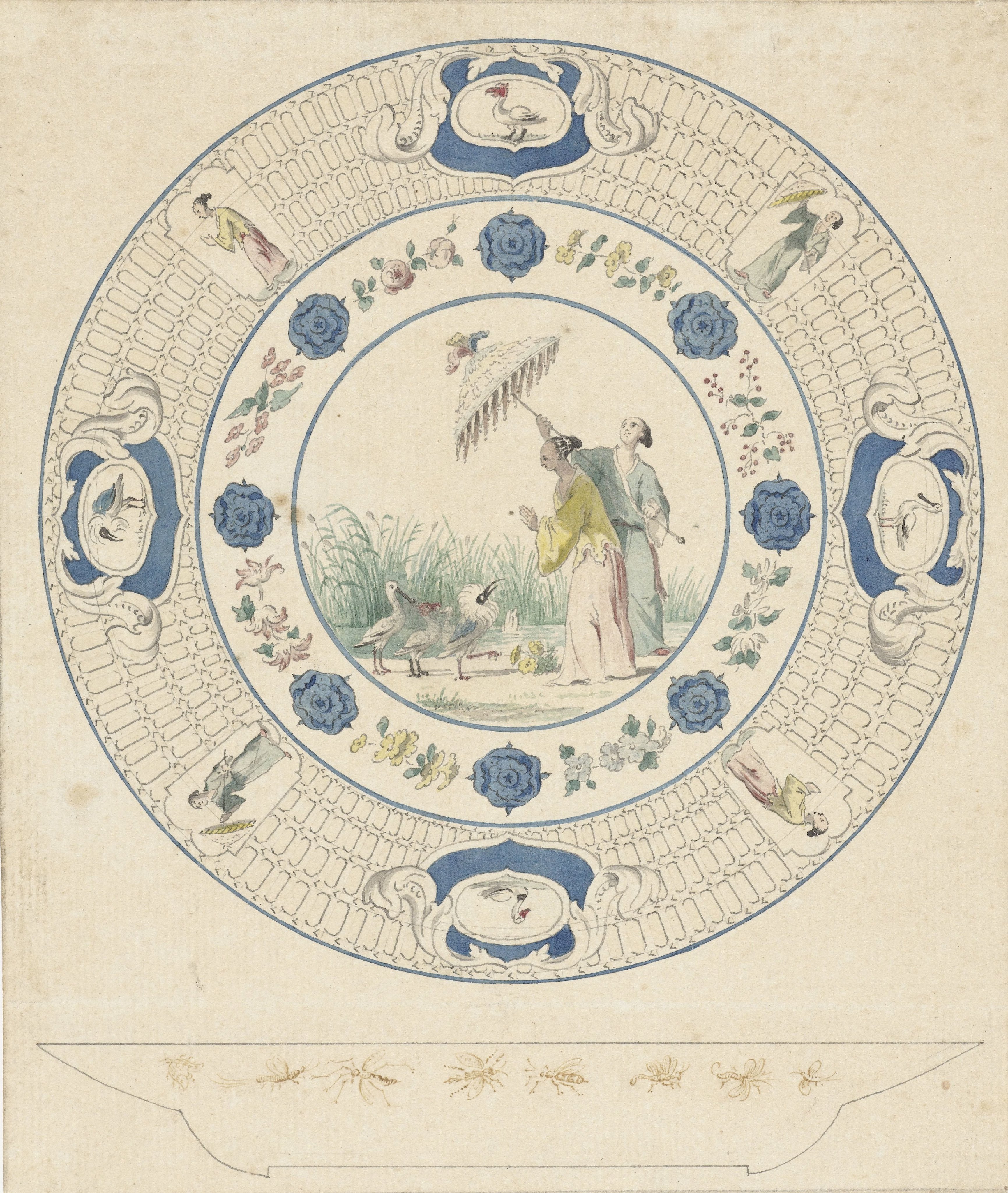
'Portret van Cornelis Pronk Cornelis van Noorde 1759' 'Ontwerptekening voor een bord met een dame met parasol Cornelis Pronk, 1734/1736'
source: www.rijksmuseum.com.
source: C.J.A. Jorg, 'Pronk Porcelain', 1980.
A Chinese Imari plate after the 'parasol ladies' design of Cornelis Pronk on the instructions of the Dutch East India Company, 18th century, around 1736-1738, China, Jingdezhen.
Dimensions: 23,5 cm. diameter.
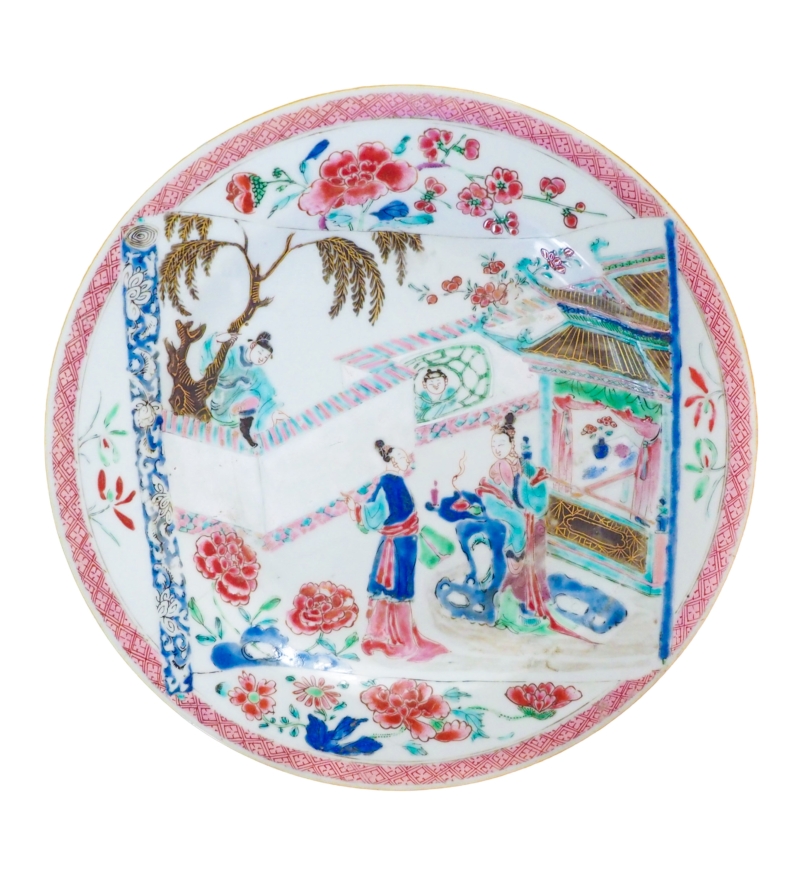
A Chinese Yongzheng period (1723-1735) Famille Rose plate depicting a scene from the ‘Romance of the Western Chamber’, 18th century, around 1730, Jingdezhen, China.
Famille rose
Dimensions: 22,5 cm diameter.
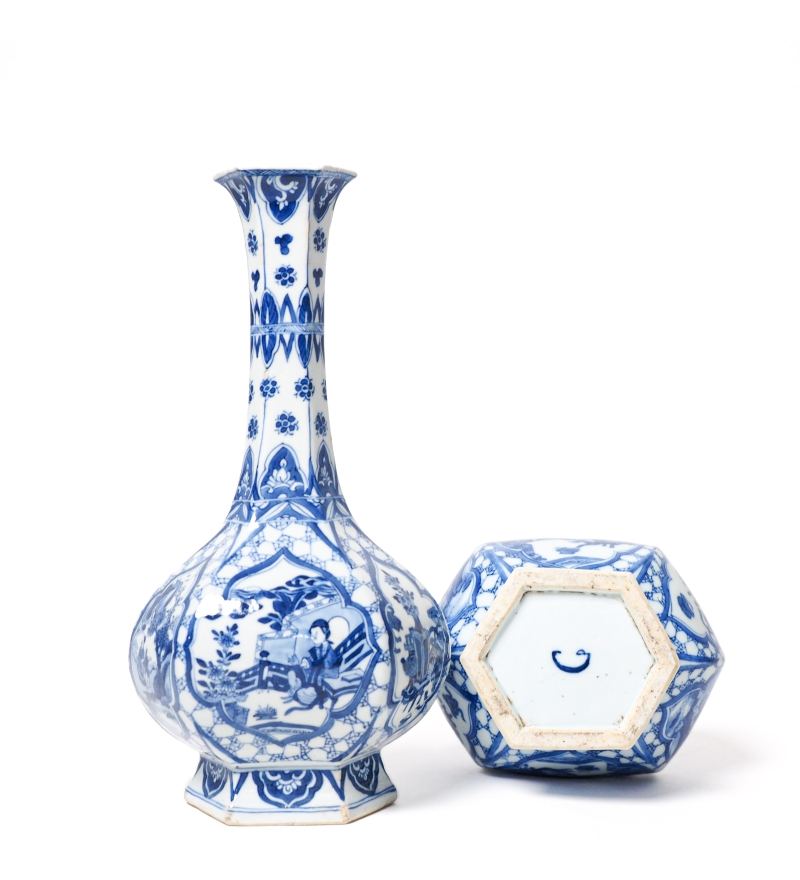
A pair of blue and white Kangxi Period (1662-1722) G-marked bottle vases with Persian panels depicting persons and treasures on a background of 'cracked-ice' motif, 17th century, around 1680-1700, Jingdezhen, China.
Blue and White
Dimensions: around 30 cm height. (2x)
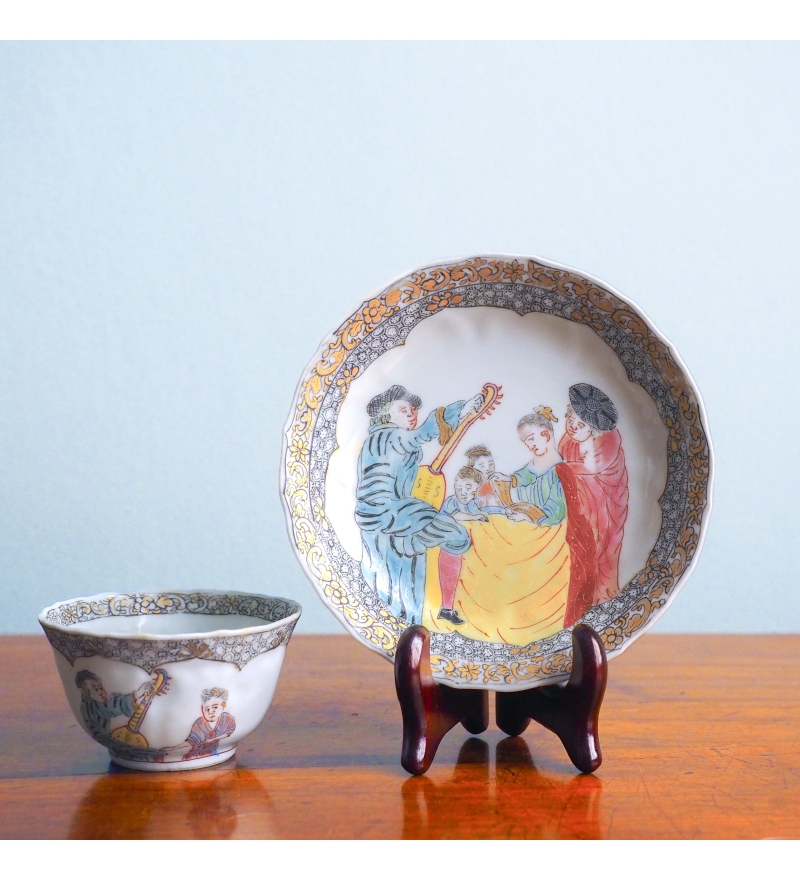
A Chinese Yongzheng Period (1723-1735) Dutch Decorated cup and saucer after a rococo print of a painting of Watteau, 18th century, around 1725-1735, Jingdezhen, China.
Dimensions: around 13,5 cm. diameter (saucer) ; 5x8 cm. (cup).
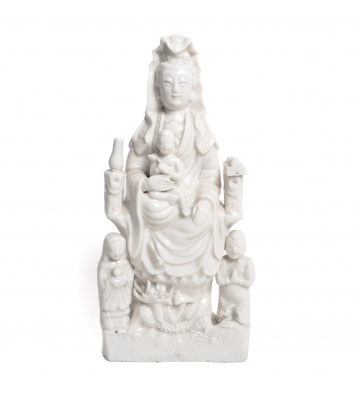
A Kangxi period (1662-1722) Blanc de Chine figure of a seated Guanyin holding a child surrounded by a girl (Longnü), a boy (Sudhana) and dragon, 17th century, around 1680-1700, Dehua, China.
Dimensions: 22 cm height.
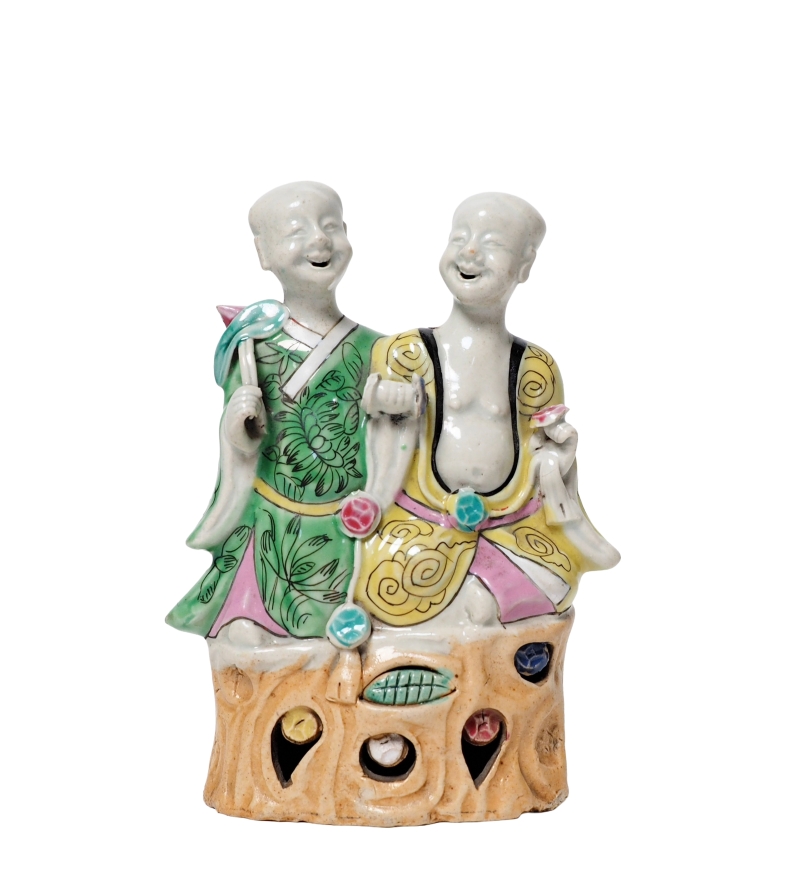
A famille rose Qianlong period (1736-1795) 'Hehe Erxian' or 'Two Immortals of Harmony and Union' group depicted on a rock wearing bright enamel robes, 18th century, around 1770-1790, Jingdezhen, China
Famille Rose
Dimensions: ca.16,5 cm height
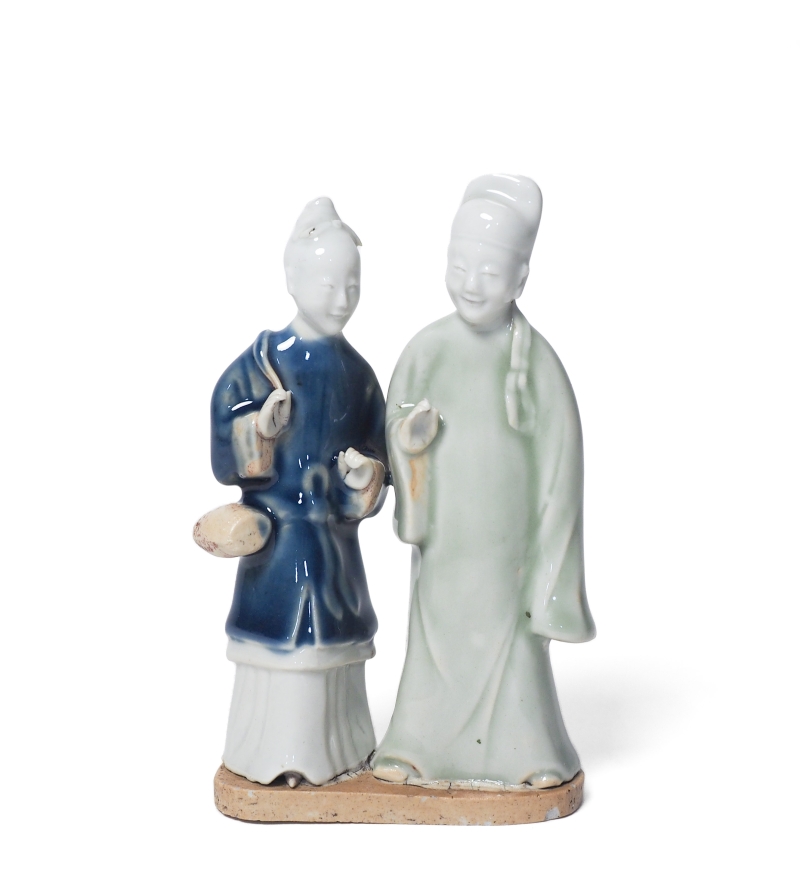
A finely modelled Qianlong period (1736-1795) Chinese biscuit porcelain group depicts a standing couple in conversation, 18th century, around 1740-1750, Jingdezhen, China.
Celadon and Blue
Dimensions: ca. 17 cm. height.
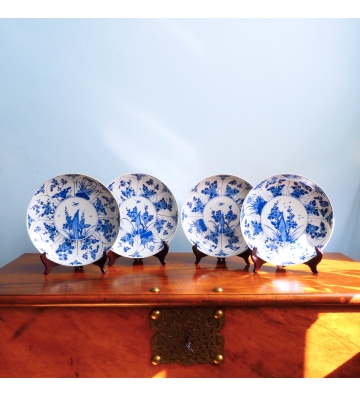
A set of 4 Chinese blue and white porcelain floral dishes of the Kangxi period (1662–1722) with divided in Persian-style panels filled with floral design, 17th-18th century, around 1690-1710, Jingdezhen, China.
Dimensions: ca. 27,5 cm. diameter.
A set of 12 Qianlong Period (1736-1795) Nanking cargo '"Boatman and six-flower border" plates out of the sunken ship VOC Ship Geldermalsen, 18th century, around 1750, Jingdezhen, China.
Dimensions: ca. 23 cm. diameter
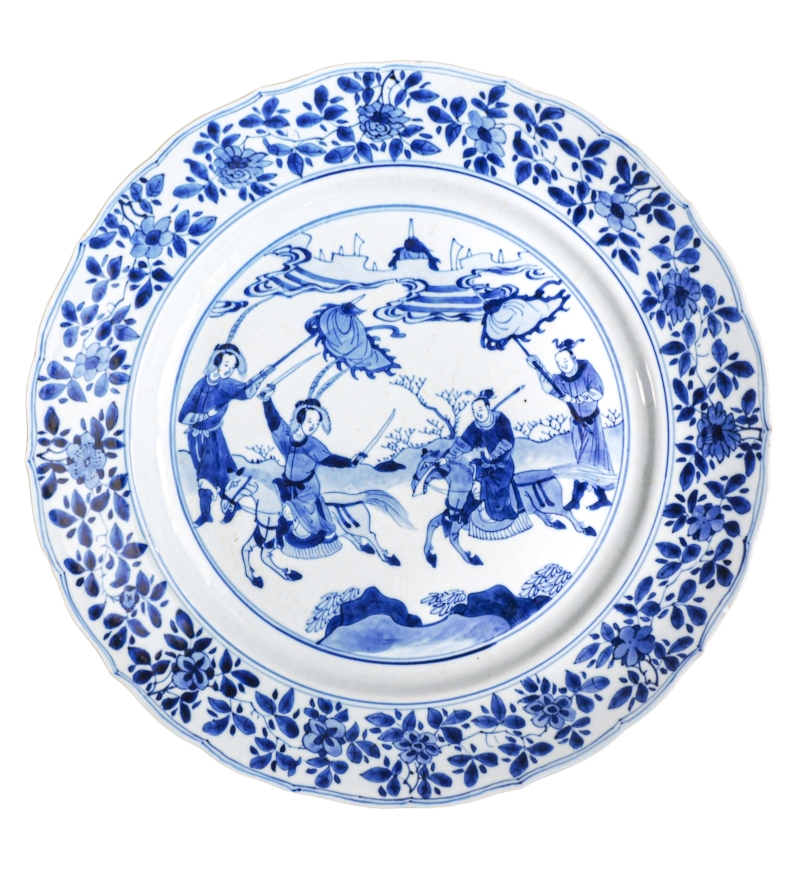
A large Kangxi Period (1662-1722) plate with scalloped rim depicting warriors on horseback accompanied by two standard-bearer with in the background the Chinese wall, 17th century, around 1700, Jingdezhen, China.
Dimensions: 36,5 cm diameter.
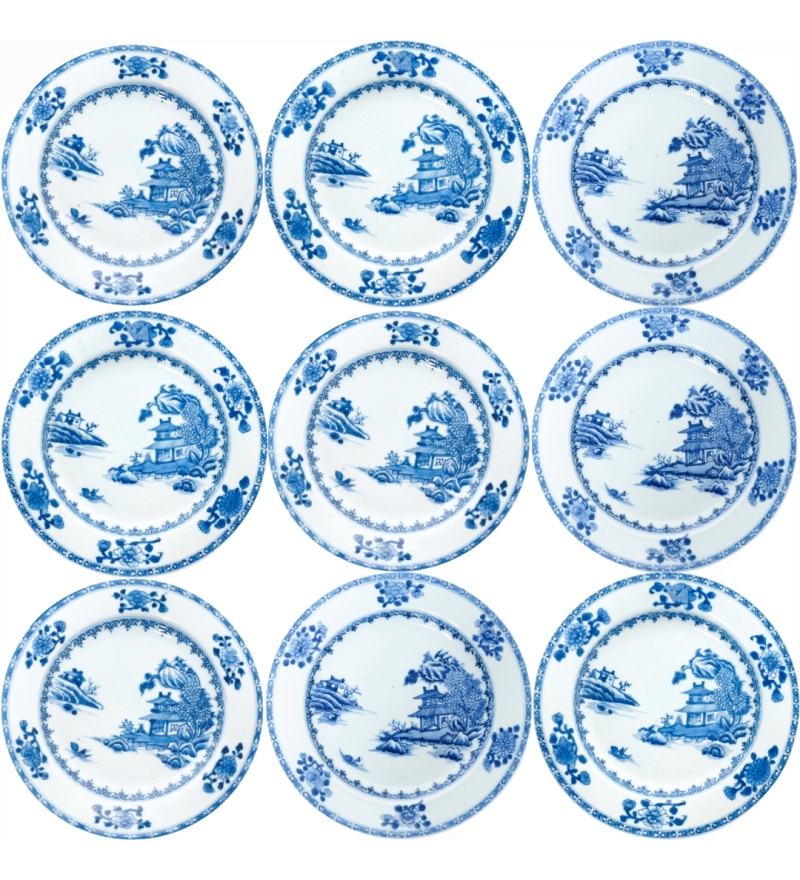
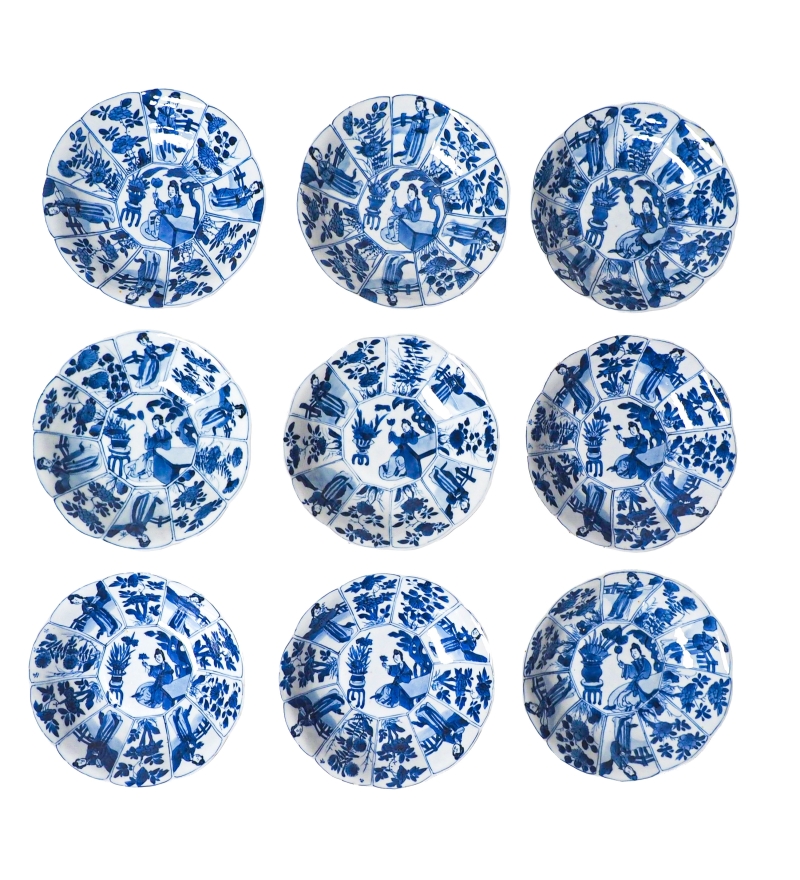
A set of 9 Chinese blue and white porcelain saucer dishes of the Kangxi period (1662–1722) with a Long Eliza figure, depicted seated beside a table and holding a lotus flower, 18th century, around 1700-1720, Jingdezhen, China.
Dimensions: ca. 15 cm. diameter
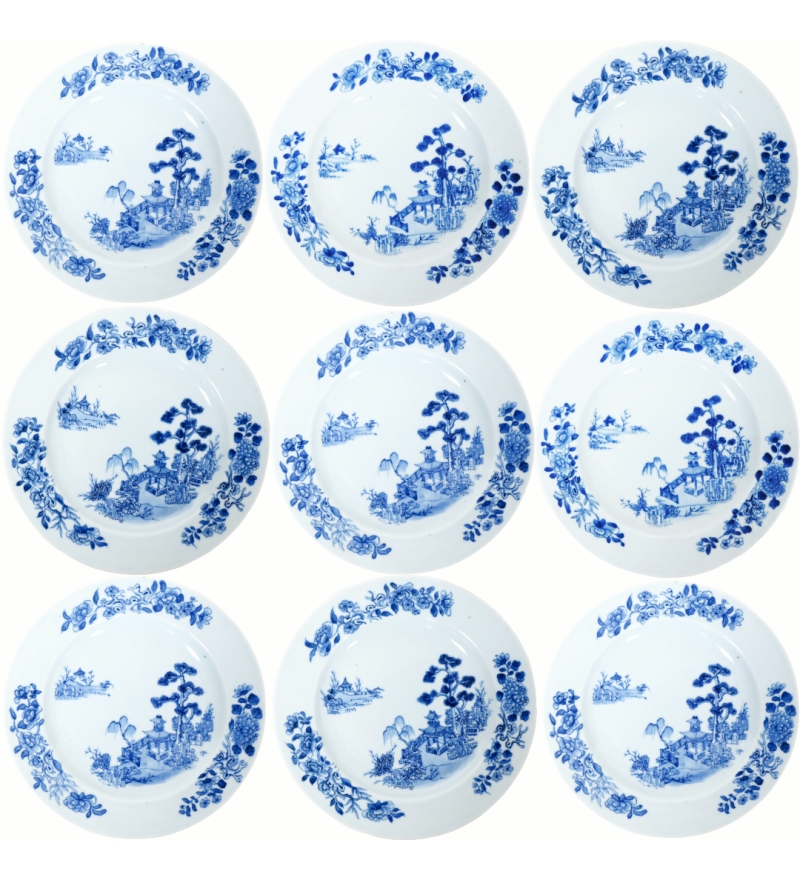
A set of 12 Qianlong Period (1736-1795) Nanking cargo '"Lattice-fence pattern" plates out of the sunken ship VOC Ship Geldermalsen, 18th century, around 1750, Jingdezhen, China.
Dimensions: ca. 23,5 cm. diameter
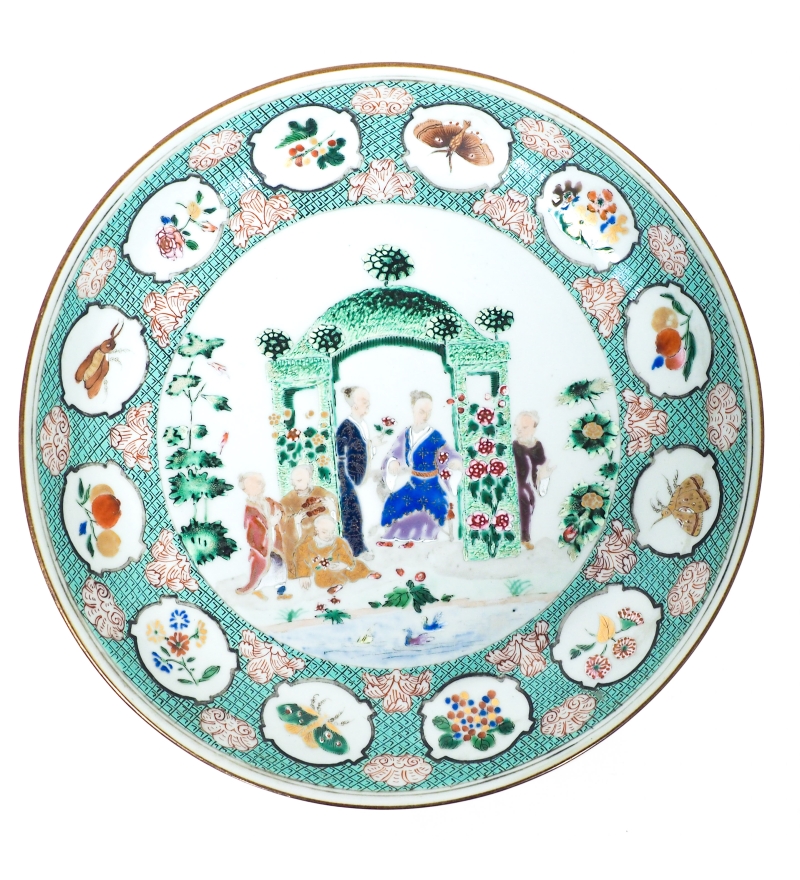
A Chinese verte deep plate after the 'Arbor' design of Cornelis Pronk on the instructions of the Dutch East India Company, 18th century, around 1739-40, China, Jingdezhen.
Dimensions: around 24,5 cm diamater.
A large octangle shaped Chinese Qianlong period (1735-1796) plate with a Western subject after a design from Esaias van de Velde, 18th century, around 1750, Jingdezhen, China.
Blue and white
Dimensions: 38,5 x 38 cm.
A beautiful pair of Qianlong period (1736-1795) Chinese export plates with ‘Madame de Pompadour’ decor, 18th century, around 1745, Jingdezhen, China.
Blue and white
Dimensions: 28 cm. diameter.