- Out-of-Stock
Reference: 10081
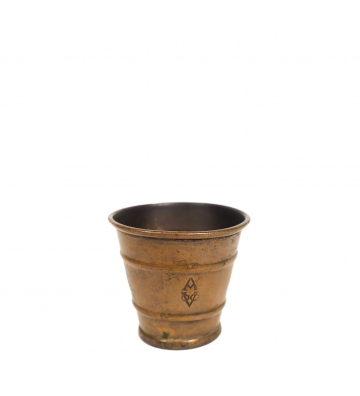
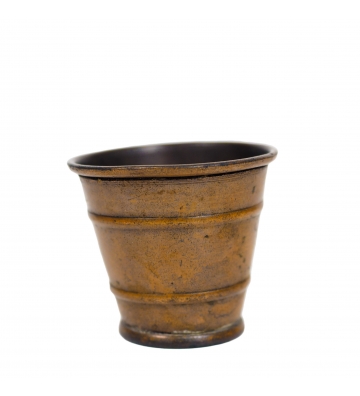
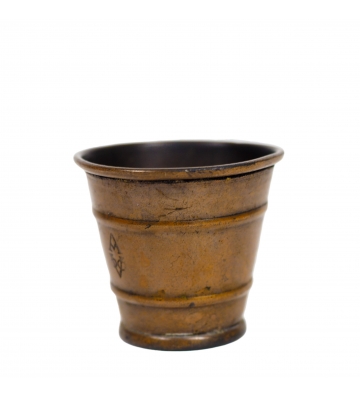
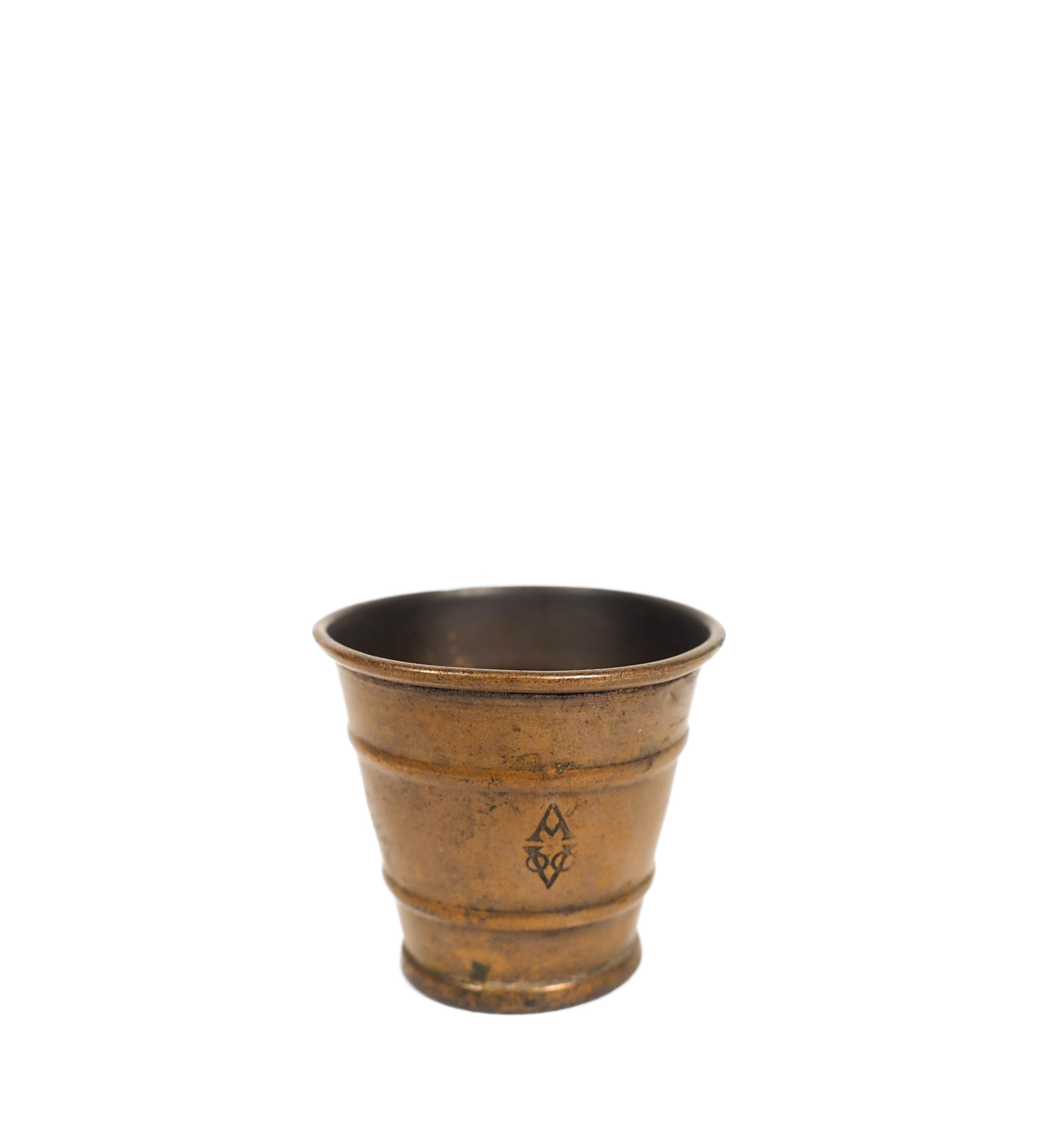
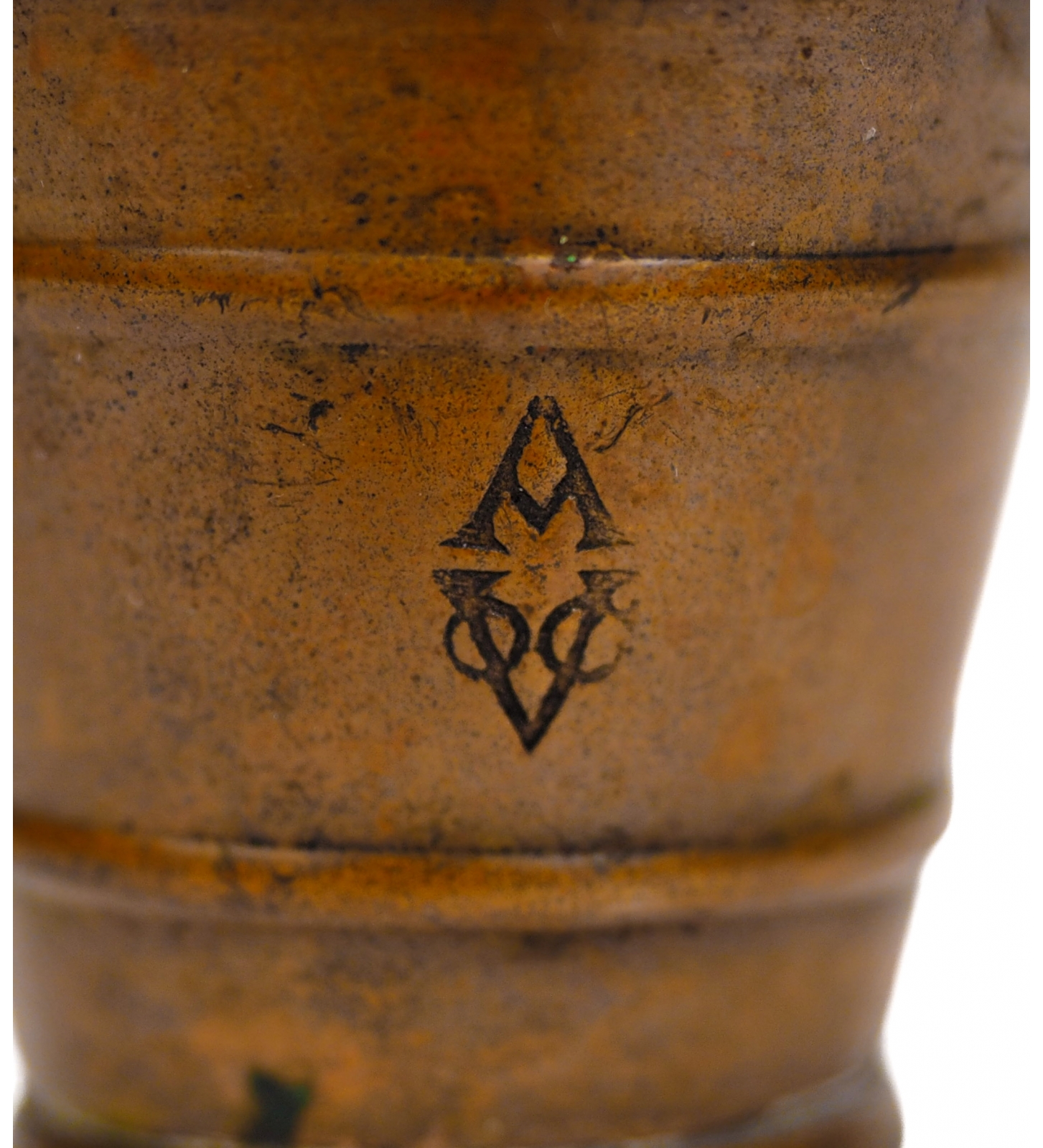
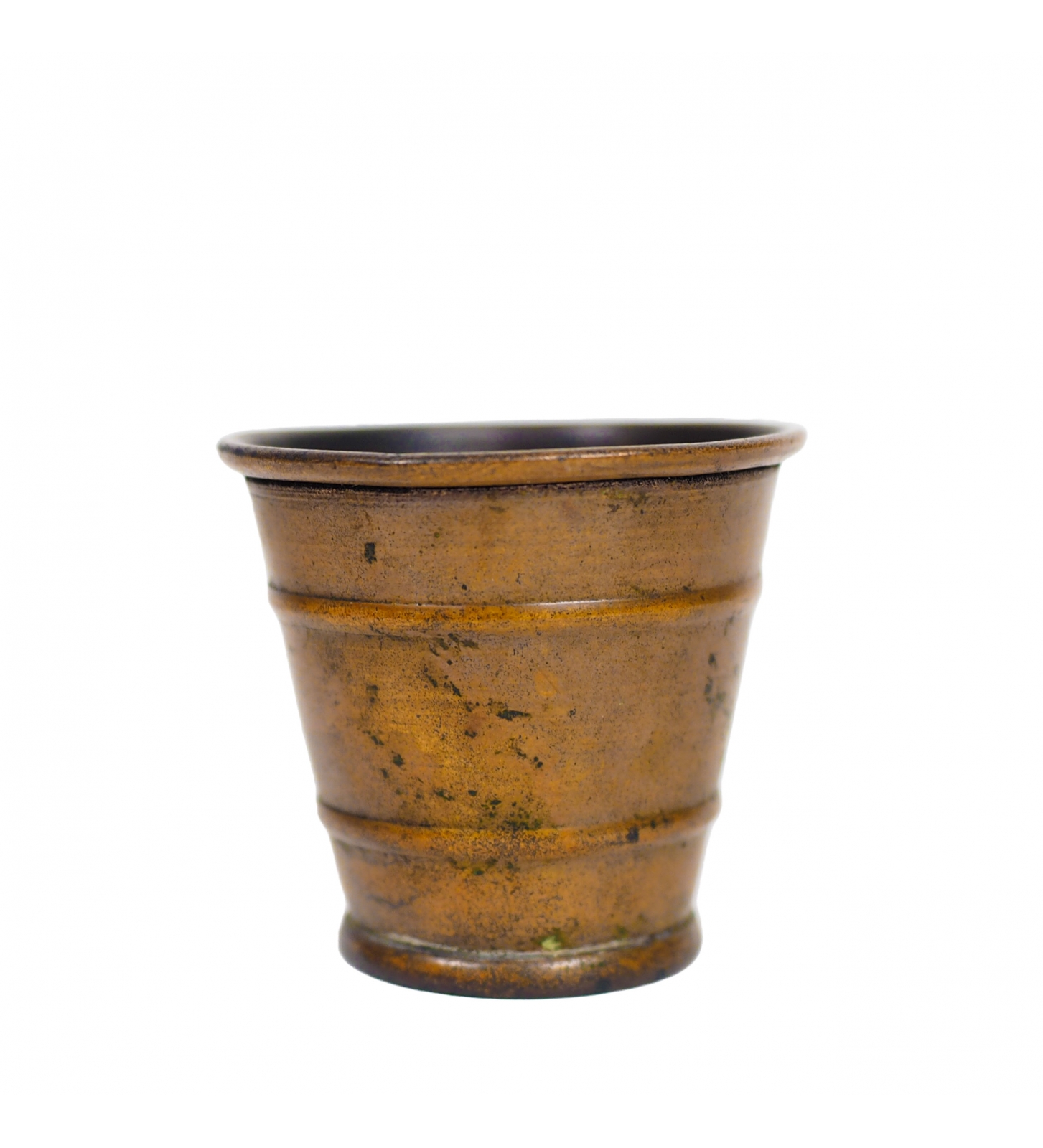
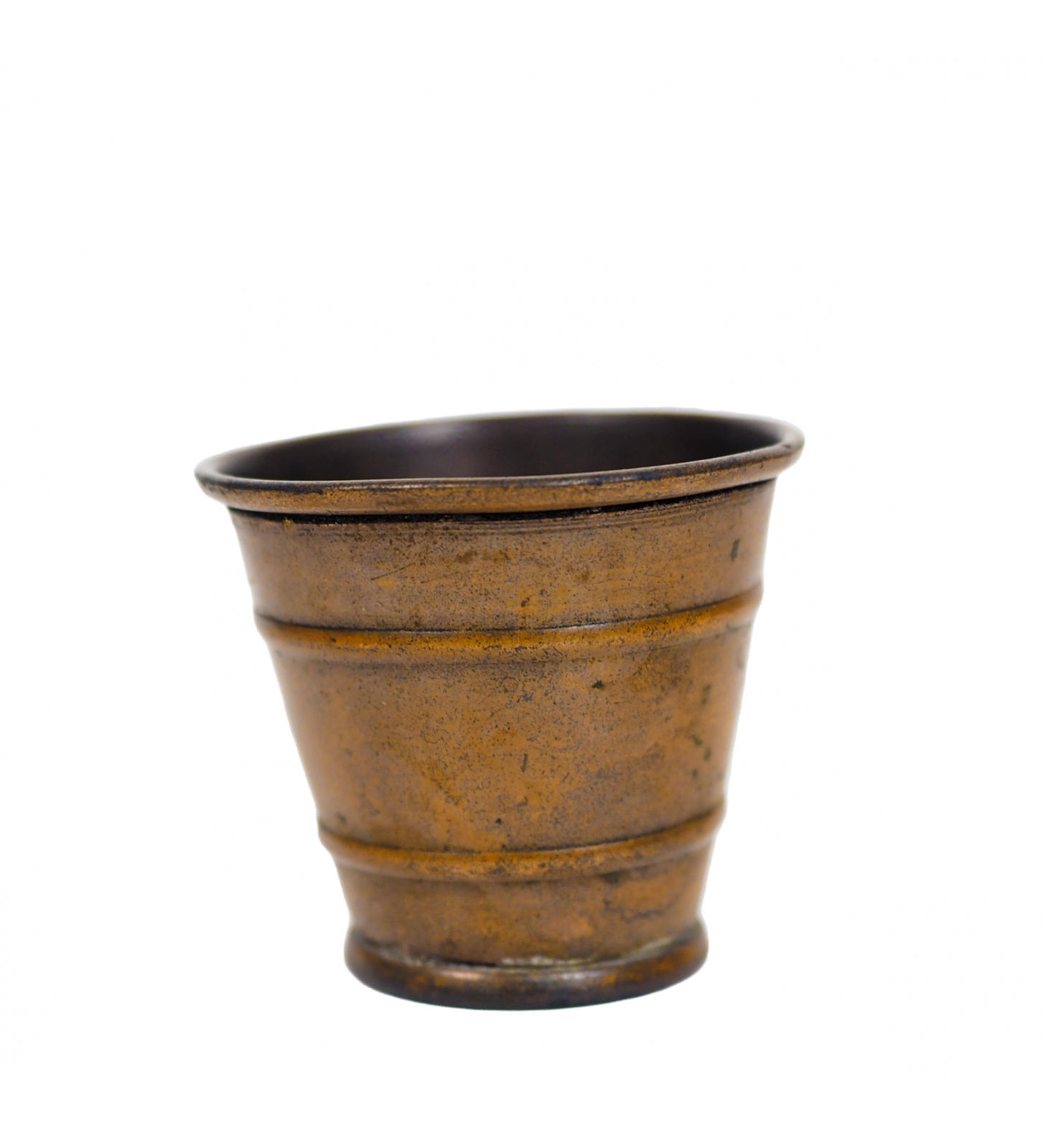
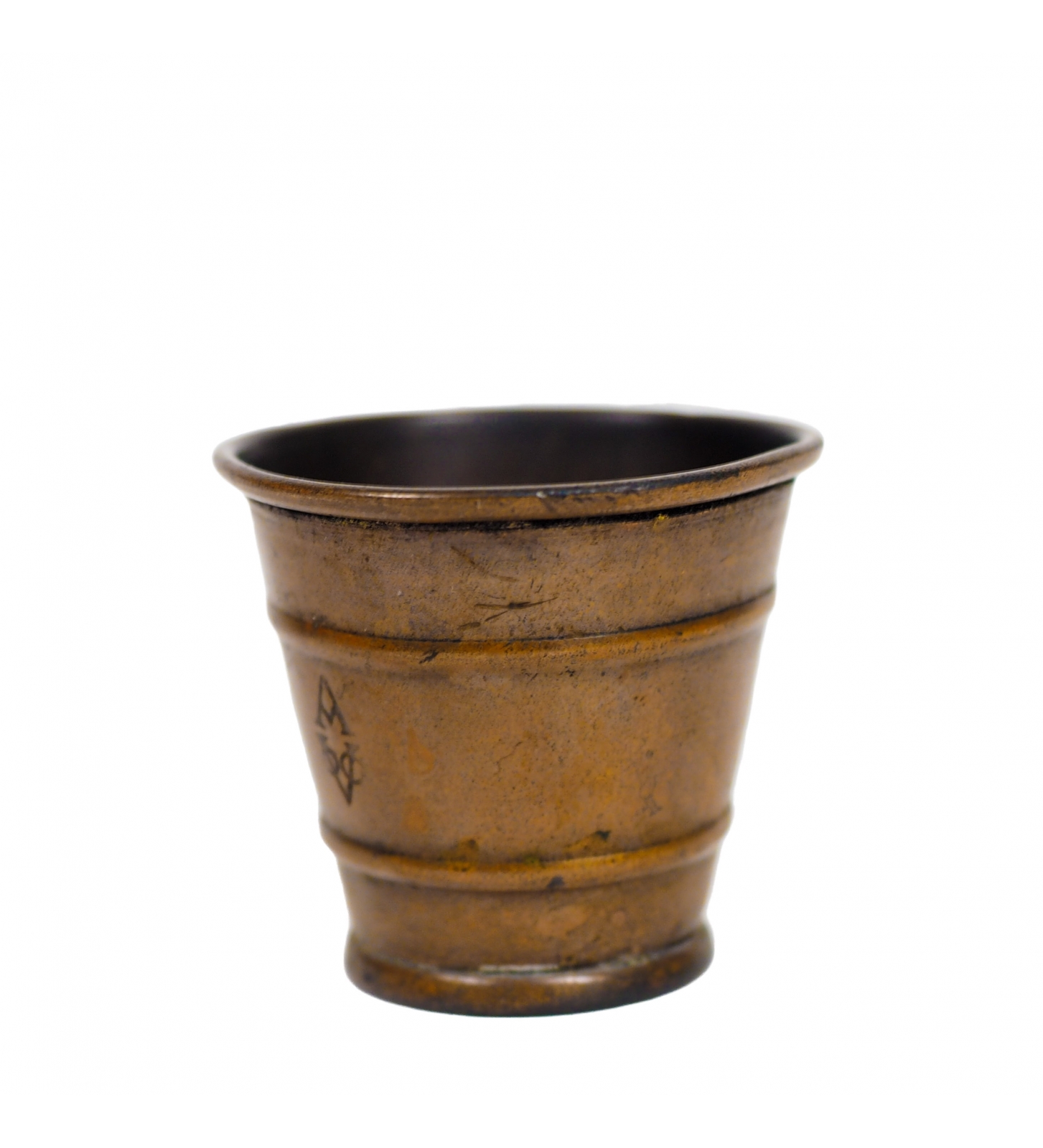
A bronze Dutch East India Company utensil of the Chamber of Amsterdam probably an 'oorlam' cup, 18th century, around 1700-1750, Amsterdam, Holland
Dimensions: 4,5 cm height
 Secure payment
100% secure payment
 Worldwide shipping
Fast delivery
 Free shipping in EU
On all orders
 Professional packaging
Professional order packaging
The Dutch East India Company (VOC) was founded in 1602 and became one of the most powerful trading companies of the early modern world. Within the Company several regional offices, called chambers, were responsible for financing voyages and managing trade. The most important of these was the VOC Chamber of Amsterdam, located in Amsterdam.
The VOC Chamber of Amsterdam was located in the eastern part of Amsterdam, at the Oost-Indisch Huis on the Kloveniersburgwal. This chamber provided roughly half of the Company’s total capital and organised a large share of the VOC’s shipping and trade.
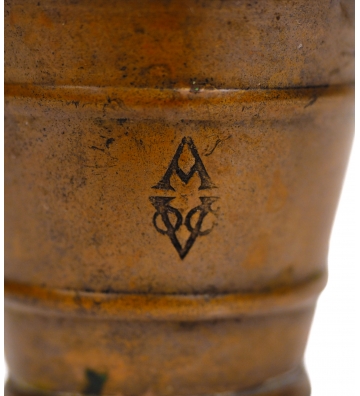
Items like cannon, anchors, weights, and tools from VOC ships sometimes carry the VOC monogram with a chamber letter, but also barrels, chests, and trade goods were sometimes branded with VOC marks to identify ownership and chamber origin.
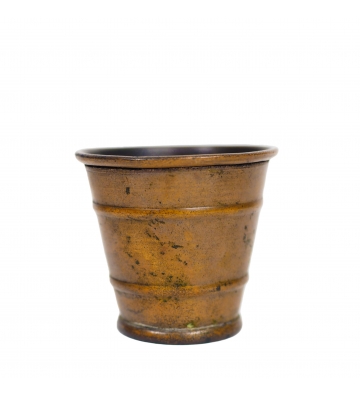
This object was most likely just used for a strong drink considering the folded edge, shape and volume. An other possibility is that this 'cup' was used as measuring cup or weight. Notice the two rims made in and around the bronze!
The Amsterdam chamber oversaw the preparation of voyages to Asia. Ships were built and fitted out in the VOC shipyards, loaded with cargo such as silver, textiles, and other European goods that could be traded overseas. Fleets usually departed in the winter as part of the annual “Christmas fleet,” sailing from the Dutch Republic around the Cape of Good Hope toward Asia. The voyage often took seven to eight months.
Once in Asia, the VOC operated through a large trading network centred on Batavia (present-day Jakarta), the Company’s Asian headquarters. From there merchants organised trade with ports across the region, including Canton in China and Nagasaki in Japan. Ships returning to the Netherlands carried the well-known valuable goods such as tea, silk, spices, and our favorite: porcelain.
The Amsterdam chamber also managed the arrival of these return fleets. The ships unloaded their cargo in the Dutch Republic, where the goods were auctioned to merchants. Through this system the VOC connected European markets with Asian production centres. The chamber in Amsterdam remained the Company’s largest and most influential branch until the VOC was dissolved in 1799.
A bronze Dutch East India Company utensil of the Chamber of Amsterdam probably an 'oorlam' cup, 18th century, around 1700-1750, Amsterdam, Holland
Dimensions: 4,5 cm height
A set of three Vienna bronze oriental figures on tapestry, 19th/20th century, around 1900, Vienna, Austria.
Dimensions: 10, 15 and 17 cm. height.
Marked 'HK' / 'HA' at the bottom (unknown artist) .