Reference: 10097
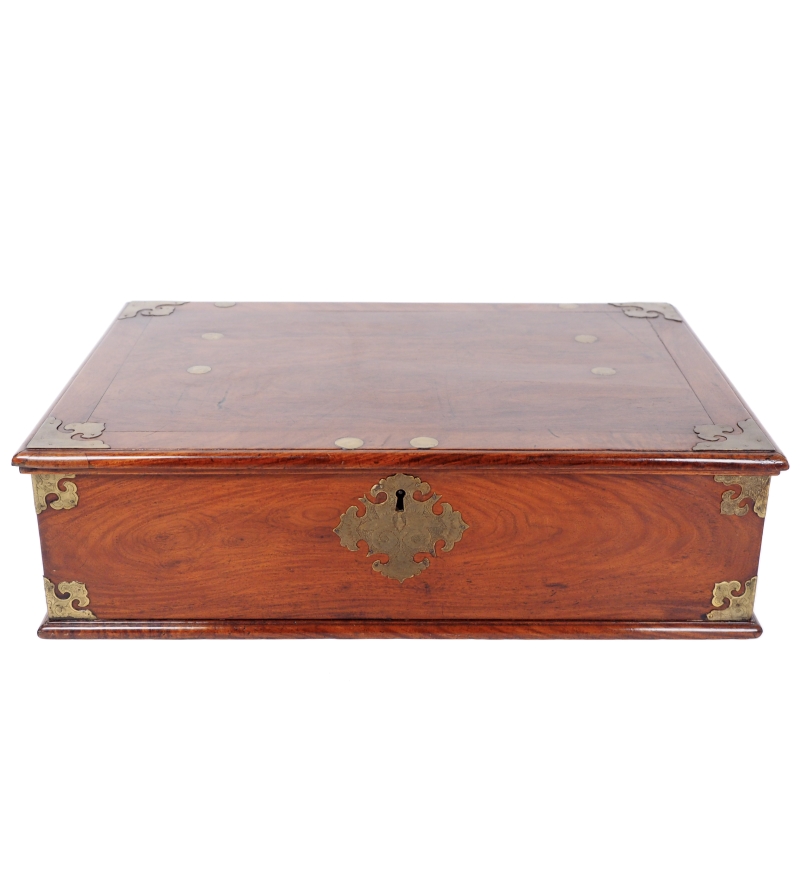
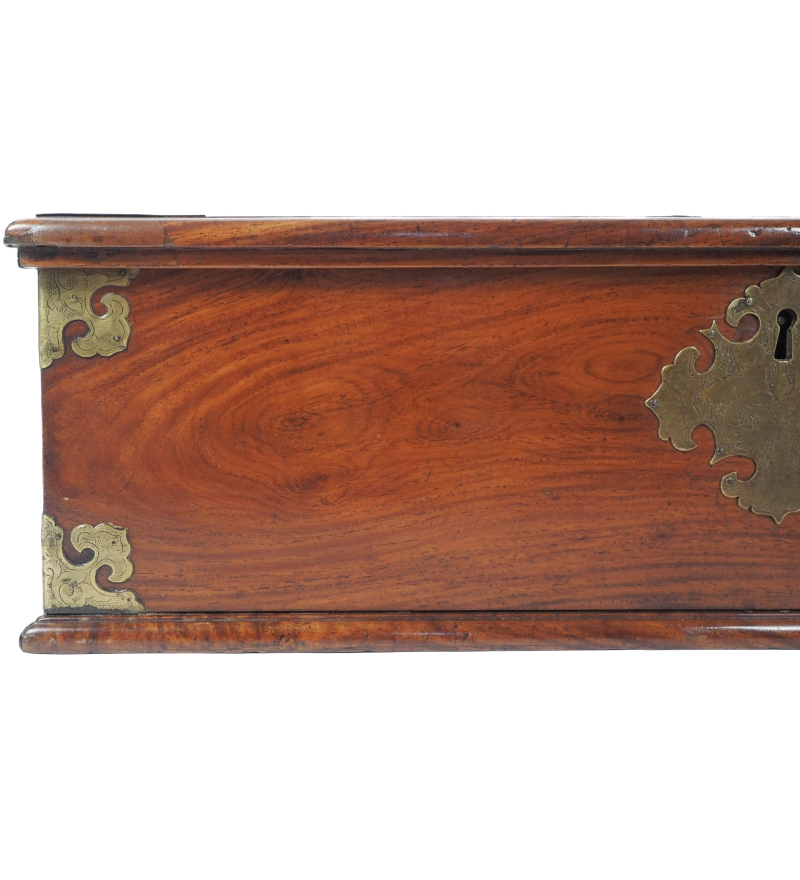
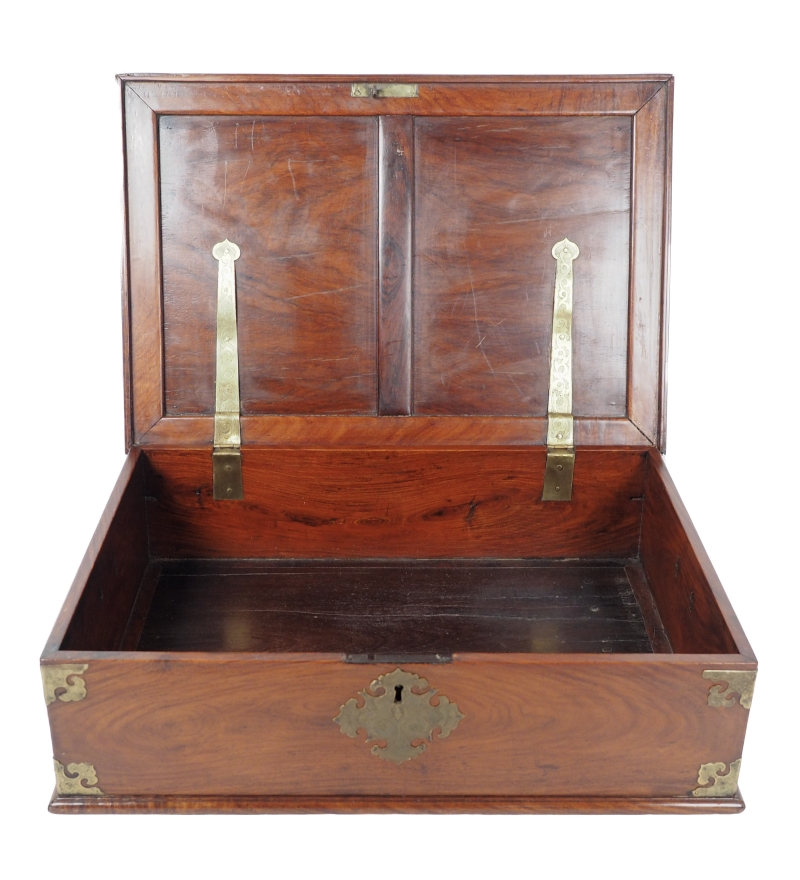
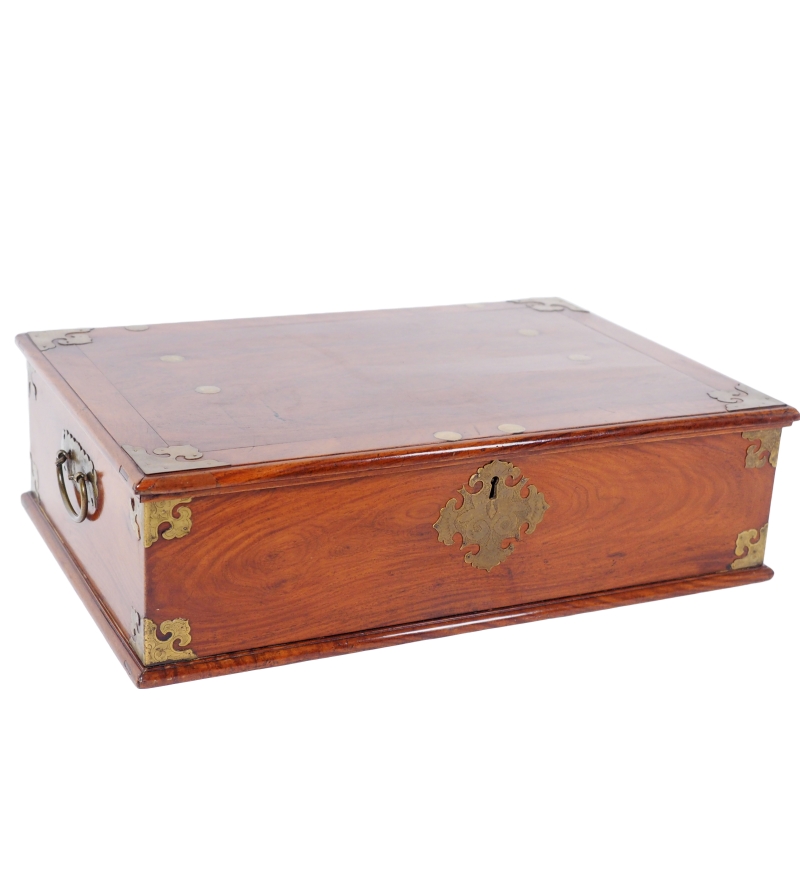
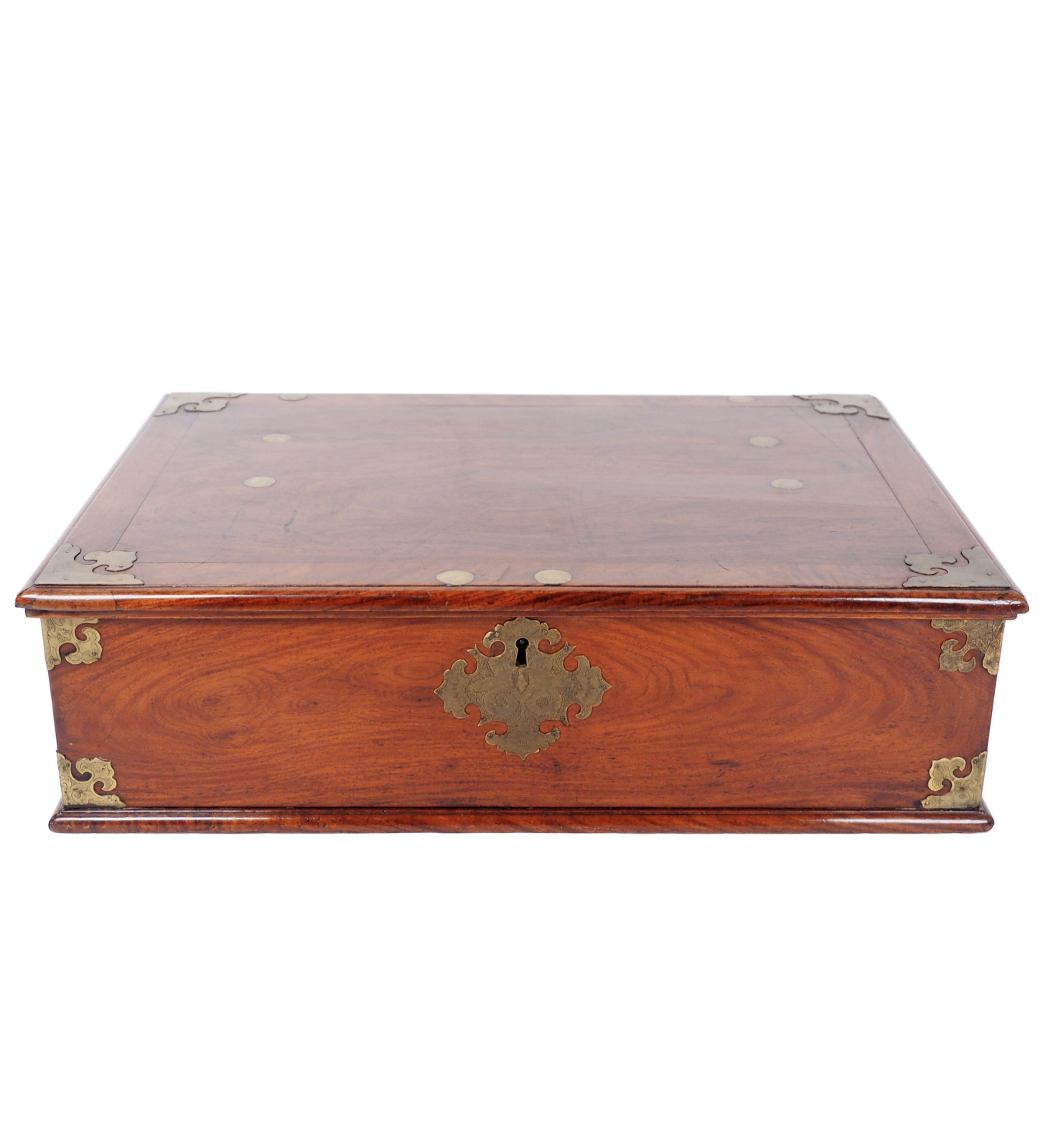
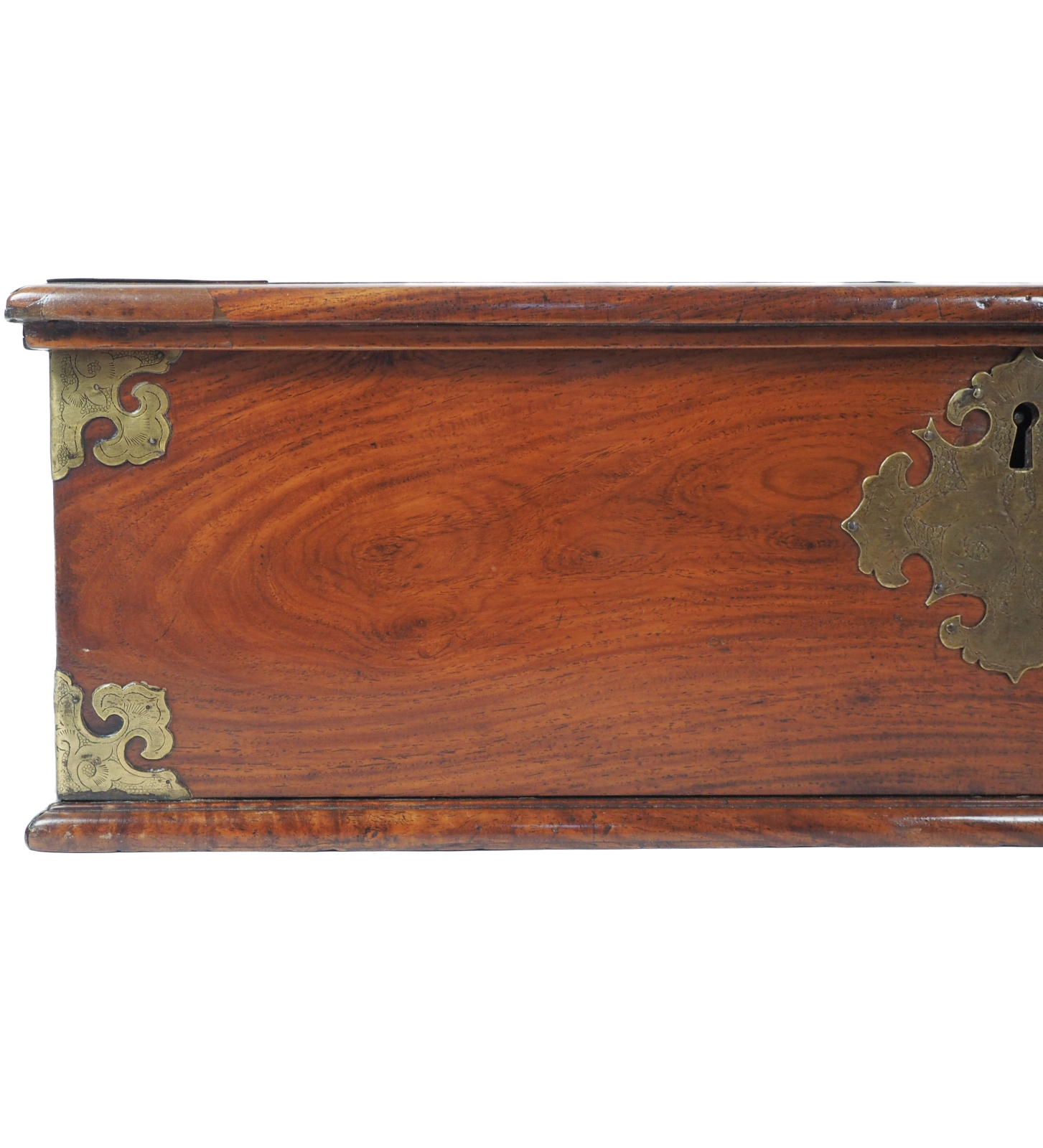
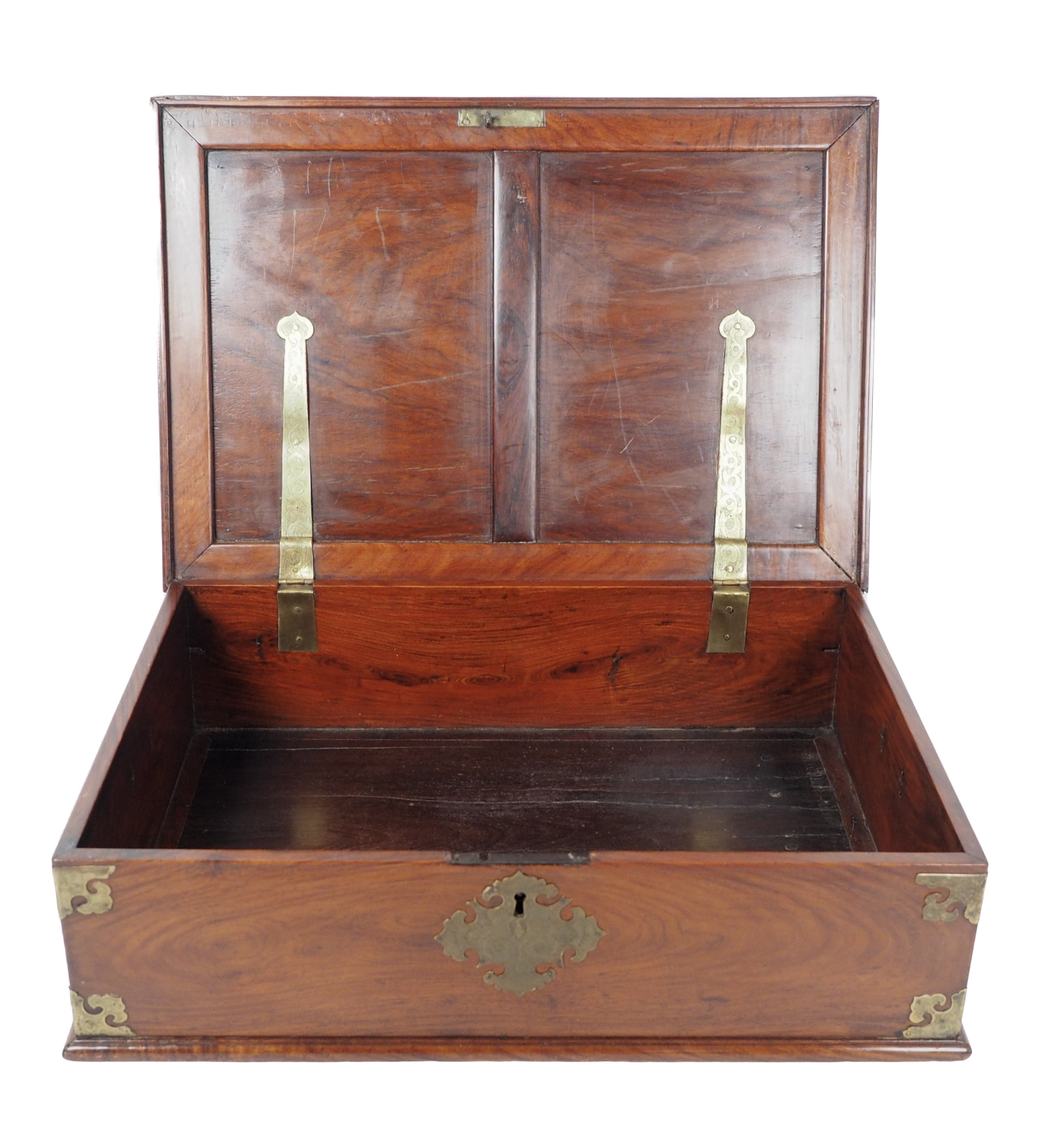
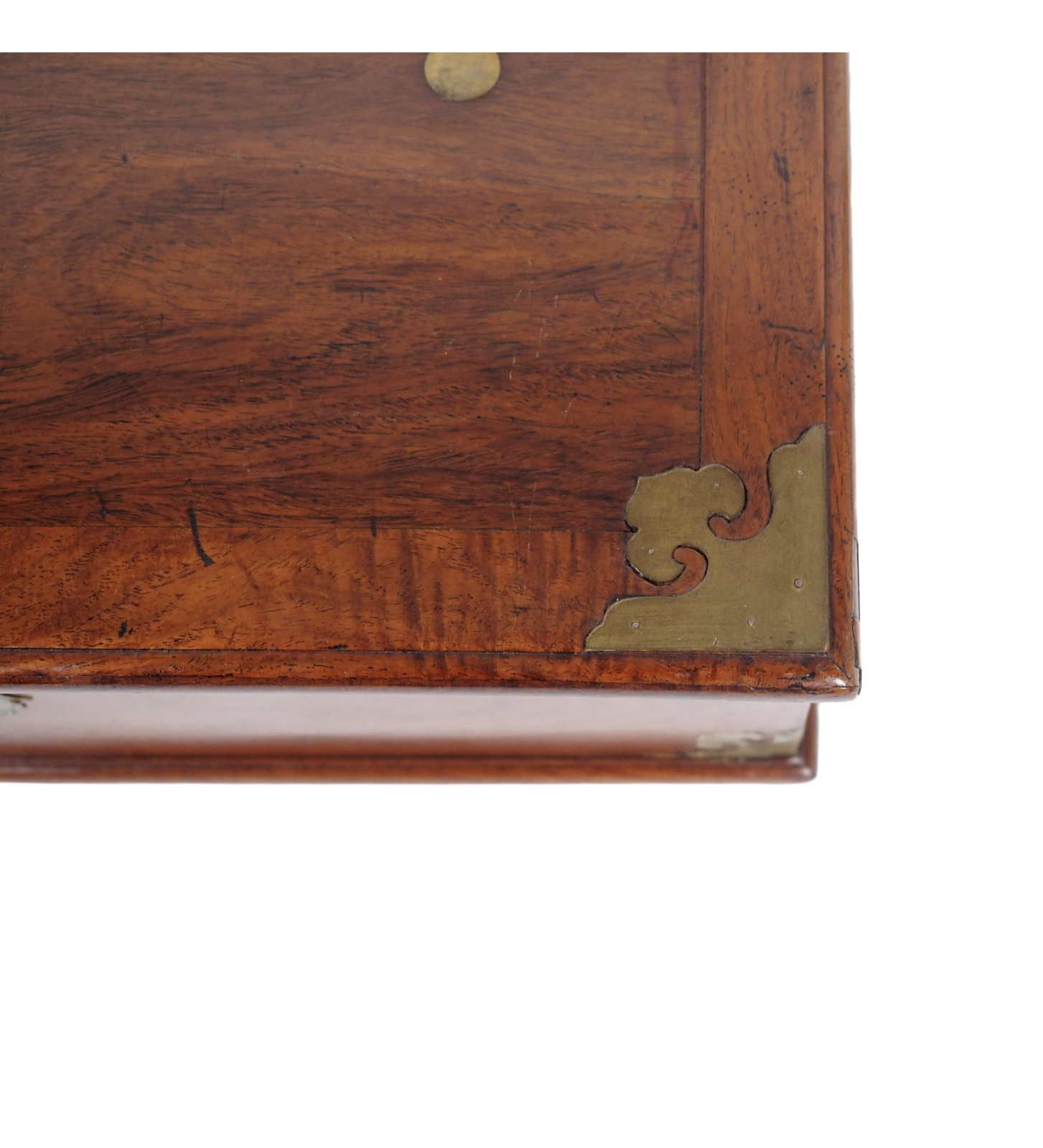
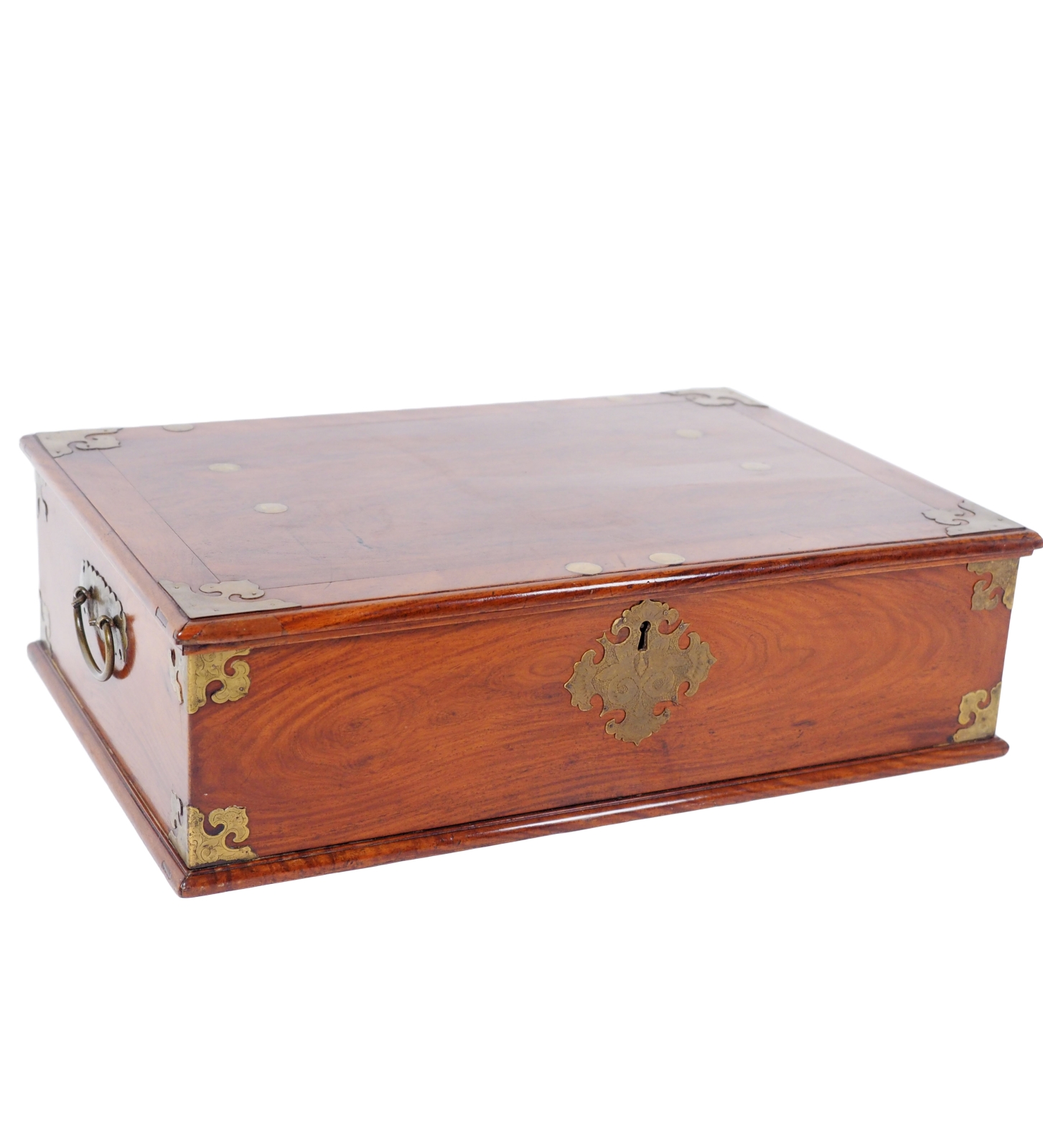
A Rare Chinese Kangxi period (1662-1722) crafted Huanghuali document box for the Dutch colonial market, 17th-18th century, around 1680-1720, Fujian or Canton, South-China.
Dimensions: 56x38x16 cm.
 Secure payment
100% secure payment
 Worldwide shipping
Fast delivery
 Free shipping in EU
On all orders
 Professional packaging
Professional order packaging
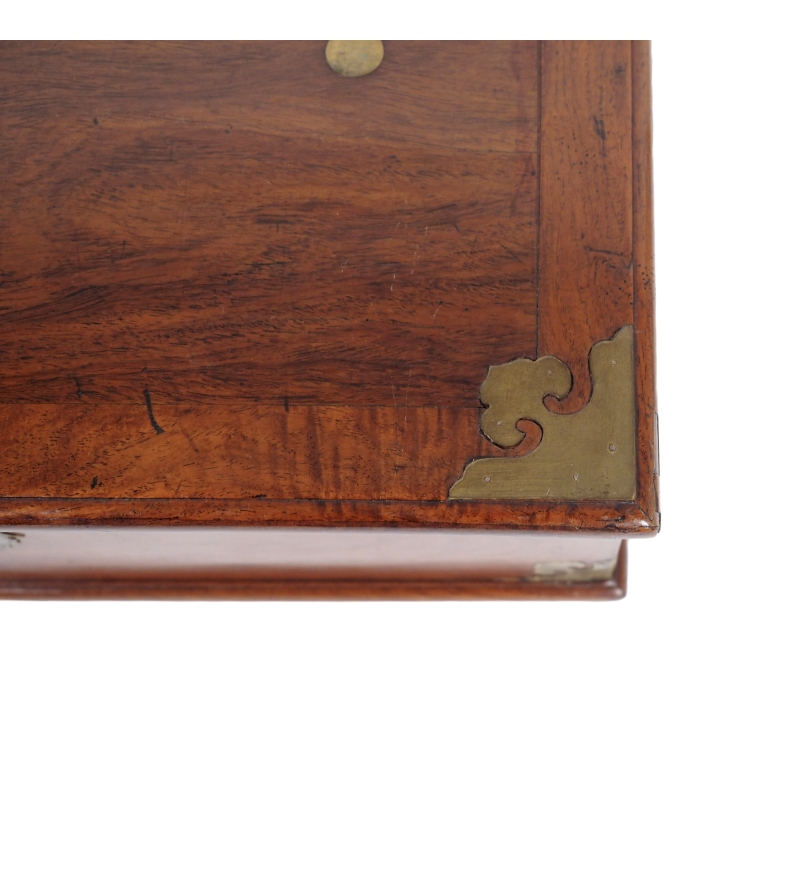
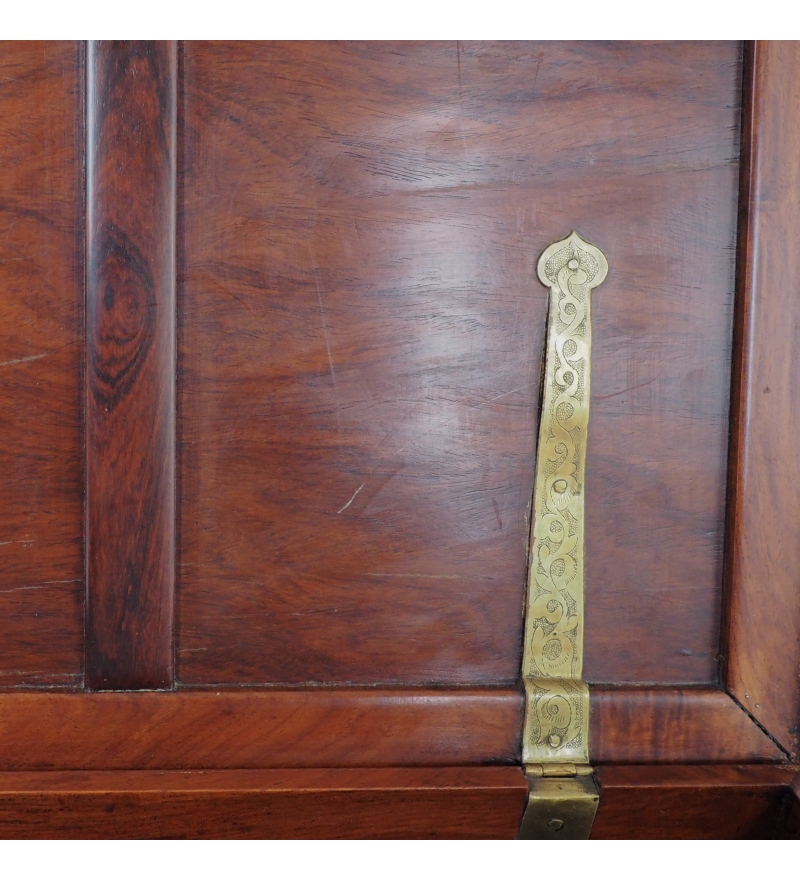
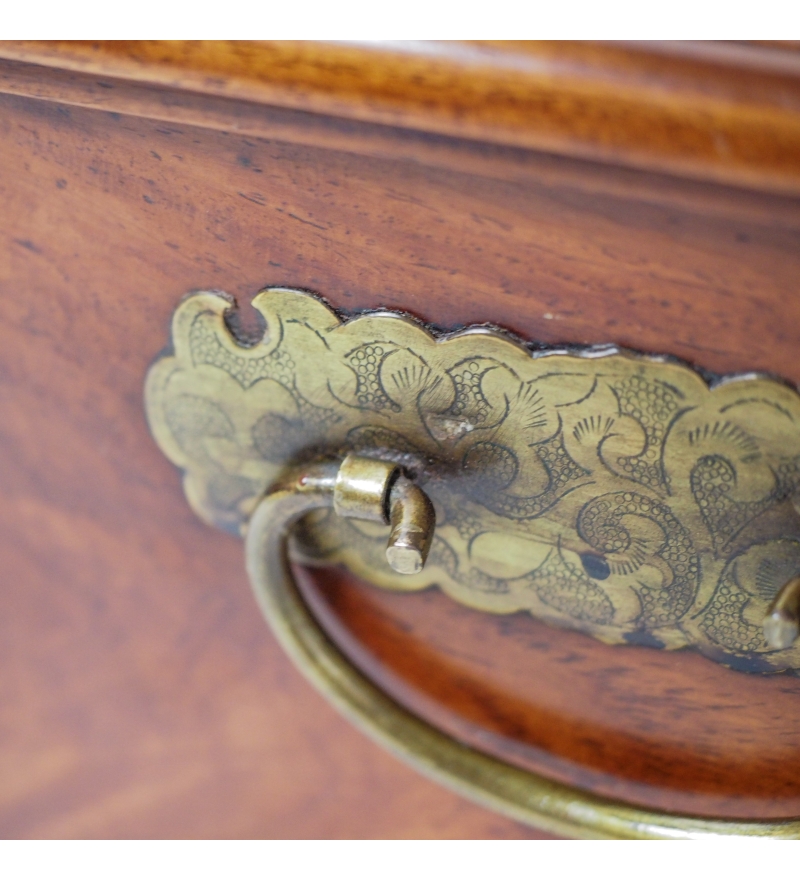
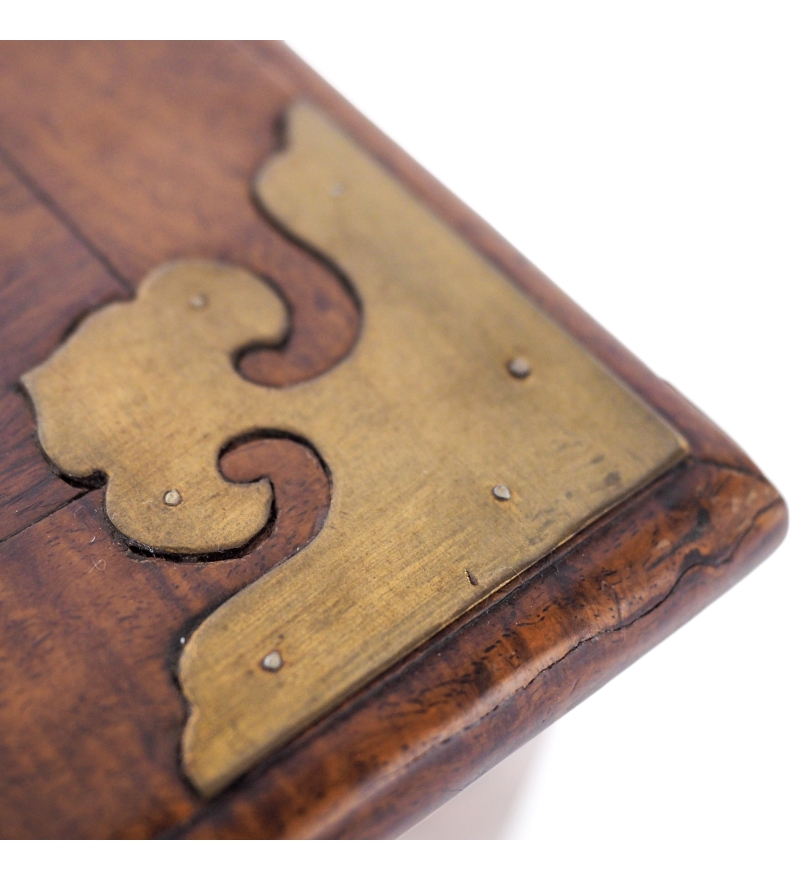
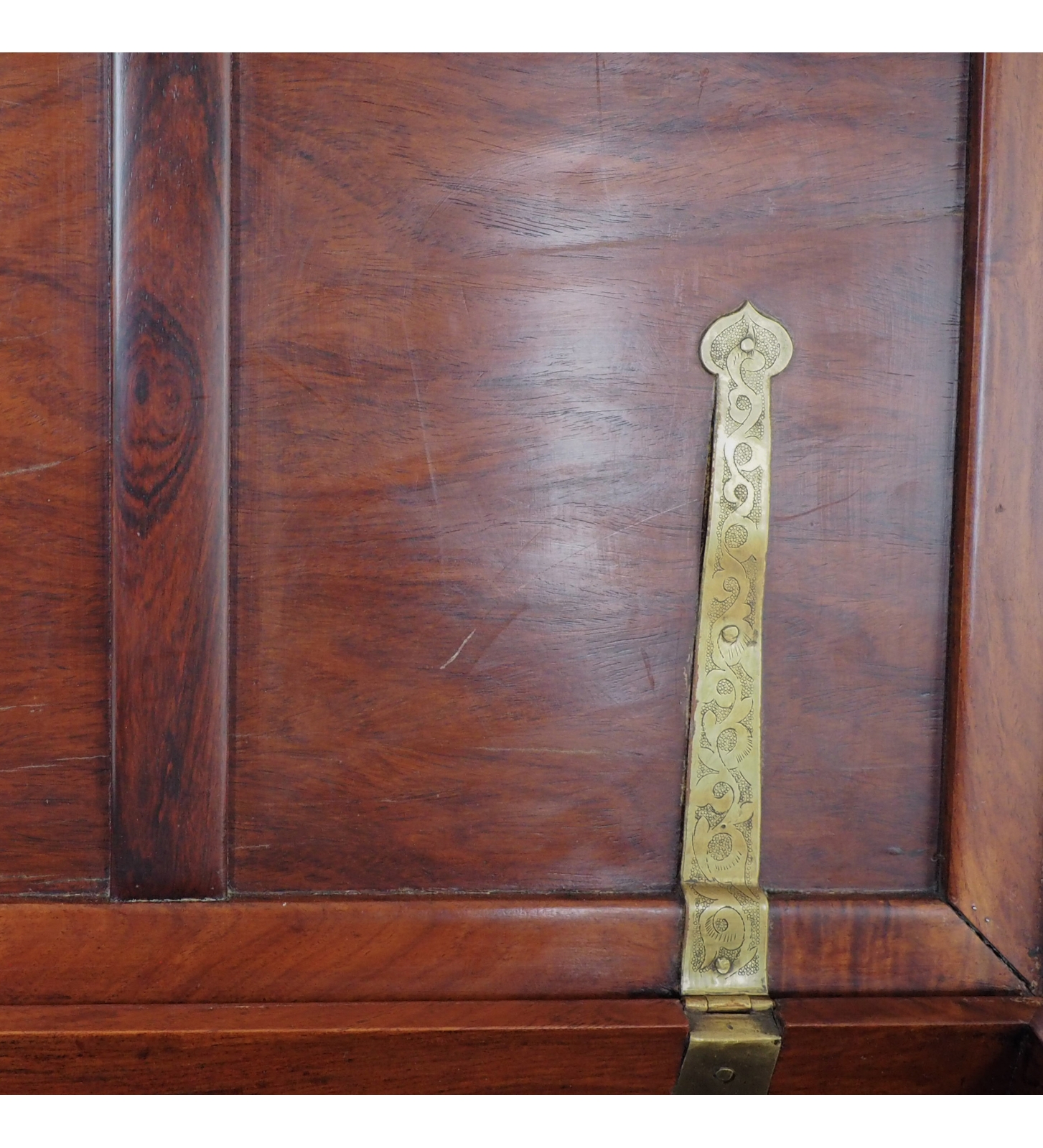
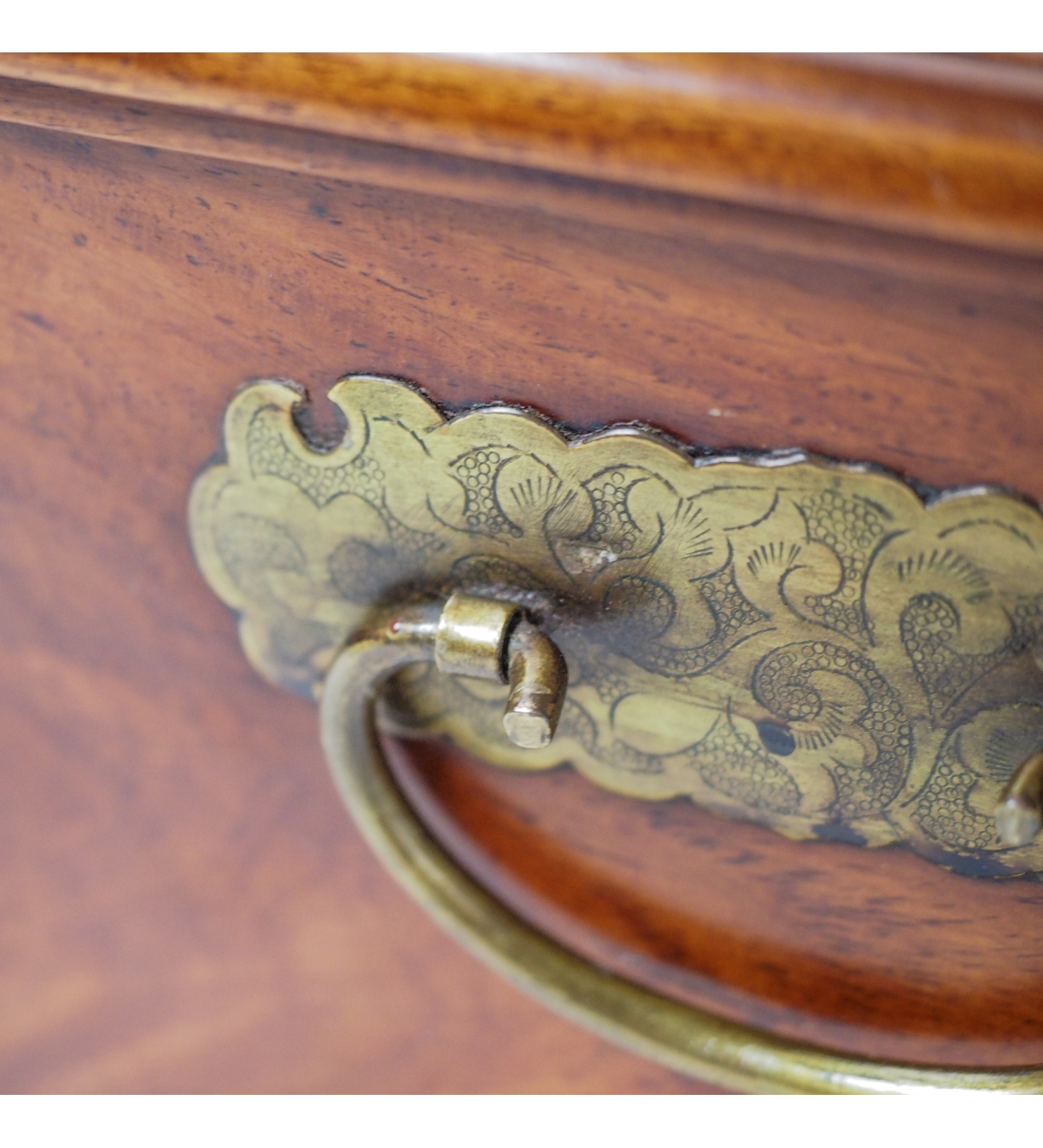
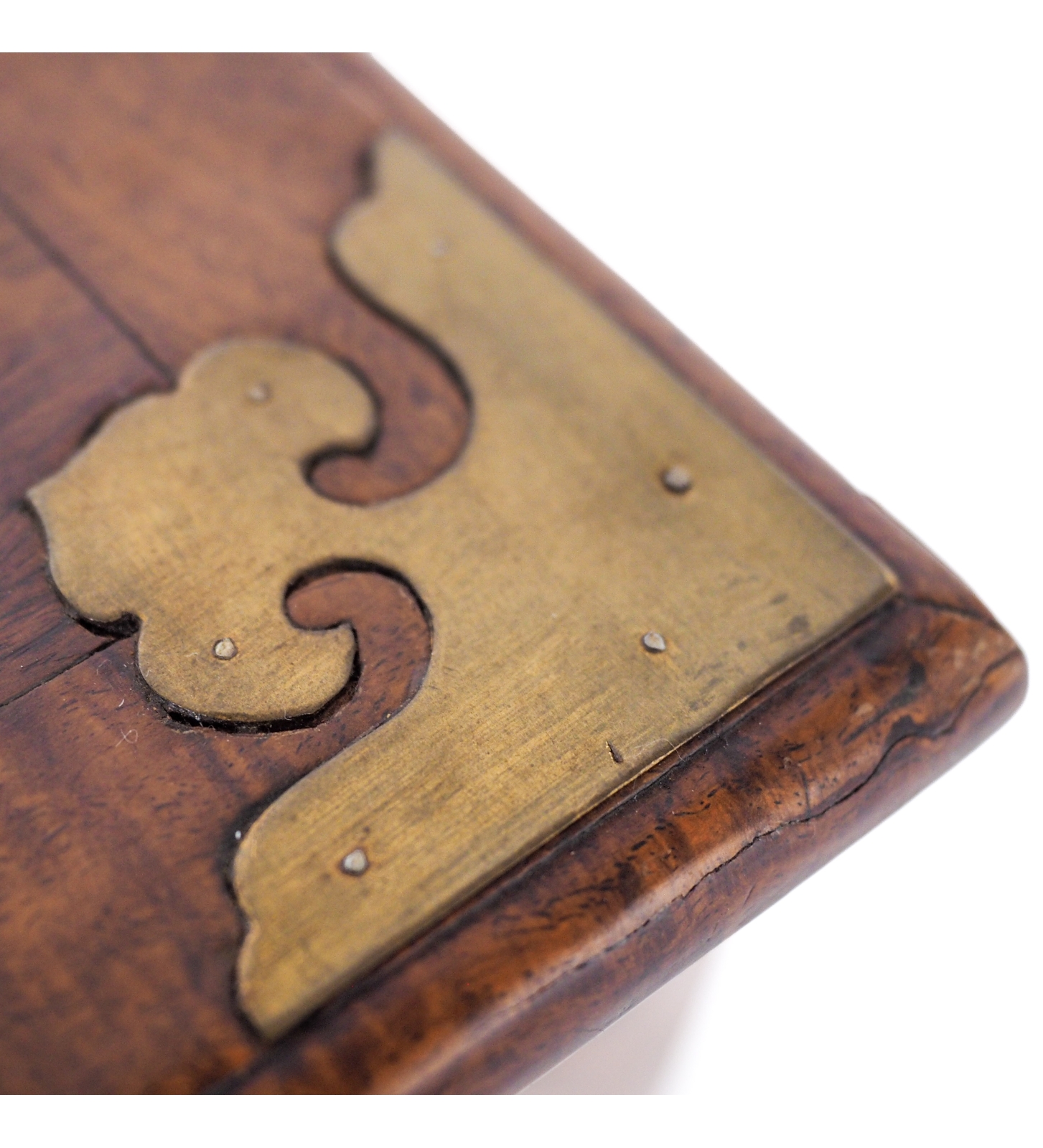
This rare Chinese document box is finely crafted from Huanghuali (黄花梨) (Dalbergia odorifera), one of the most precious hardwoods in Chinese furniture making. The square box is mounted with engraved gilt-metal corner fittings in the shape of a ruyi, handles, hinge straps, and an elaborate lock plate. The brass is finely incised with floral and pearl motifs. The word ruyi itself comes from the two characters rú (如) and yì (意), and together they literally mean “as you wish.” On the first glaze it looks like the Lingzhi (fungi) symbol, but it has another meaning. The symbol depicts the upper rounded part of the ruyi scepter: a Chinese ceremonial attribute and a sign of authority. According to superstition, the ruyi brings its owner good luck, blessings, and a long life.
The form closely follows that of the portable writing and document boxes used by officials and merchants of the Dutch East India Company (VOC) throughout Batavia, Ceylon, and other Dutch trading settlements. Such boxes were essential for storing correspondence, contracts, and account books, as VOC officials were required to produce multiple handwritten copies of reports concerning trade, diplomacy, and local affairs. Although Dutch in design, this example was almost certainly made in China, combining European functionality with the craftsmanship and luxurious materials of Chinese cabinetmakers.
Founded in 1602, the VOC sought with limited succes direct trade with China. Because of Chinese trade restrictions and the loss of Formosa in 1662, they had to rely on Chinese merchants rather than trading freely in China itself. Through Batavia and later Canton, the Company commissioned luxury export goods from Chinese workshops via junk trade, including a small number of huanghuali document boxes made in the Dutch colonial style for highly places senior VOC officials and merchants. It was not until the early 18th century that the Dutch were allowed to travel directly to Canton.
Huanghuali, that literally means “yellow flowering pear wood,” was reserved for the finest furniture produced for the Chinese imperial court, wealthy merchants, and the scholarly elite. Native of the Hainan Island, the wood is known to grow extremely slow but with very much character. Its rich golden-brown colour, fragrant oils (protects from humidity), and striking grain made it one of the most sought-after woods of the Ming and early Qing periods. Sometimes the wood displays the celebrated “ghost face” figure (a face pattern that is sometimes seen in this type of wood). By the late 18th century, supplies had already become scarce, contributing to its enduring rarity and value. Nowadays, new huanghuali wood of Hainan is so scares that is has been placed under State protection to prevent possible extinction. Some sources mention that there are fewer than 10,000 pieces of huanghuali furniture made during the Ming (1368-1662) and Qing (1662-1912) Dynasties, of which a high percentage is currently in museum collections.
This box illustrates the interesting commercial exchange and quality production between China and the west during the great age of maritime trade.
Reference:
-Christie's 13th May 2011, Live Auction 6162 'Chinese ceramics , works of art and textile', lot nr. 1103.
-Liangyi Museum Hong Kong, Object. nr. LYMF-230 ; LYMF-331.
-Bonhams London 9th November 2017 'Fine Chinese Art ', lot nr. 114. (The Property of a Gentleman)
-Shoteby's 3th November 2021, Auction L21212 'Important Chinese Art', lot nr. 189 and 193. (Property from the Elvina and Gerard Hawthorn Collection)
Source: Zhong Pingyuan, Tapei Times 2011
Qiao Hao, 2013
M. Backman
A Rare Chinese Kangxi period (1662-1722) crafted Huanghuali document box for the Dutch colonial market, 17th-18th century, around 1680-1720, Fujian or Canton, South-China.
Dimensions: 56x38x16 cm.
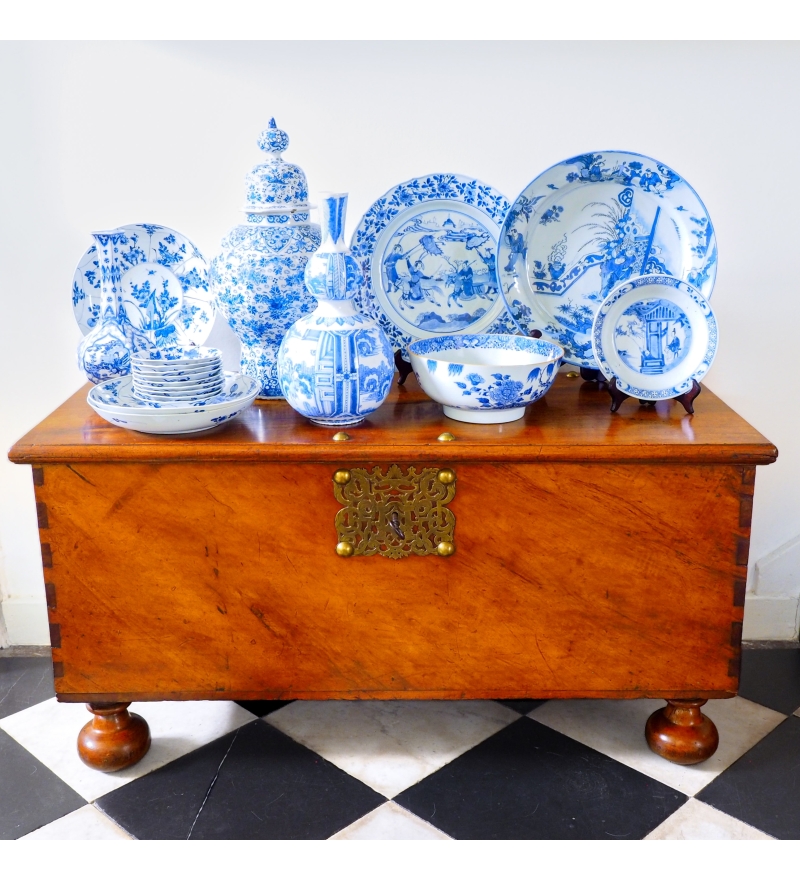
A Dutch colonial chest made out of tropical hardwood, 18th century, around 1700-1750, Indonesian archipel.
Dimensions: 49x119x61 cm.
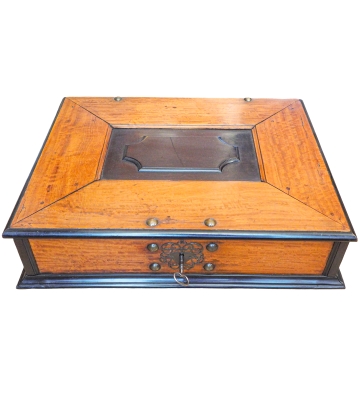
A very large Dutch colonial writing box on ball feet made out of teak and ebony wood finished with fine bronze mounts, 18th century, around 1750, Batavia (Jakarta), Indonesia.
Dimensions: 19x62x50 cm.
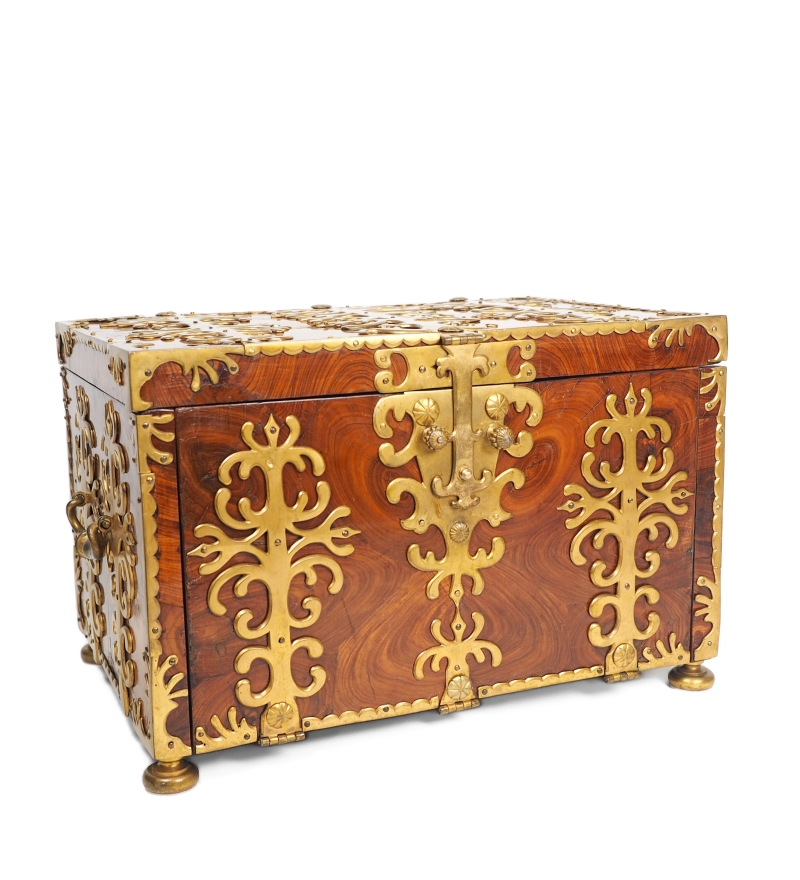
A Kingswood oyster veneered William & Mary period (1689–1702) 'coffre fort' or strongbox on bun feet and richly mounted with gilt-brass strapwork, 17th century, around 1690-1700, England, London.
Dimensions: 49,5x33x33 cm.
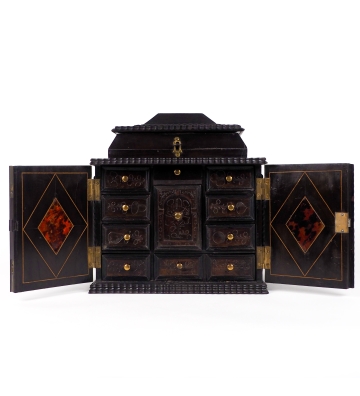
A Flemish table art cabinet made out of ebony wood and inlayed with red tortoiseshell, 17th century, around 1650, Antwerp, Southern Netherlands.
Dimensions: 36 x 22 x 34 cm.
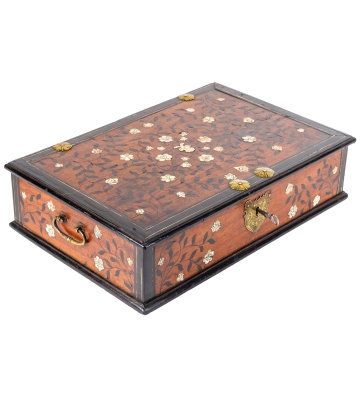
An exotic (Anglo-)Indian work box made of teak and ebony with bone inlaid floral motifs, 18th century, around 1700-1750, Vizagapatam, India.
Dimensions: 32,5 x 47,5 x 12 cm.
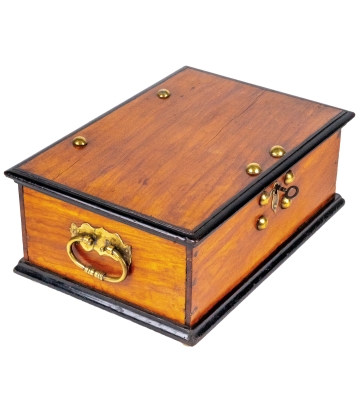
A Dutch padouk wood colonial document box with brass mounts, feet and handles, finished with ebonized edges, 18th century, around 1750, Batavia (Jakarta), Indonesia.
Dimensions: 24 x 35 x 15 cm.
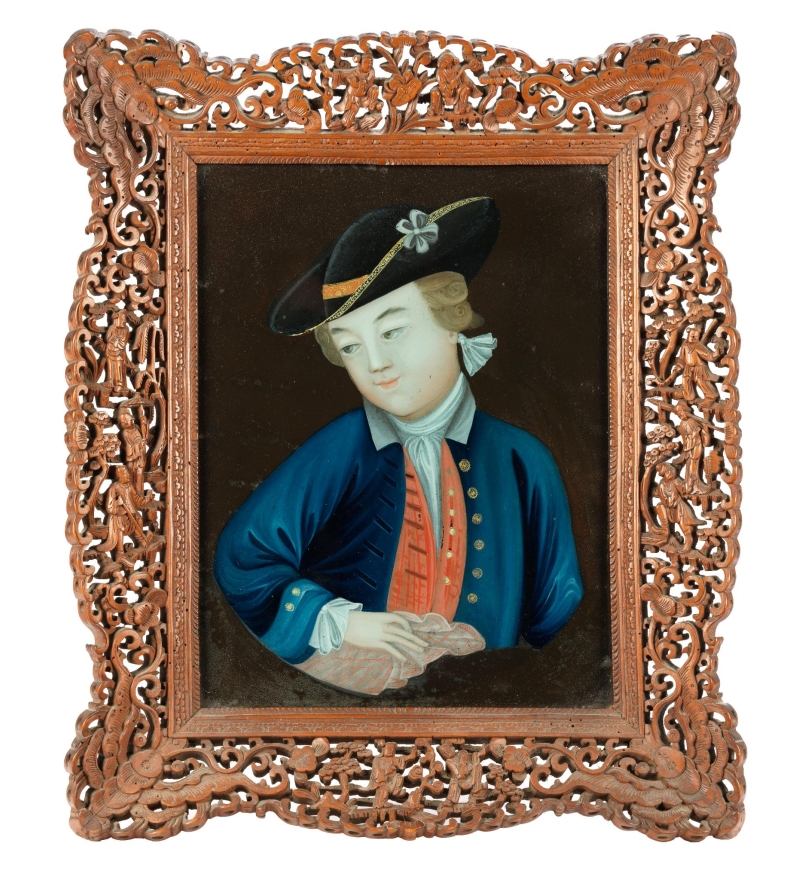
A fine Chinese reverse glass export portrait painting of an European nobleman or merchant in a Chinese carved wooden frame , around 1780, Canton, China.
Dimensions: around 50 x 40 cm. with frame.