Reference: 10092
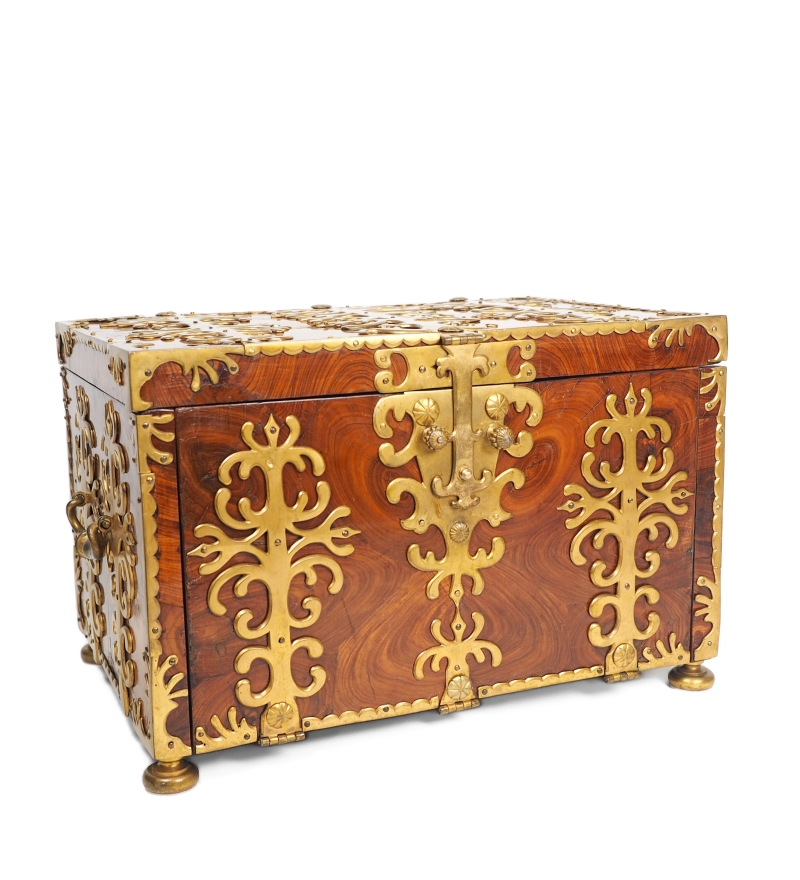
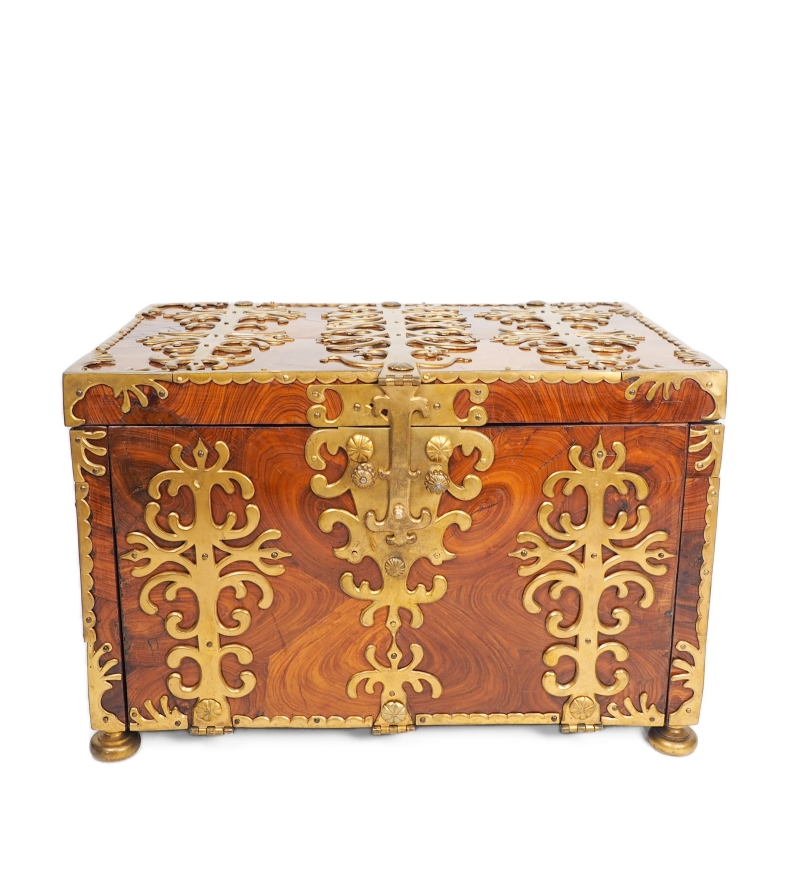
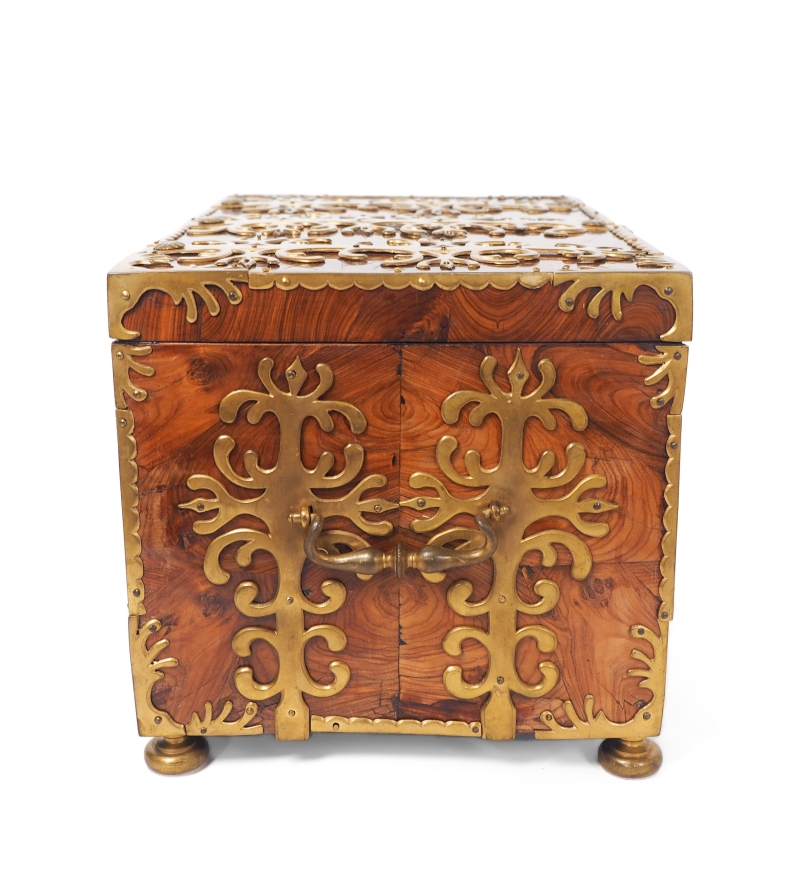
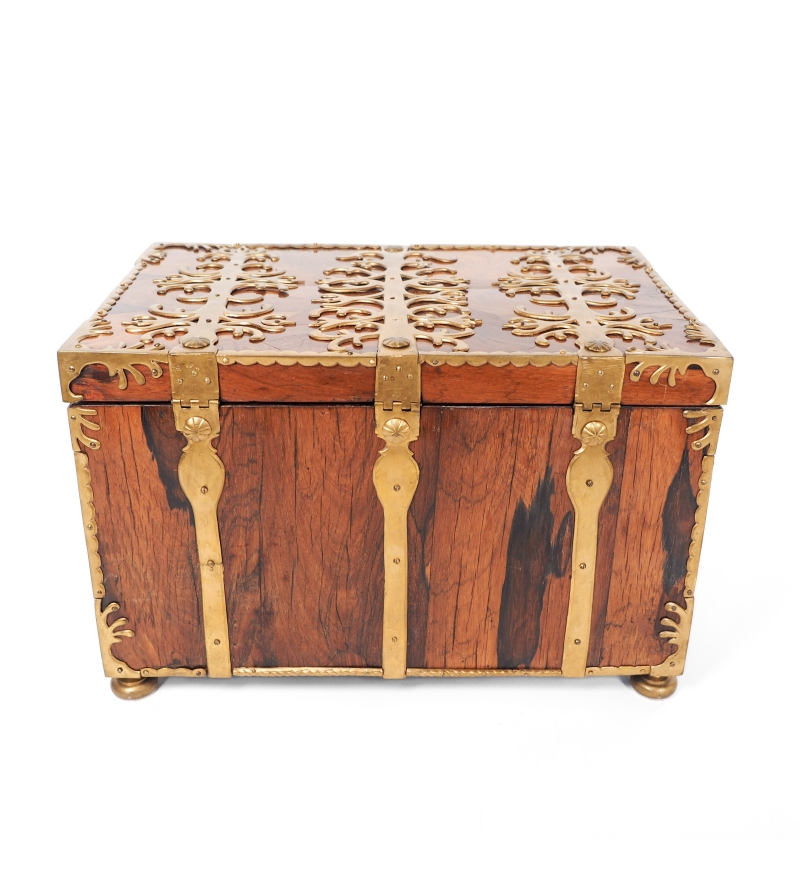
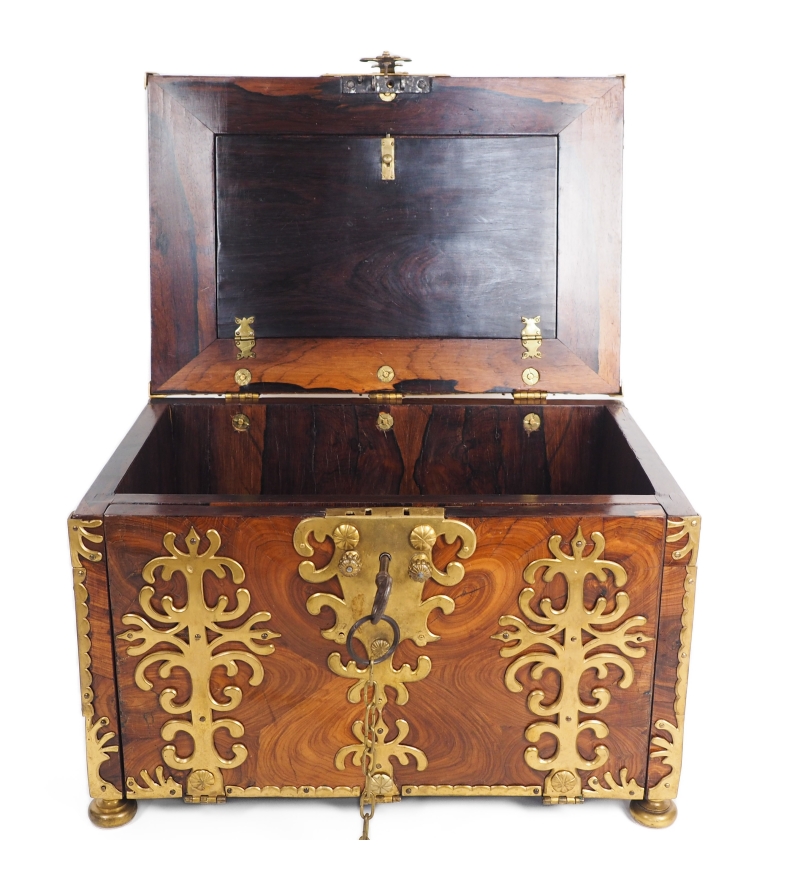
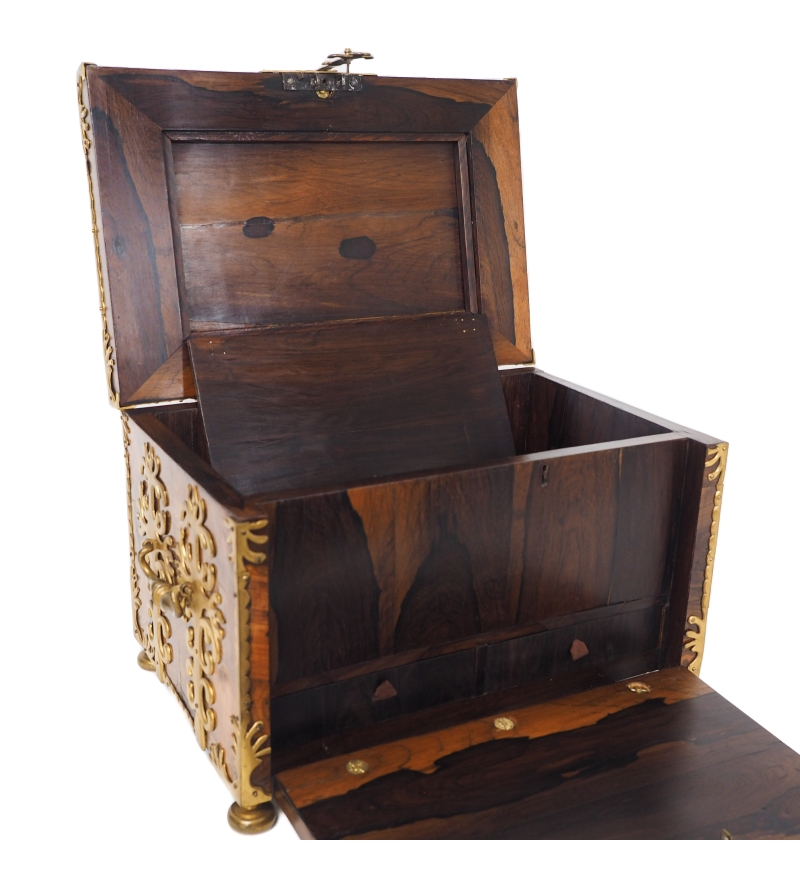
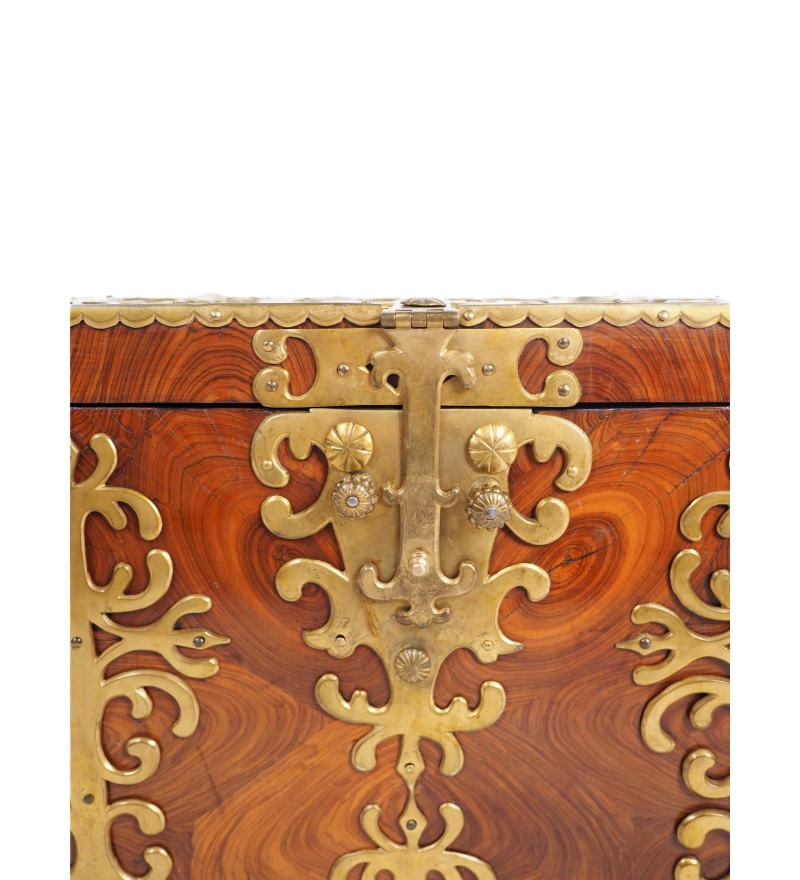
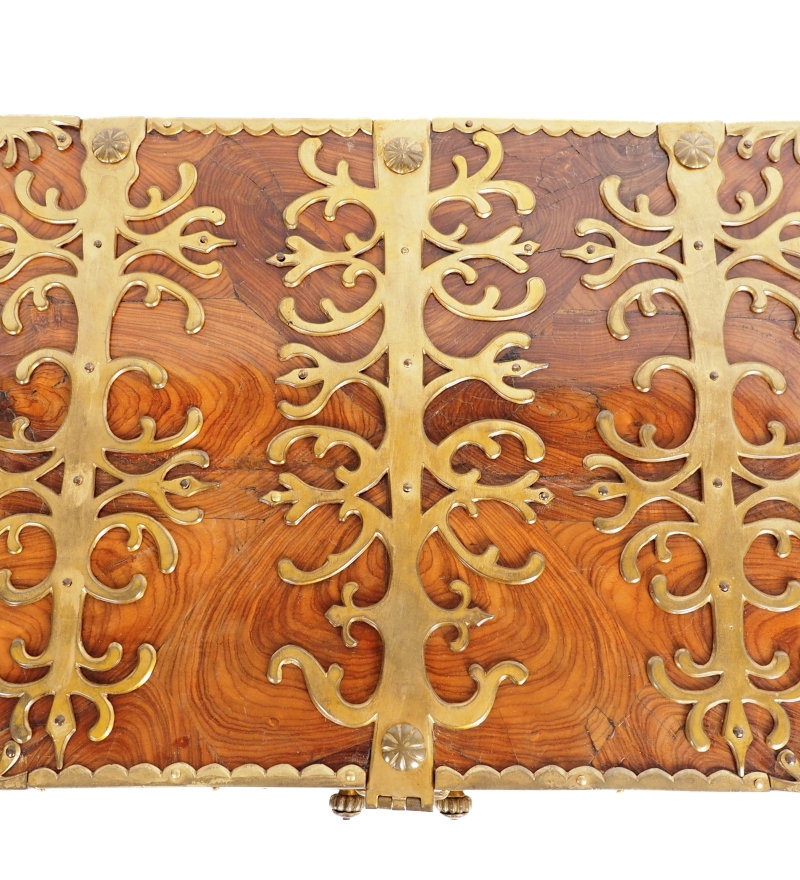
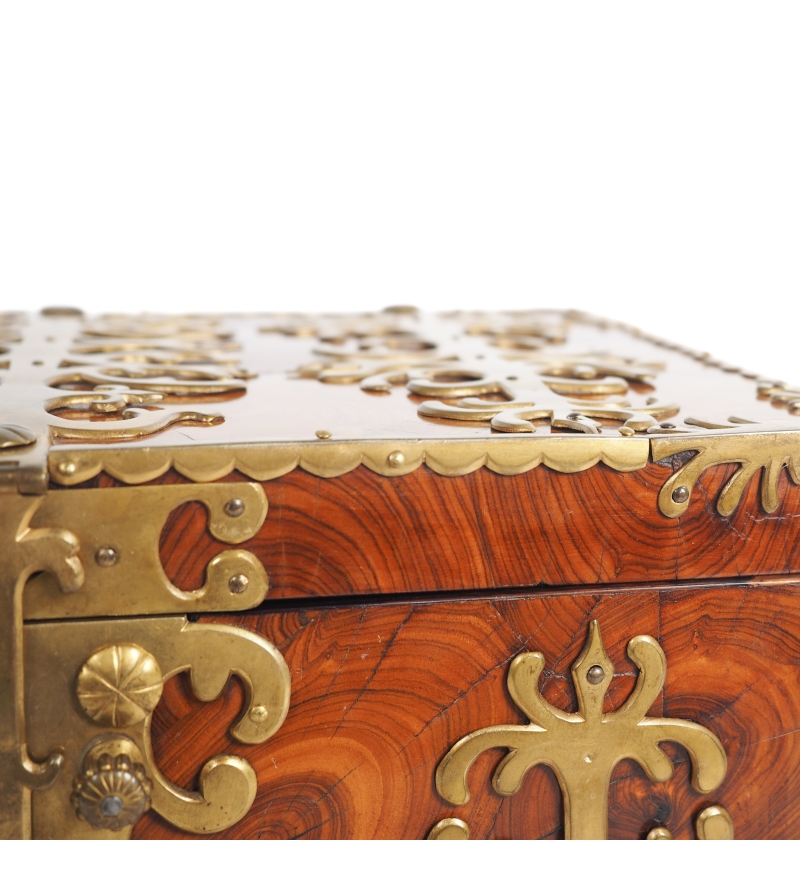
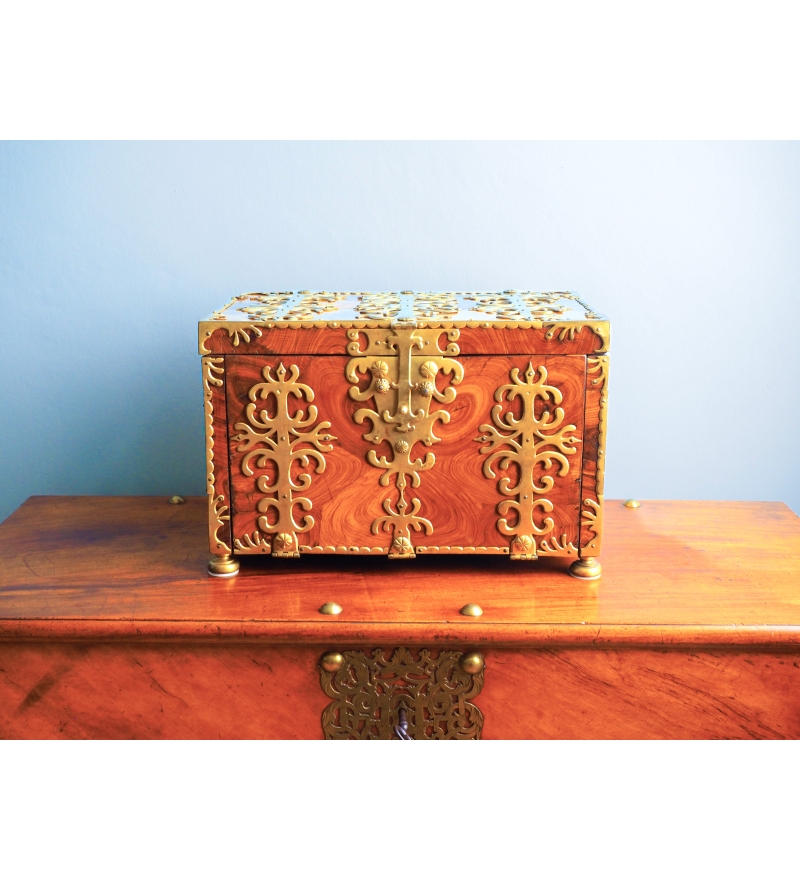
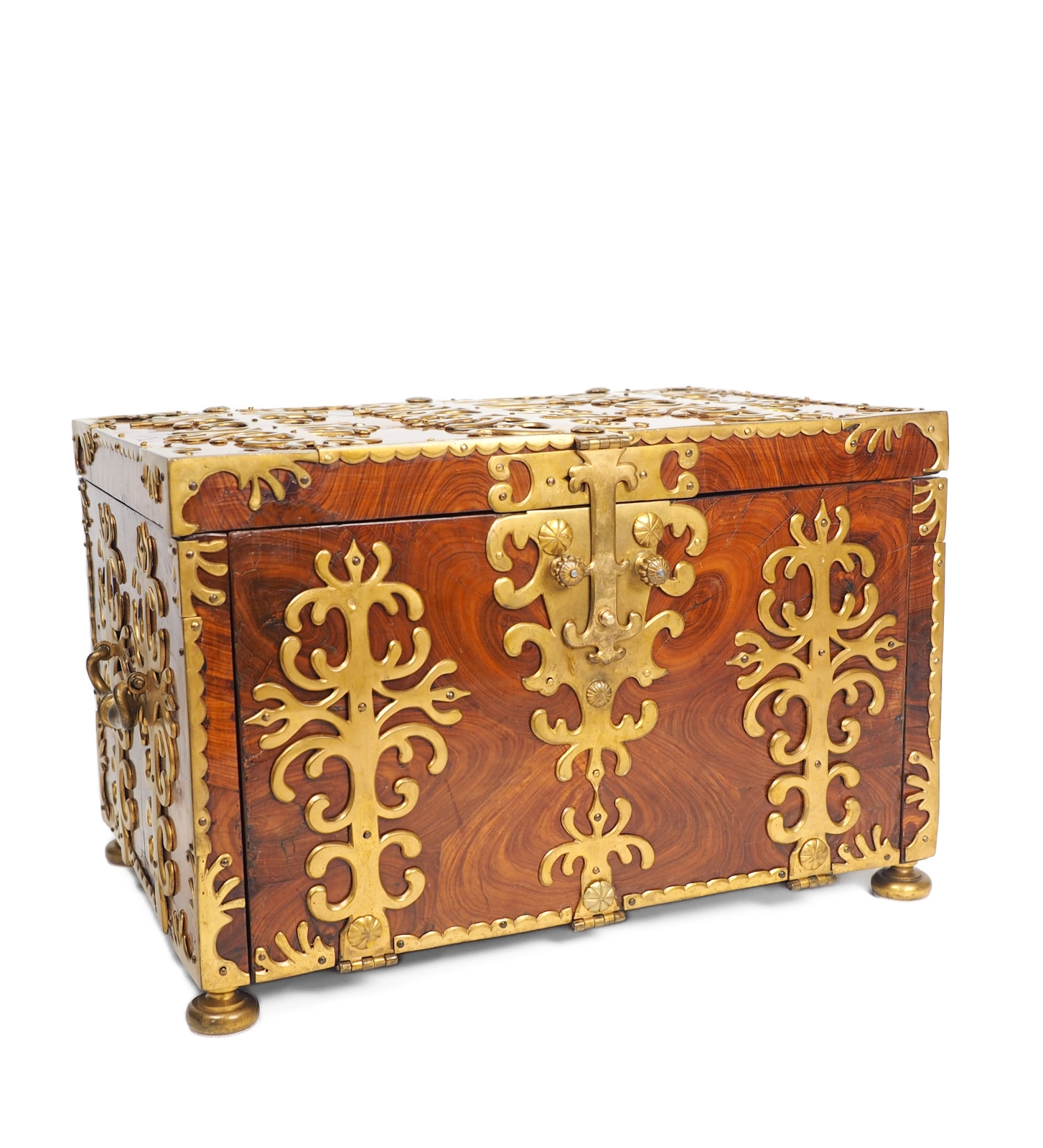
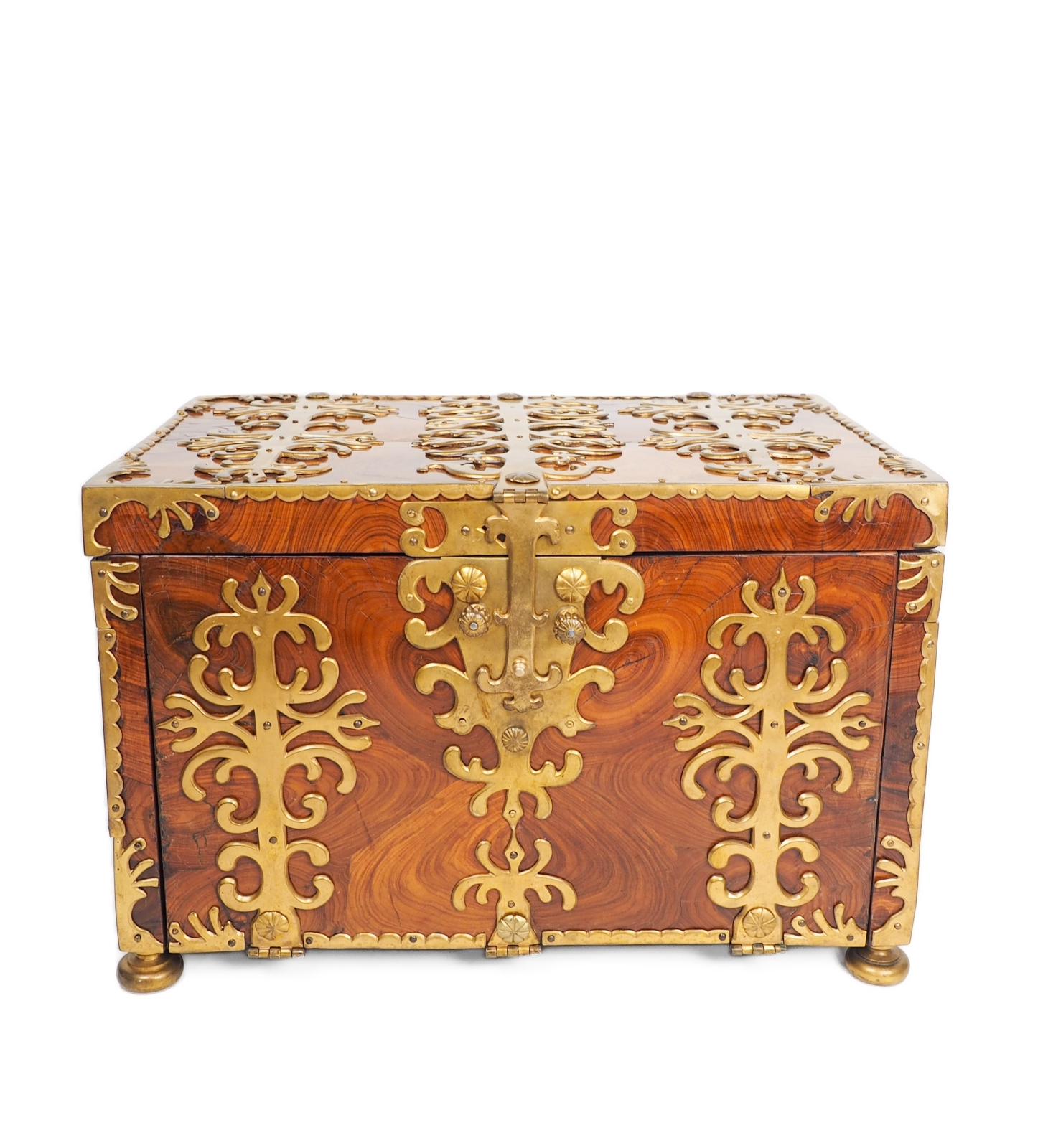
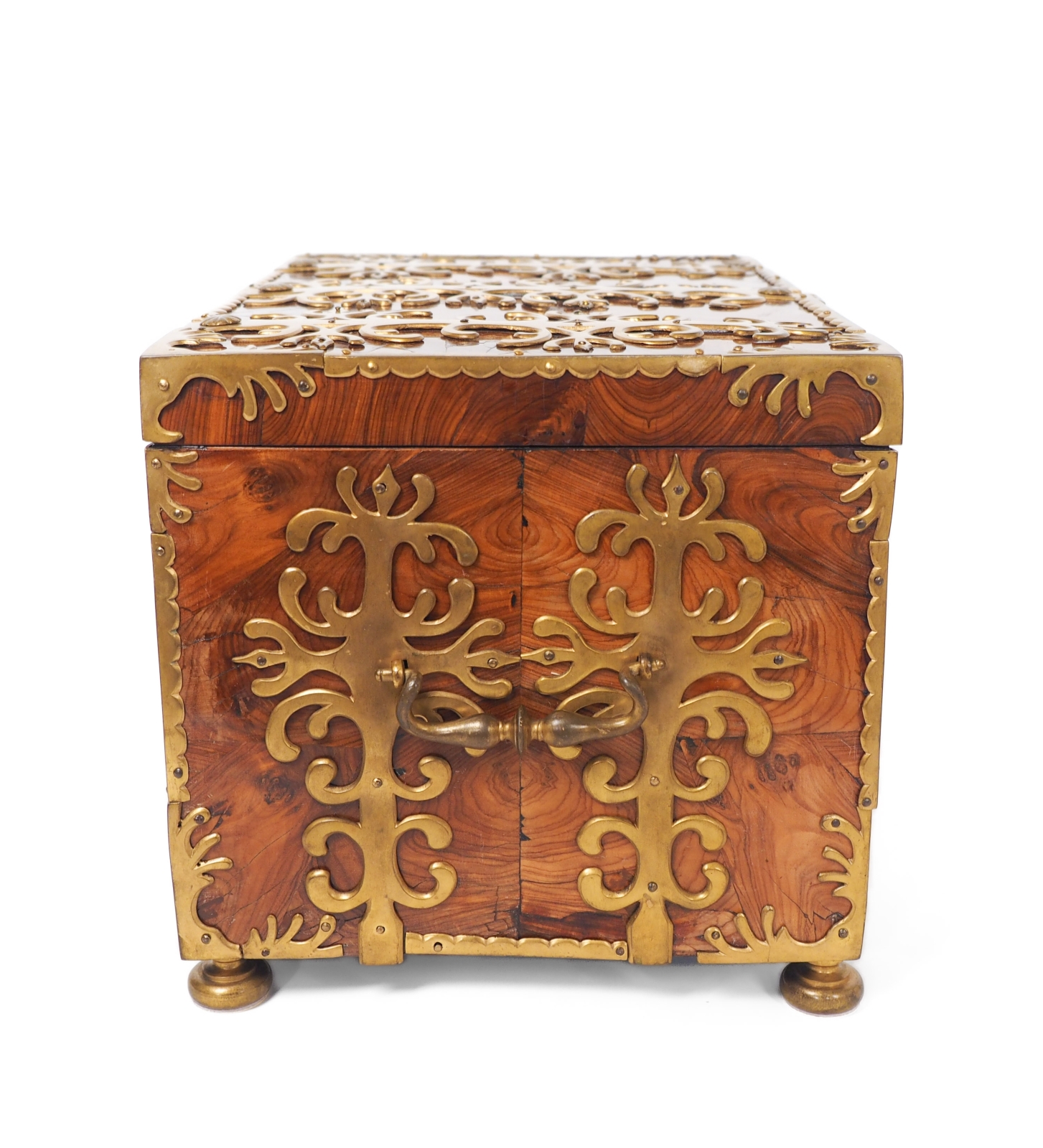
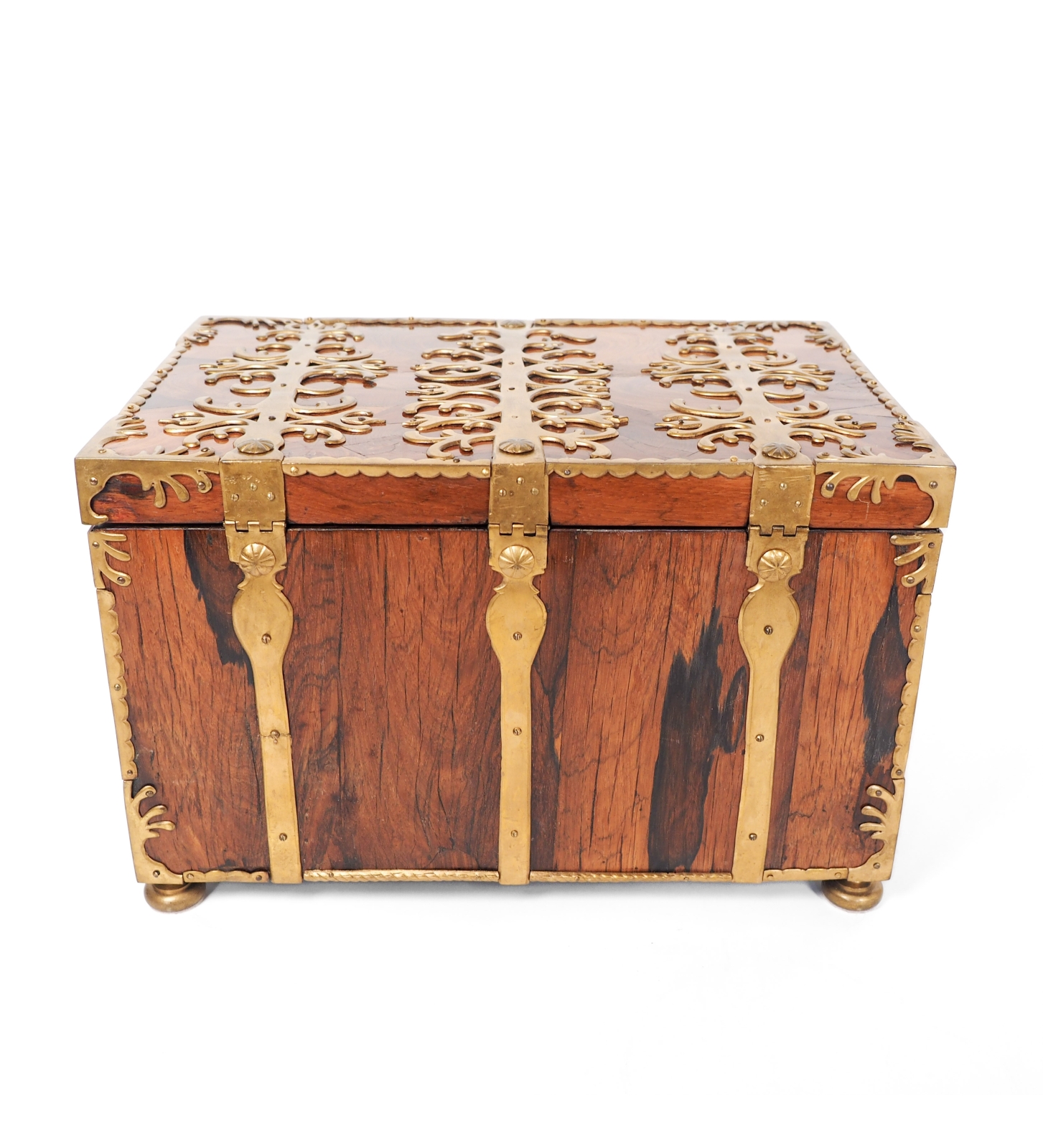
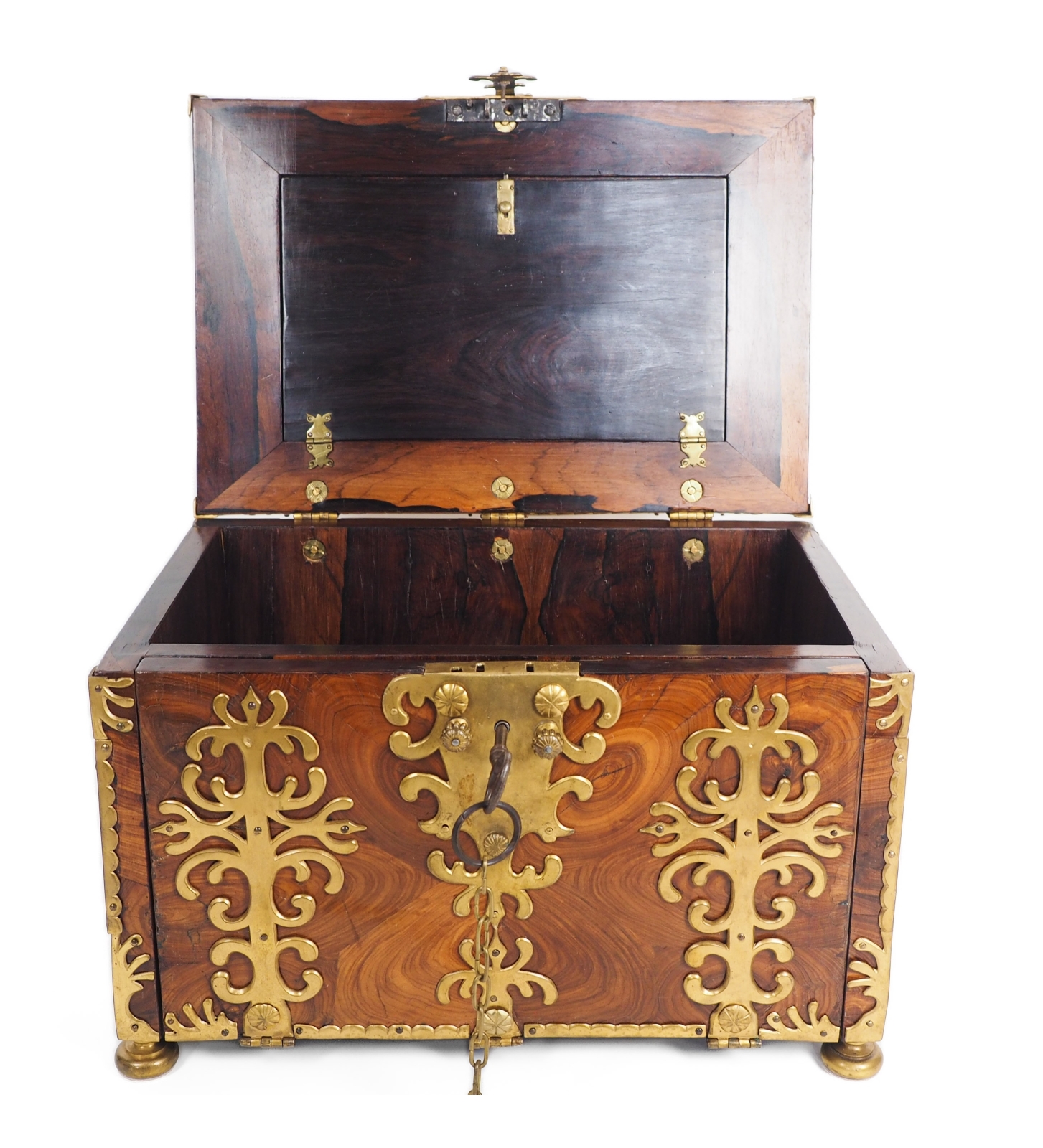
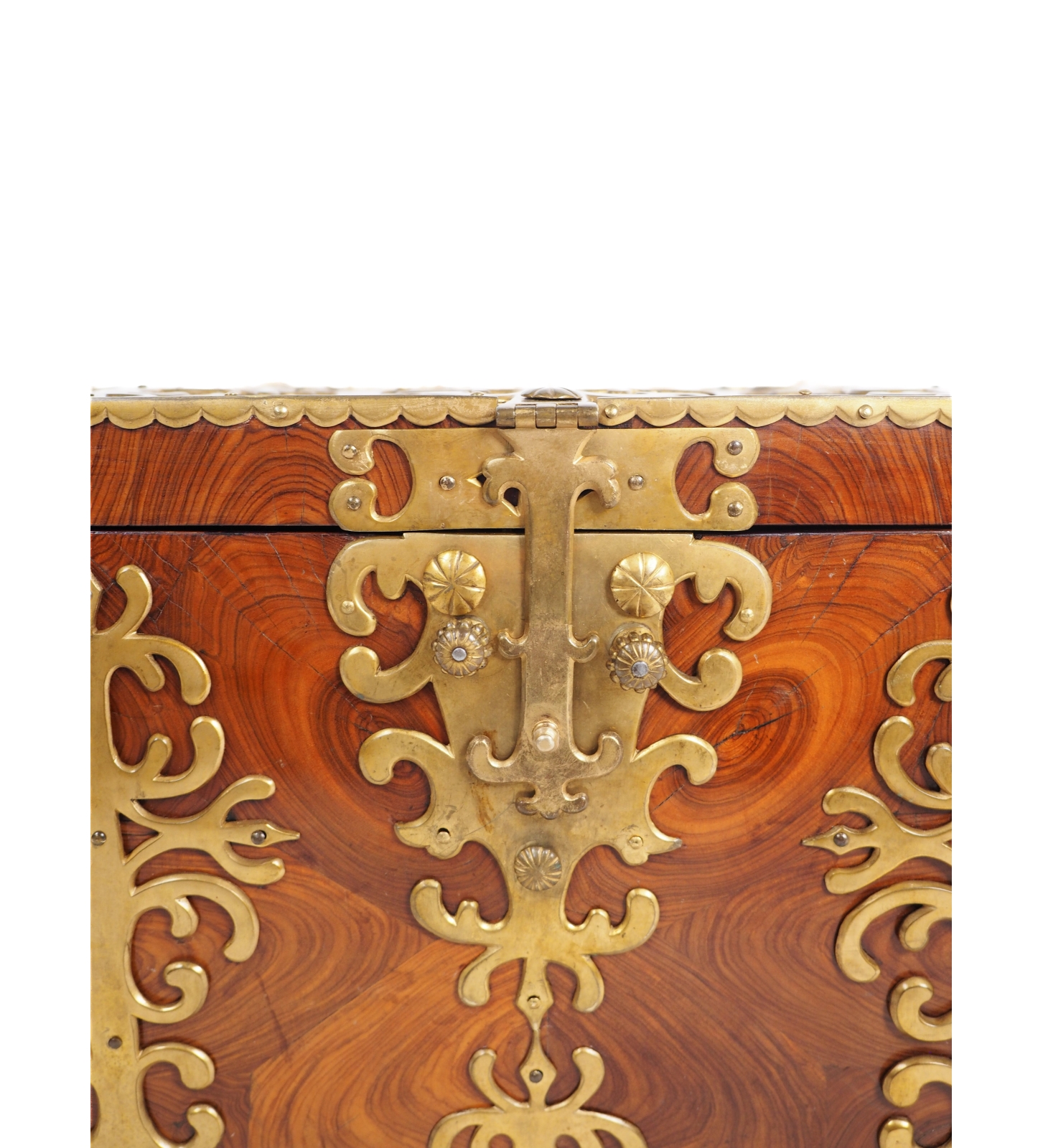
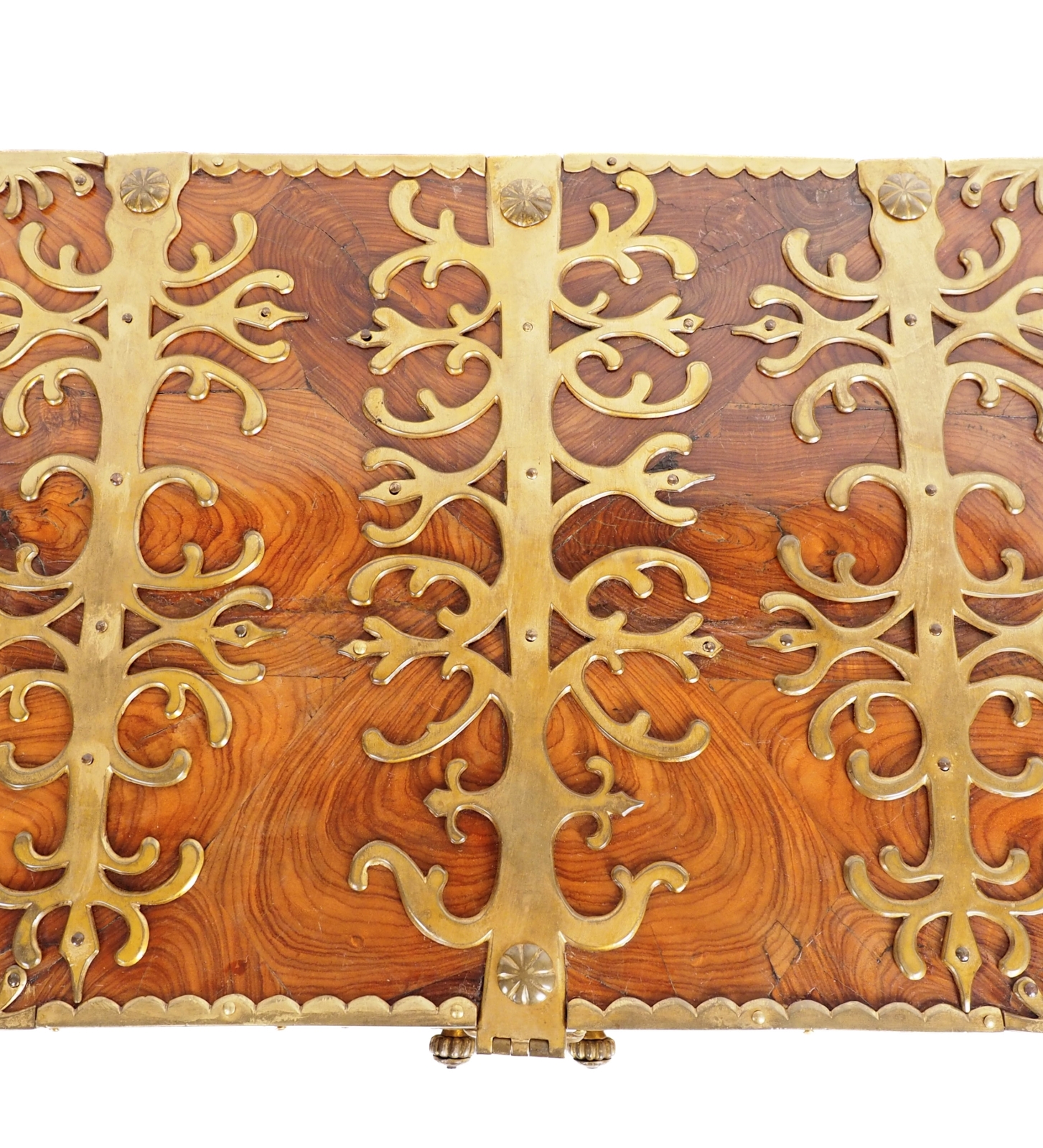
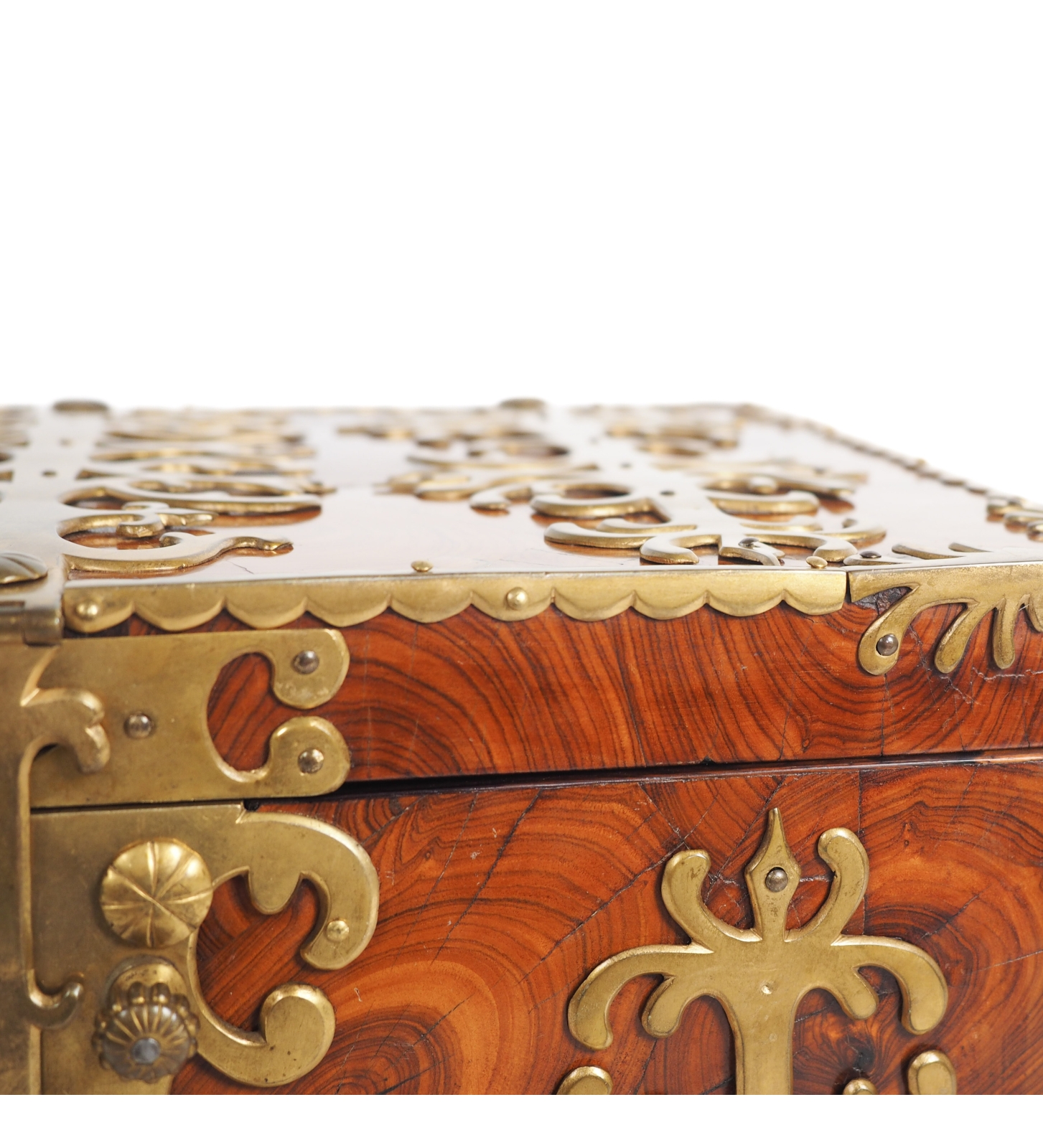
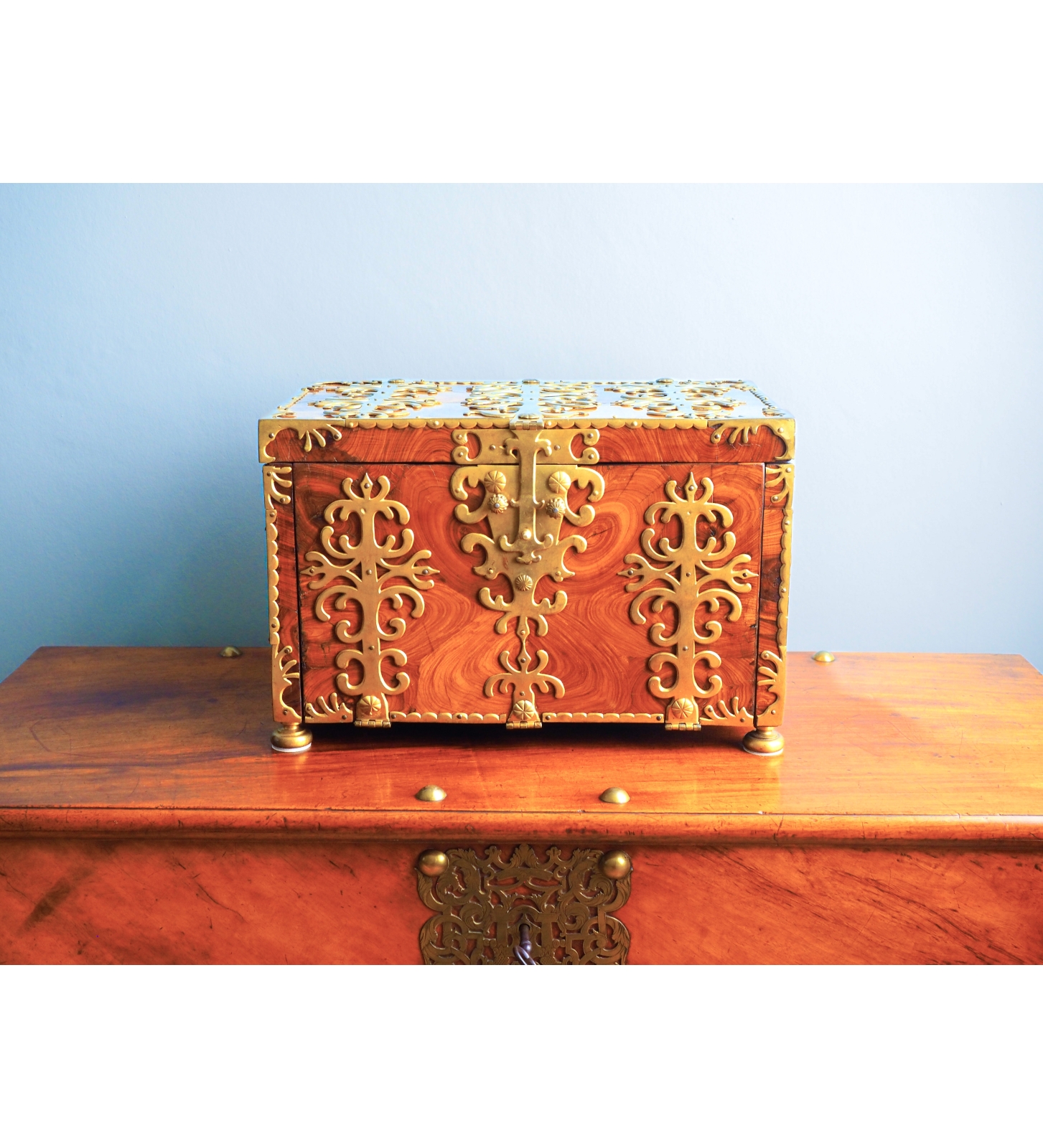
A Kingswood oyster veneered William & Mary period (1689–1702) 'coffre fort' or strongbox on bun feet and richly mounted with gilt-brass strapwork, 17th century, around 1690-1700, England, London.
Dimensions: 49,5x33x33 cm.
 Secure payment
100% secure payment
 Worldwide shipping
Fast delivery
 Free shipping in EU
On all orders
 Professional packaging
Professional order packaging
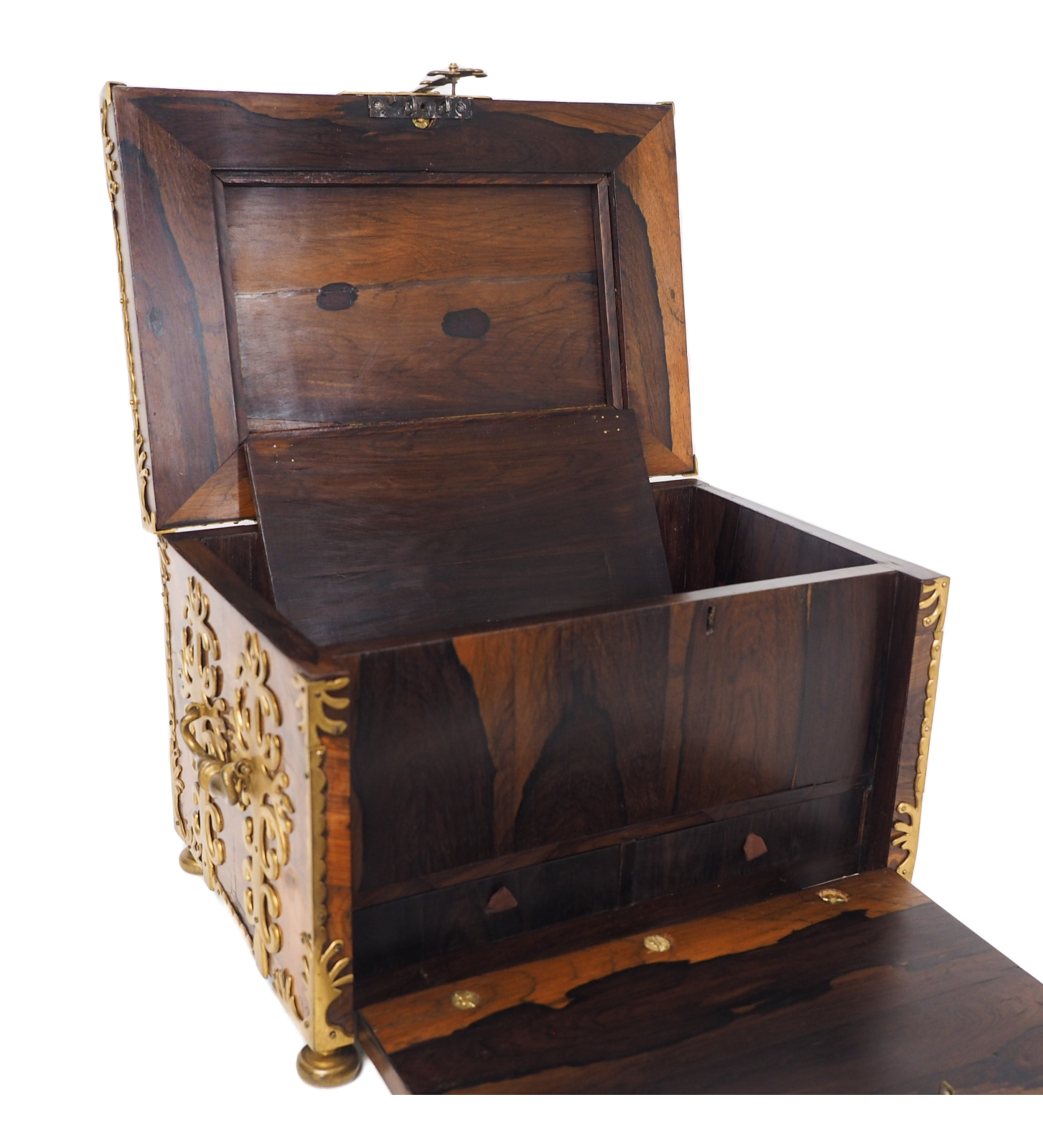
An exceptional William and Mary period 'coffre fort' or strongbox, veneered in finely cut kingwood oyster and richly mounted with gilt-brass strapwork. The carcass is lined with rosewood (palisander) and fitted with drawers and concealed compartments for security. A substantial lock and concealed iron threaded rods or bolts housed within the sides allowed the box to be securely fastened to the floor of a house, coach, or, when required, aboard a ship, safeguarding valuables during both travel and domestic use.
These boxes are typically produced during the late 17th to early 18th century. Luxurious strongboxes were among the most prestigious forms of security furniture. Designed to protect money, jewelry, important documents, and other valuables. They also served as status symbols, reflecting the wealth and taste of their owners through the use of costly imported tropical hardwoods and elaborate gilt-brass mounts.
This type is traditionally associated with William and Mary England (1685-1702) and reflects the close relationship between English and Dutch cabinetmaking during the period. Following the accession of the Dutch Stadtholder William III to the English throne in 1689, Dutch craftsmen and design principles exerted a notable influence on English furniture production. One of the leading makers associated with this is Gerrit Jensen (1650-1725). He was a Dutch-born cabinetmaker who established a highly successful workshop in London. Consequently, these strongboxes are sometimes described as Anglo-Dutch in character, although the finest kingwood examples are generally attributed to London workshops.
Their portability and ingenious security features made them suitable for merchants, traveling officials, and members of the wealthy elite. Often they are described as 'Captains chest' that suggest that they were used aboard East India Company vessels. The exclusive maritime use has not been confirmed by remaining documents. They rather functioned as portable safes that could accompany their owners on journeys or remain securely fixed within a residence.
Comparable examples are preserved in the collections of international musea such as the Victoria and Albert Museum, but also in noble houses and collections.
Reference:
Similar examples can be found at for example;
-Victoria & Albert Museum, Accession Number W.10-1951, W.13-1966 and 793:1, 2-1896
-National Trust Collection, Ham House Richmond London, object NT 1139751.1
-National Trust Collection, Hardwick Hall Derbyshire, object NT 1127721
A Kingswood oyster veneered William & Mary period (1689–1702) 'coffre fort' or strongbox on bun feet and richly mounted with gilt-brass strapwork, 17th century, around 1690-1700, England, London.
Dimensions: 49,5x33x33 cm.
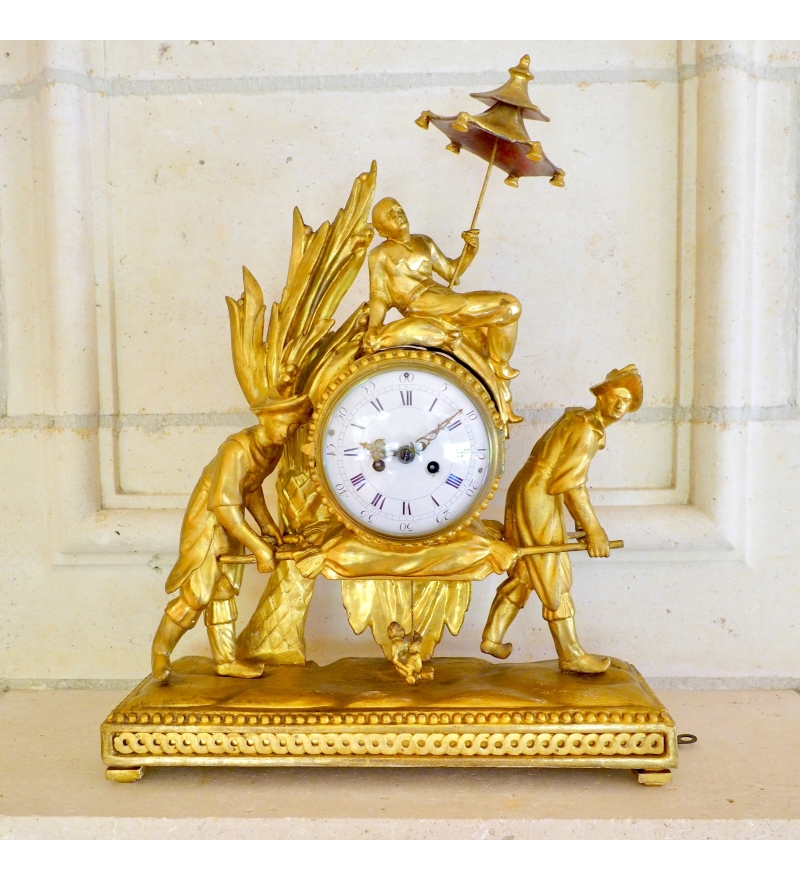
A Carved giltwood Alpine region pendule in Chinoiserie style with three figures carrying a clock, 18th century, around 1780-1800, probably Piedmont, Italy.
Dimensions: 42,5 x 13 x 53 cm
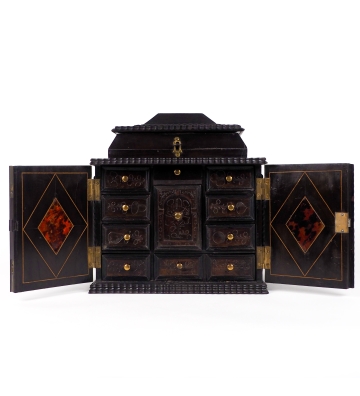
A Flemish table art cabinet made out of ebony wood and inlayed with red tortoiseshell, 17th century, around 1650, Antwerp, Southern Netherlands.
Dimensions: 36 x 22 x 34 cm.
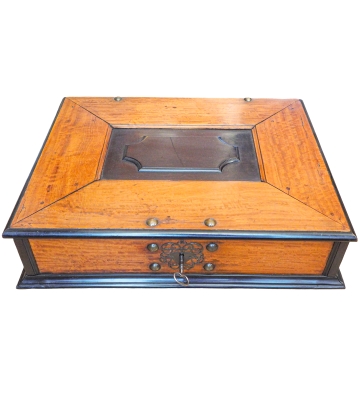
A very large Dutch colonial writing box on ball feet made out of teak and ebony wood finished with fine bronze mounts, 18th century, around 1750, Batavia (Jakarta), Indonesia.
Dimensions: 19x62x50 cm.
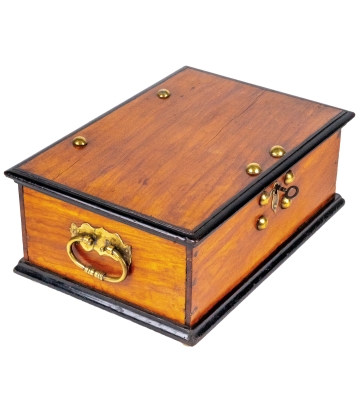
A Dutch padouk wood colonial document box with brass mounts, feet and handles, finished with ebonized edges, 18th century, around 1750, Batavia (Jakarta), Indonesia.
Dimensions: 24 x 35 x 15 cm.
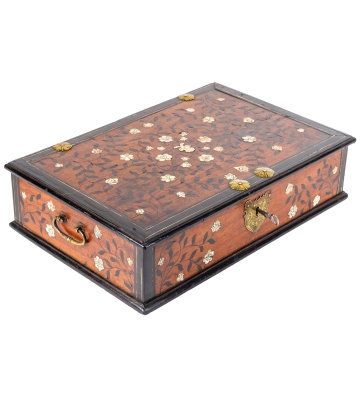
An exotic (Anglo-)Indian work box made of teak and ebony with bone inlaid floral motifs, 18th century, around 1700-1750, Vizagapatam, India.
Dimensions: 32,5 x 47,5 x 12 cm.
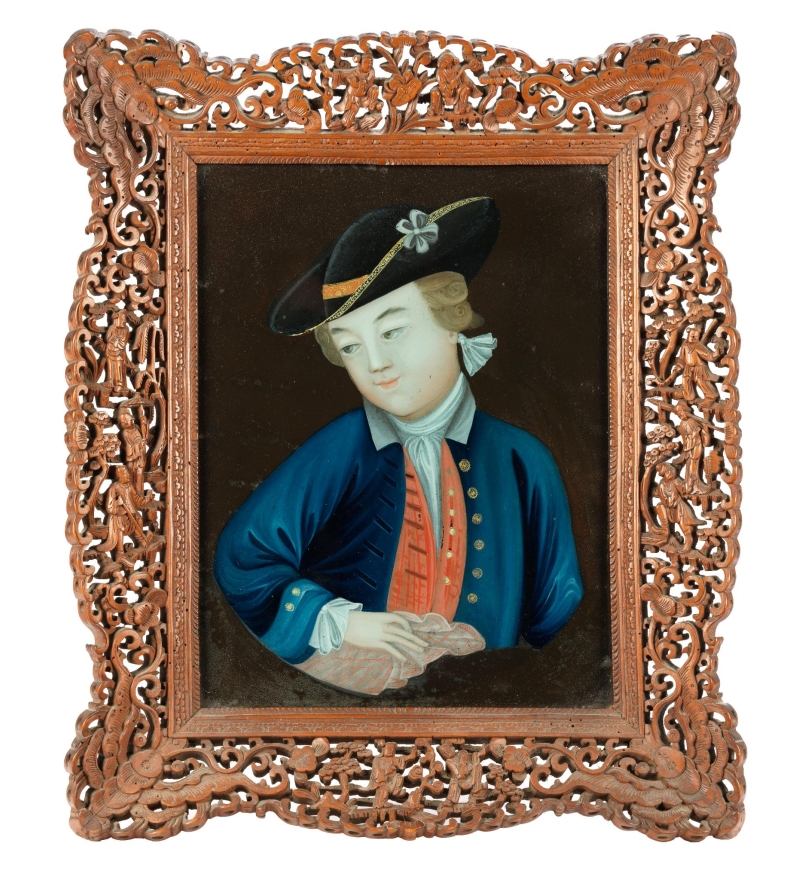
A fine Chinese reverse glass export portrait painting of an European nobleman or merchant in a Chinese carved wooden frame , around 1780, Canton, China.
Dimensions: around 50 x 40 cm. with frame.
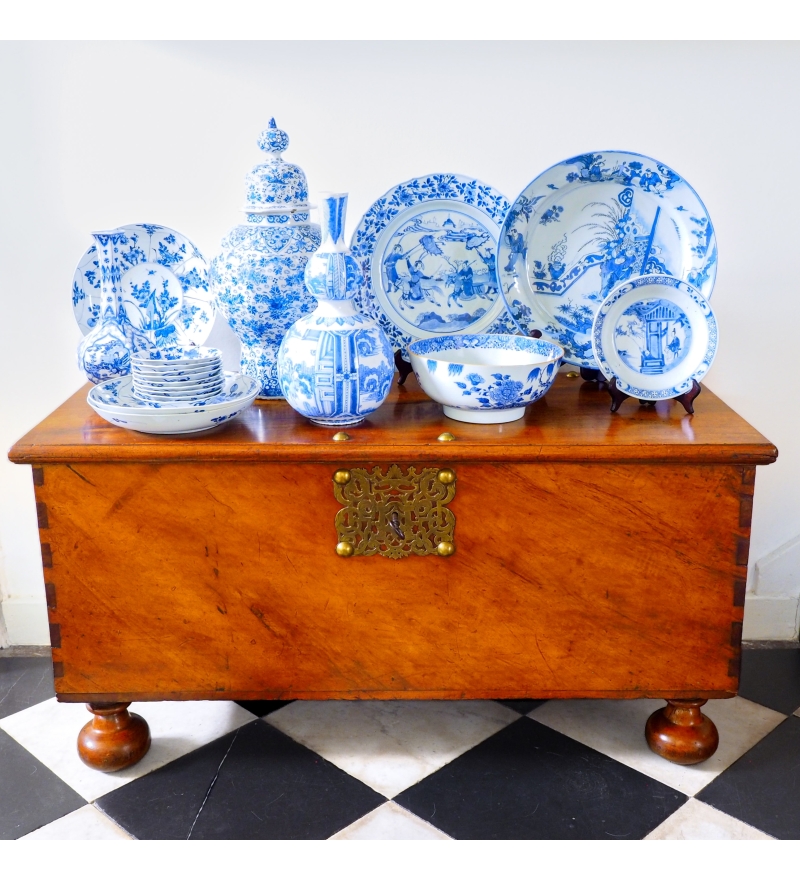
A Dutch colonial chest made out of tropical hardwood, 18th century, around 1700-1750, Indonesian archipel.
Dimensions: 49x119x61 cm.