- Out-of-Stock
Reference: 10102
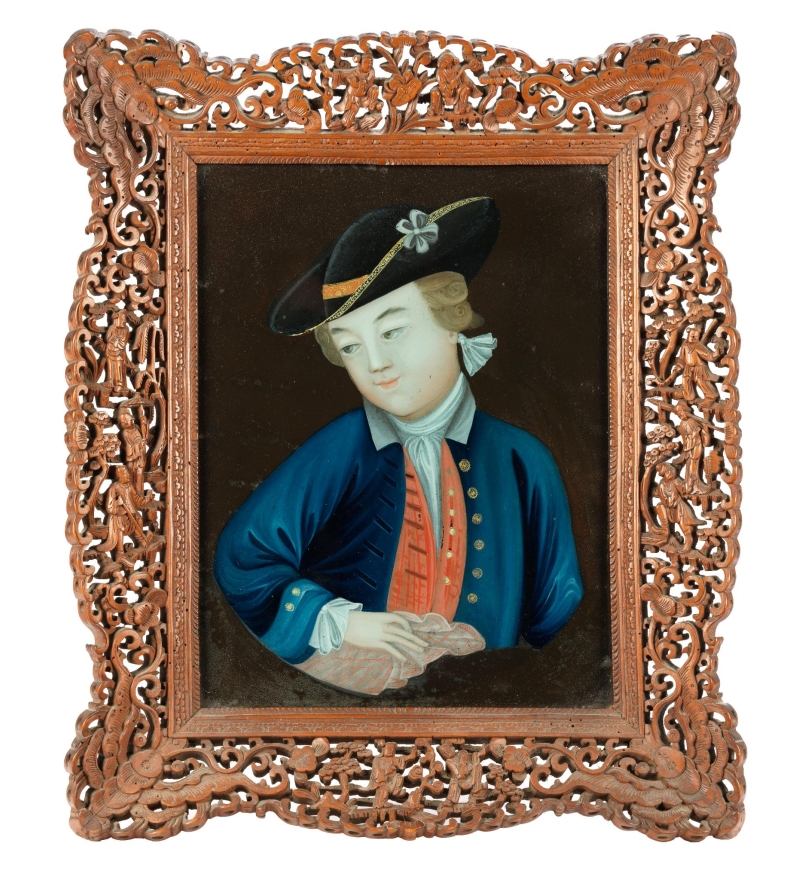
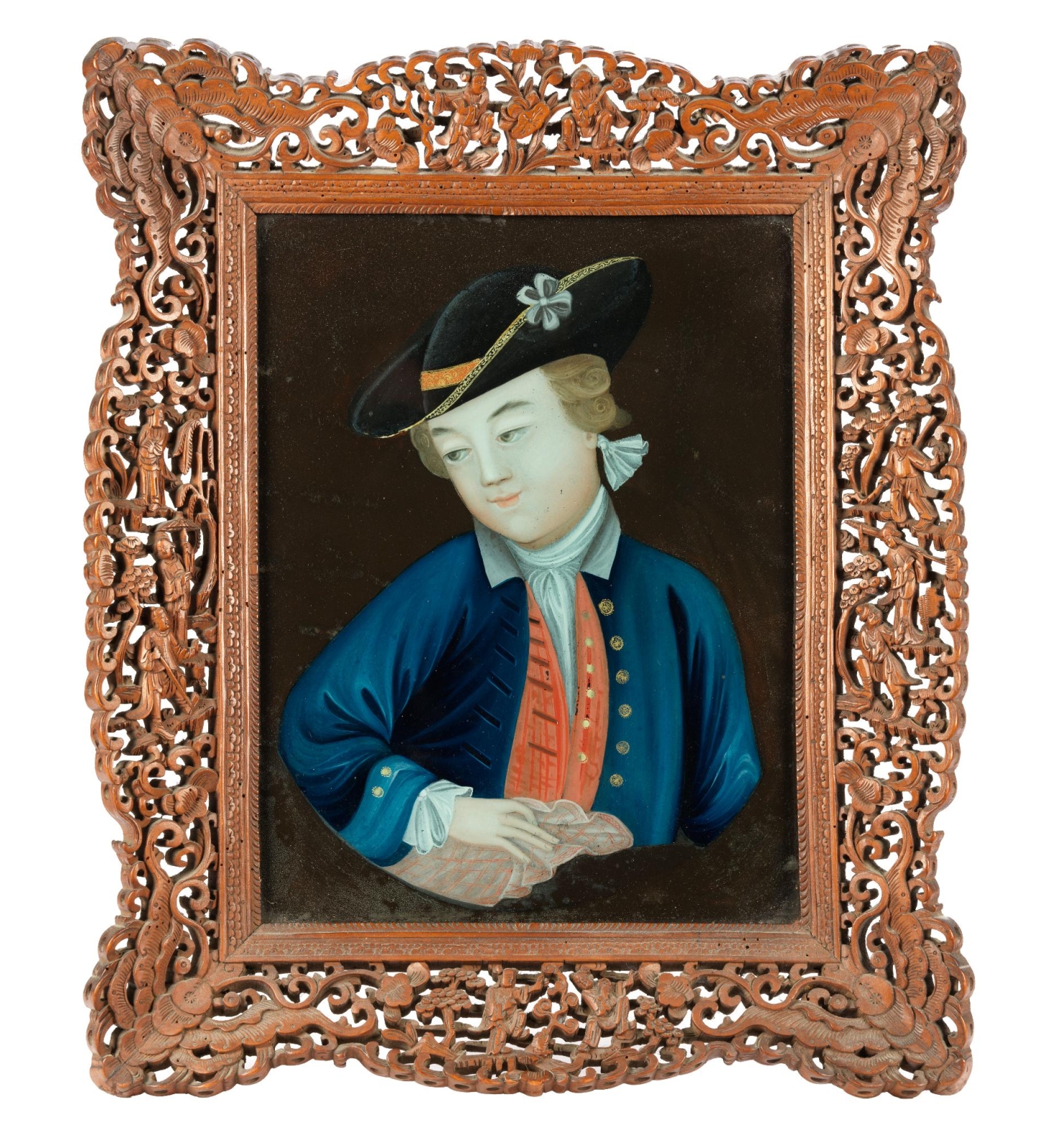
A fine Chinese reverse glass export portrait painting of an European nobleman or merchant in a Chinese carved wooden frame , around 1780, Canton, China.
Dimensions: around 50 x 40 cm. with frame.
 Secure payment
100% secure payment
 Worldwide shipping
Fast delivery
 Free shipping in EU
On all orders
 Professional packaging
Professional order packaging
This fine reverse glass mirror painting depicts a young noble gentleman shown in a relaxed three-quarter pose, dressed in a blue coat over a red waistcoat and wearing a black hat. The sitter's softly modeled face, subtle use of shading and naturalistic pose reveal the strong European influence that characterises some of the finest Canton export portraits of the late eighteenth century. Unlike the more common Chinese subjects on these type of paintings such as ladies, birds and flowers, or garden scenes, portraits of Western sitters formed a more exclusive category produced for foreign merchants and collectors by chinese workshops in Canton.
The painting is housed in an exceptionally elaborate pierced hardwood frame carved with Chinese figures, foliage, rockwork and auspicious motifs, a remarkable work of craftsmanship in its own right. Chinese reverse glass painting is one of the most distinctive artistic products created through the encounter between China and Europe during the eighteenth century. The art developed in Canton around the 1720s after large European mirrors began arriving in China aboard East India Company ships. Chinese artists discovered how to paint on the reverse of these imported mirror plates, combining European glass with Chinese painting techniques to create a completely new art form.
The technique of reverse glass painting was particularly demanding; working on the back of a sheet of imported mirror glass, the artist had to paint the image in reverse order, applying the smallest details first and the background last. Unlike a conventional painting, errors were extremely difficult to correct, requiring considerable skill, precision and planning. The combination of Chinese craftsmanship, European mirror glass and Western-inspired imagery resulted in a distinctive art form that could only have emerged through the international trade networks of the eighteenth century.
By the mid-eighteenth century these works had become highly fashionable among European aristocrats, merchants and collectors. T. Audric describes them as one of the most successful artistic collaborations between China and the West during the Qing period. Most Chinese reverse glass paintings depict traditional Chinese subjects. Popular themes included elegant ladies, courtly garden scenes, landscapes, birds and flowers, musicians, scholars and scenes of aristocratic leisure. These subjects appealed to European collectors who were fascinated by the exotic image of China. Portraits of Western sitters formed a smaller and more specialized group. They were often commissioned by merchants, naval officers and company officials visiting Canton, who supplied prints, miniatures or drawings from which Chinese artists worked.
Reference: T. Audric 'Chinese reverse glass painting 1720-1820', 2020.
A fine Chinese reverse glass export portrait painting of an European nobleman or merchant in a Chinese carved wooden frame , around 1780, Canton, China.
Dimensions: around 50 x 40 cm. with frame.
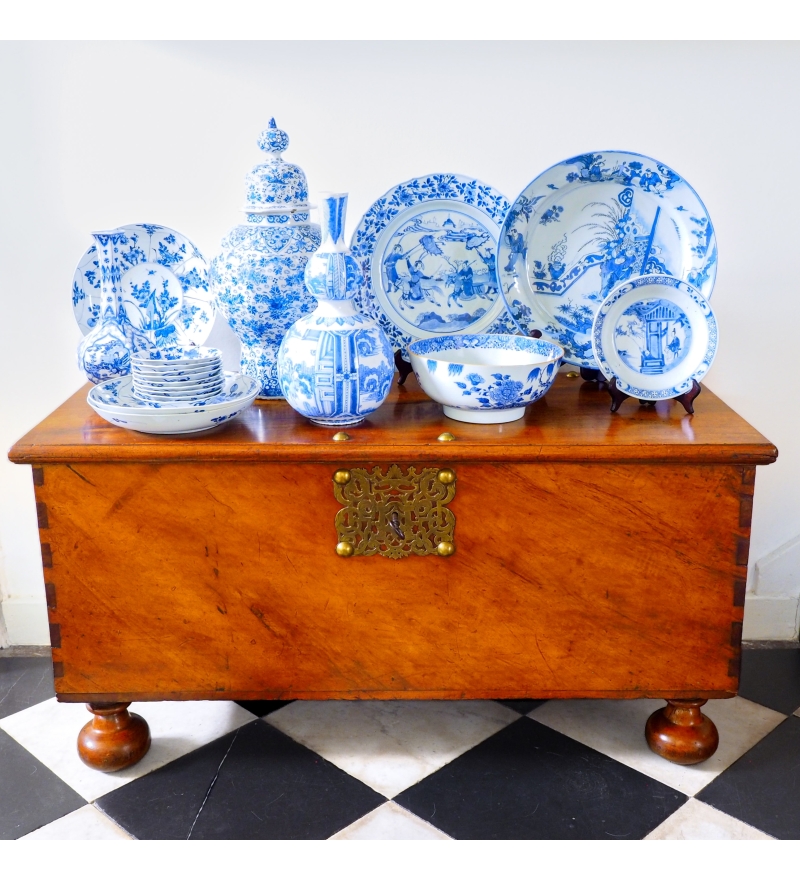
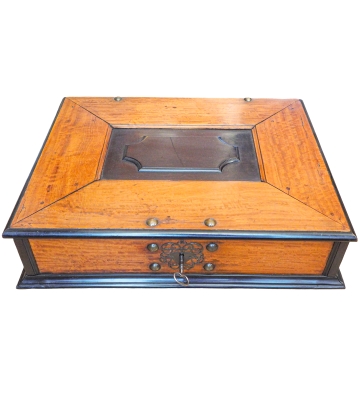
A Dutch colonial chest made out of tropical hardwood, 18th century, around 1700-1750, Indonesian archipel.
Dimensions: 49x119x61 cm.
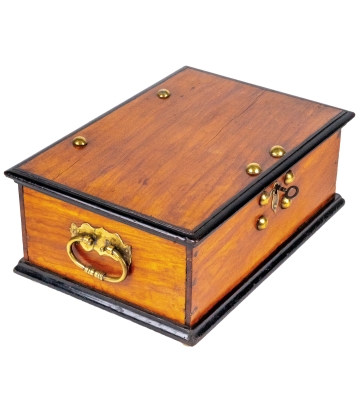
A Dutch padouk wood colonial document box with brass mounts, feet and handles, finished with ebonized edges, 18th century, around 1750, Batavia (Jakarta), Indonesia.
Dimensions: 24 x 35 x 15 cm.
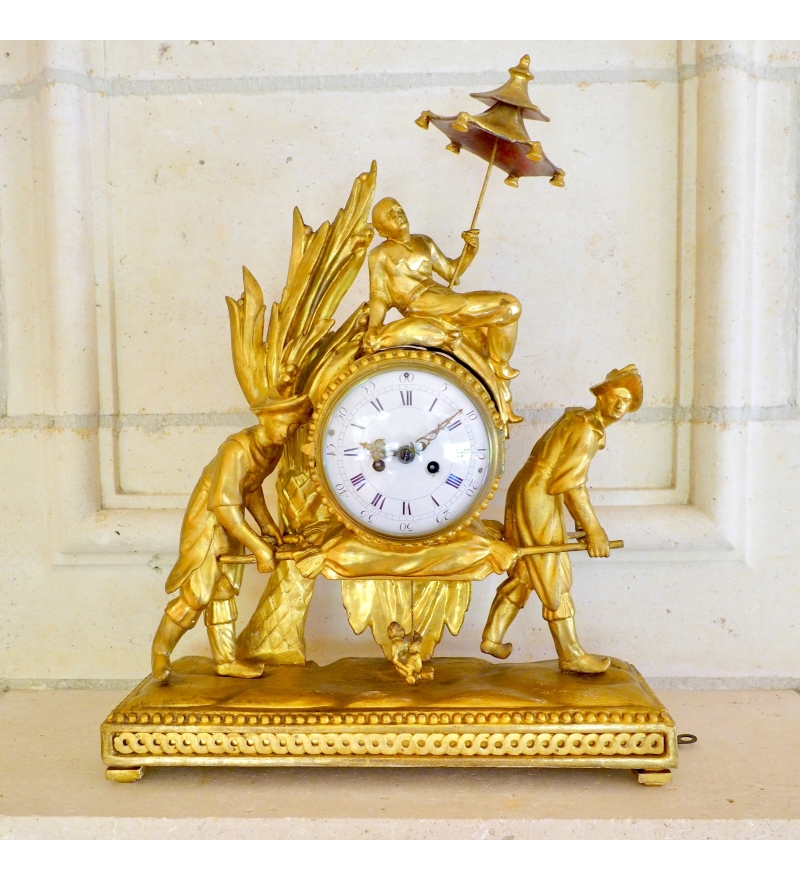
A Carved giltwood Alpine region pendule in Chinoiserie style with three figures carrying a clock, 18th century, around 1780-1800, probably Piedmont, Italy.
Dimensions: 42,5 x 13 x 53 cm
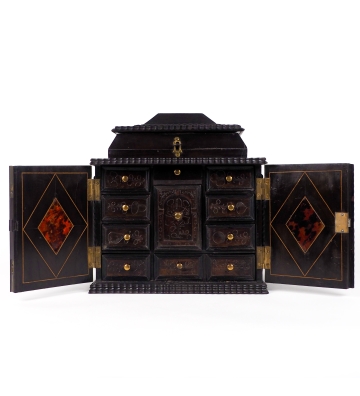
A Flemish table art cabinet made out of ebony wood and inlayed with red tortoiseshell, 17th century, around 1650, Antwerp, Southern Netherlands.
Dimensions: 36 x 22 x 34 cm.
A very large Dutch colonial writing box on ball feet made out of teak and ebony wood finished with fine bronze mounts, 18th century, around 1750, Batavia (Jakarta), Indonesia.
Dimensions: 19x62x50 cm.
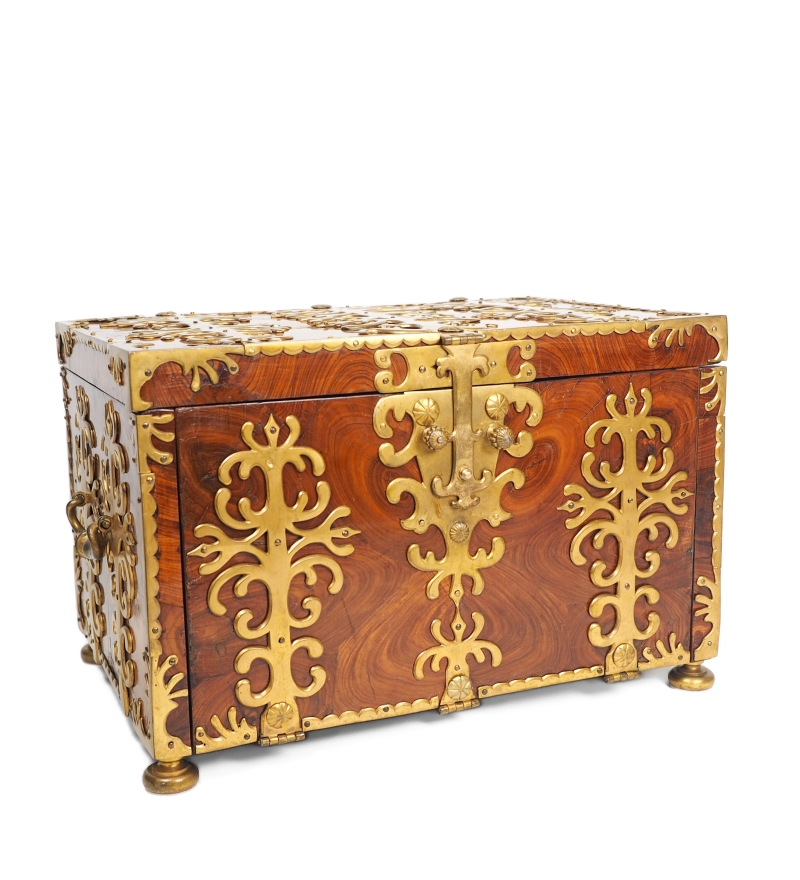
A Kingswood oyster veneered William & Mary period (1689–1702) 'coffre fort' or strongbox on bun feet and richly mounted with gilt-brass strapwork, 17th century, around 1690-1700, England, London.
Dimensions: 49,5x33x33 cm.
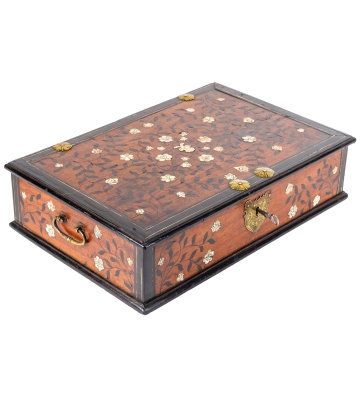
An exotic (Anglo-)Indian work box made of teak and ebony with bone inlaid floral motifs, 18th century, around 1700-1750, Vizagapatam, India.
Dimensions: 32,5 x 47,5 x 12 cm.