
- Out-of-Stock
Reference: 10076
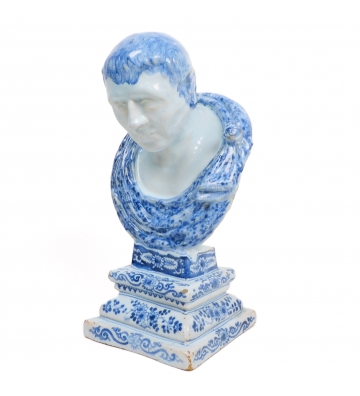
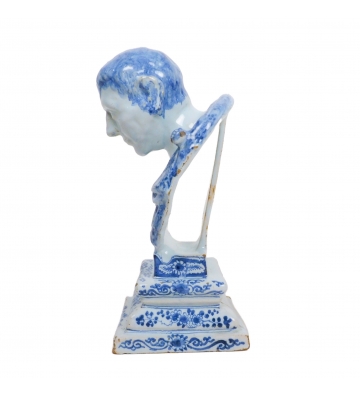
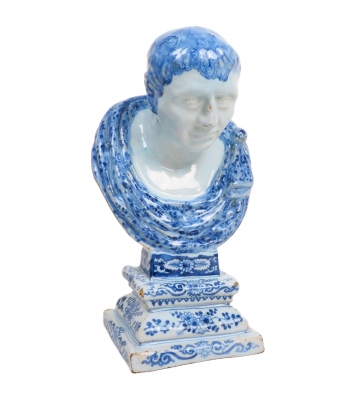
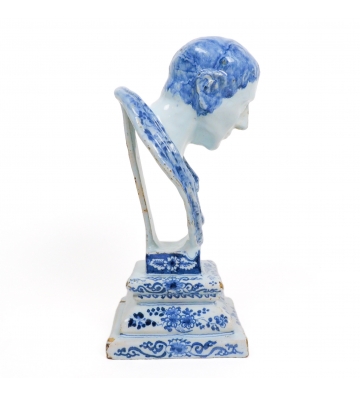
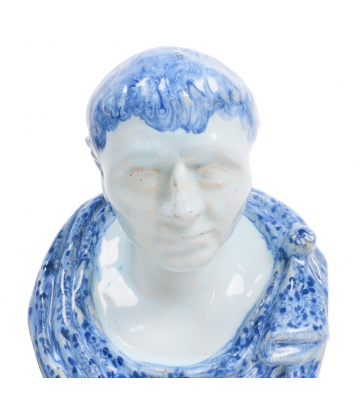
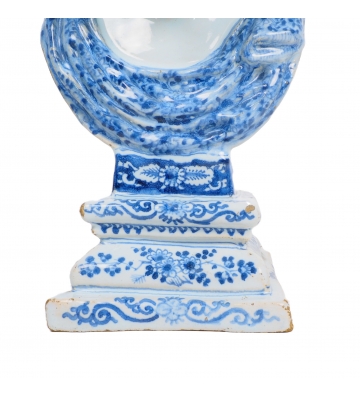
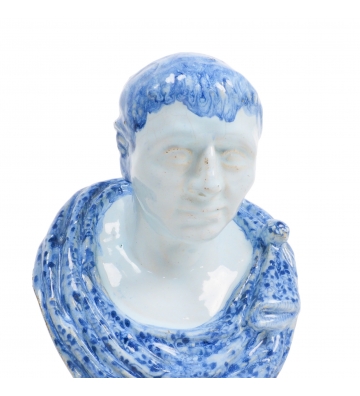
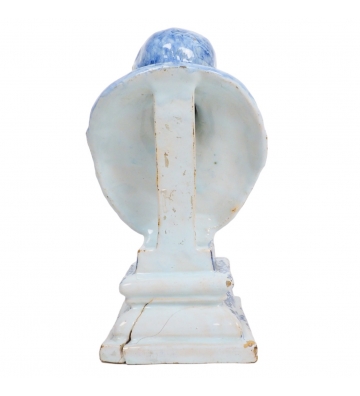
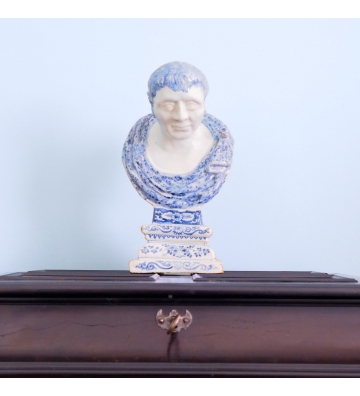
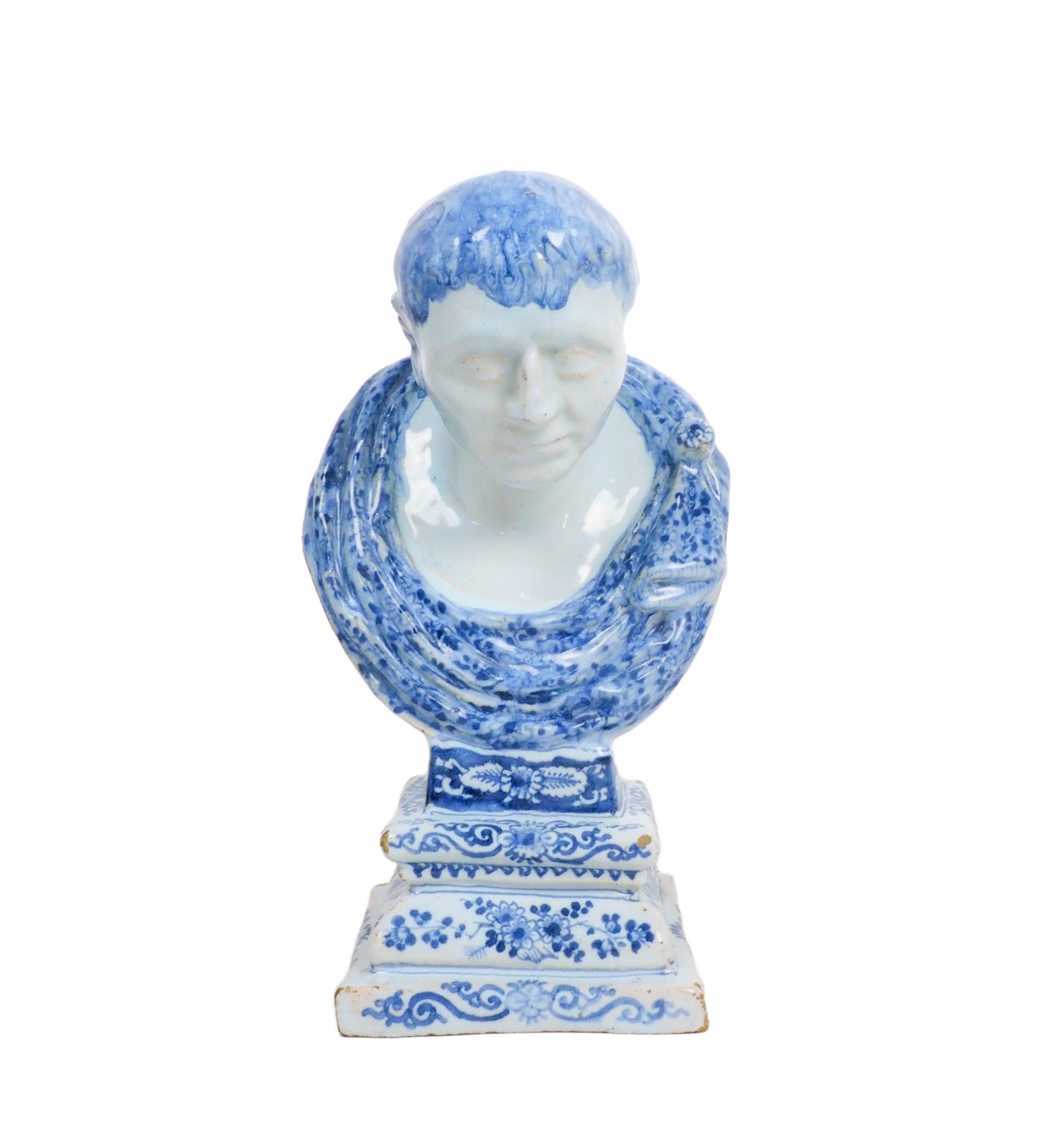
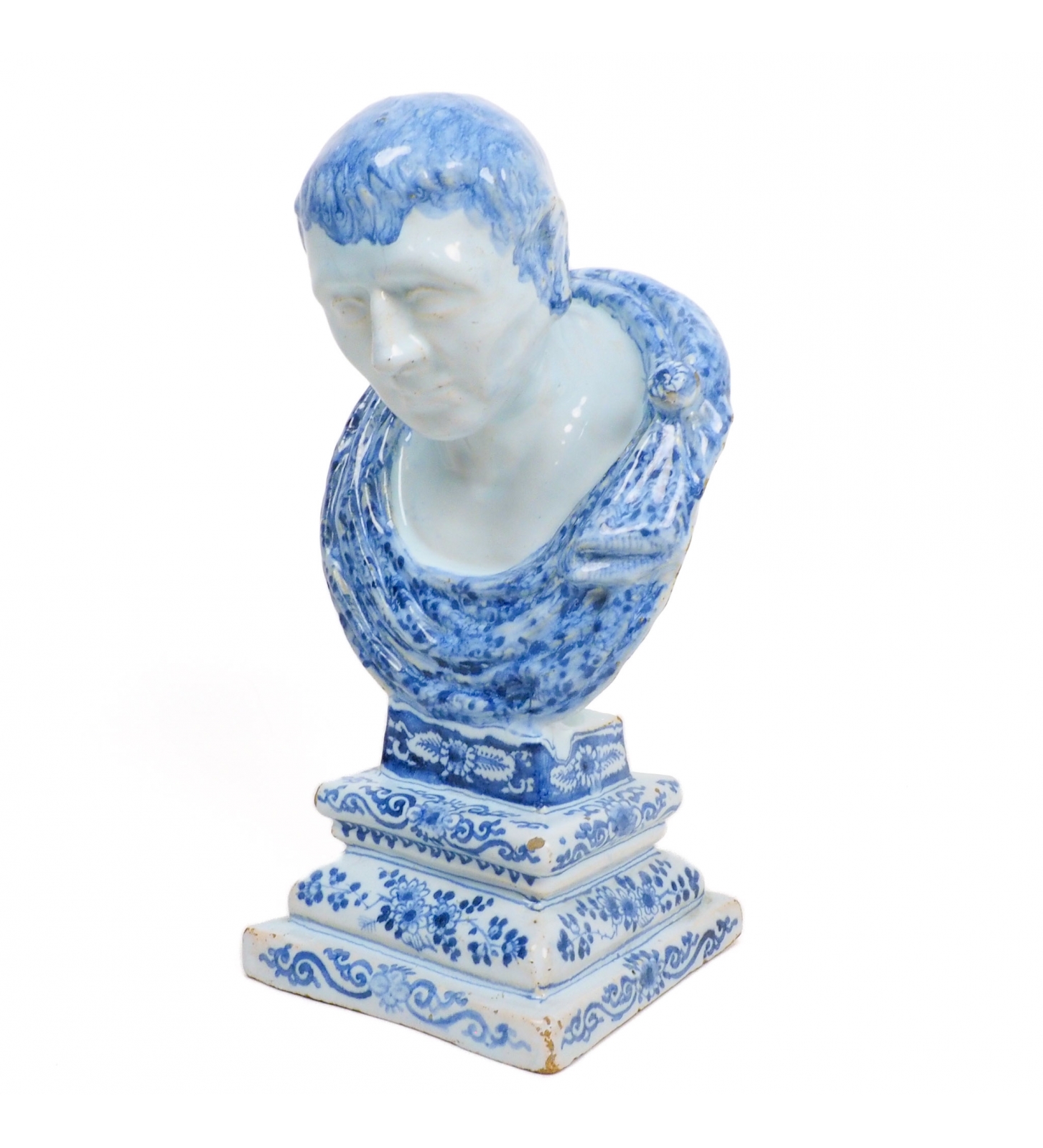
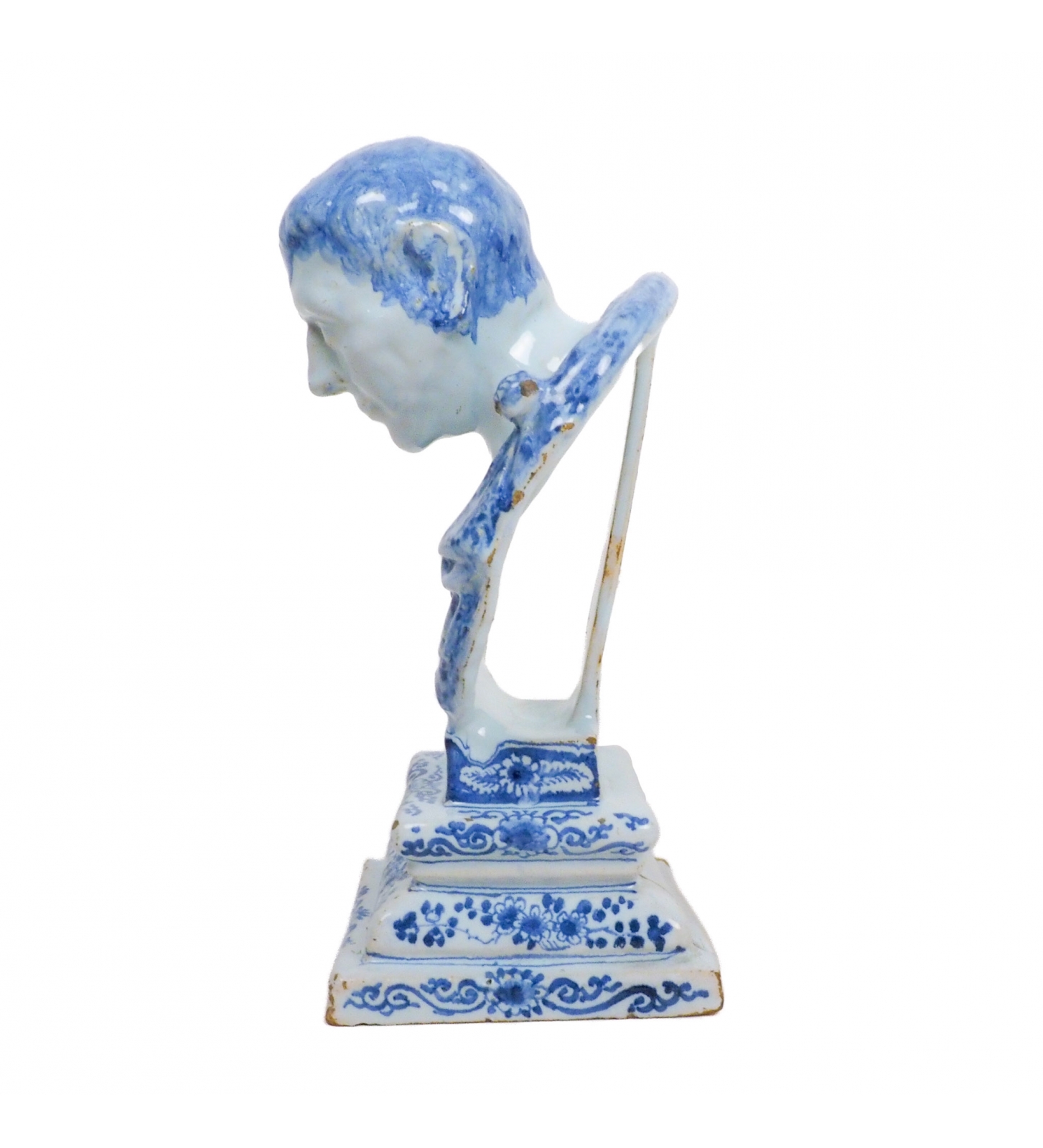
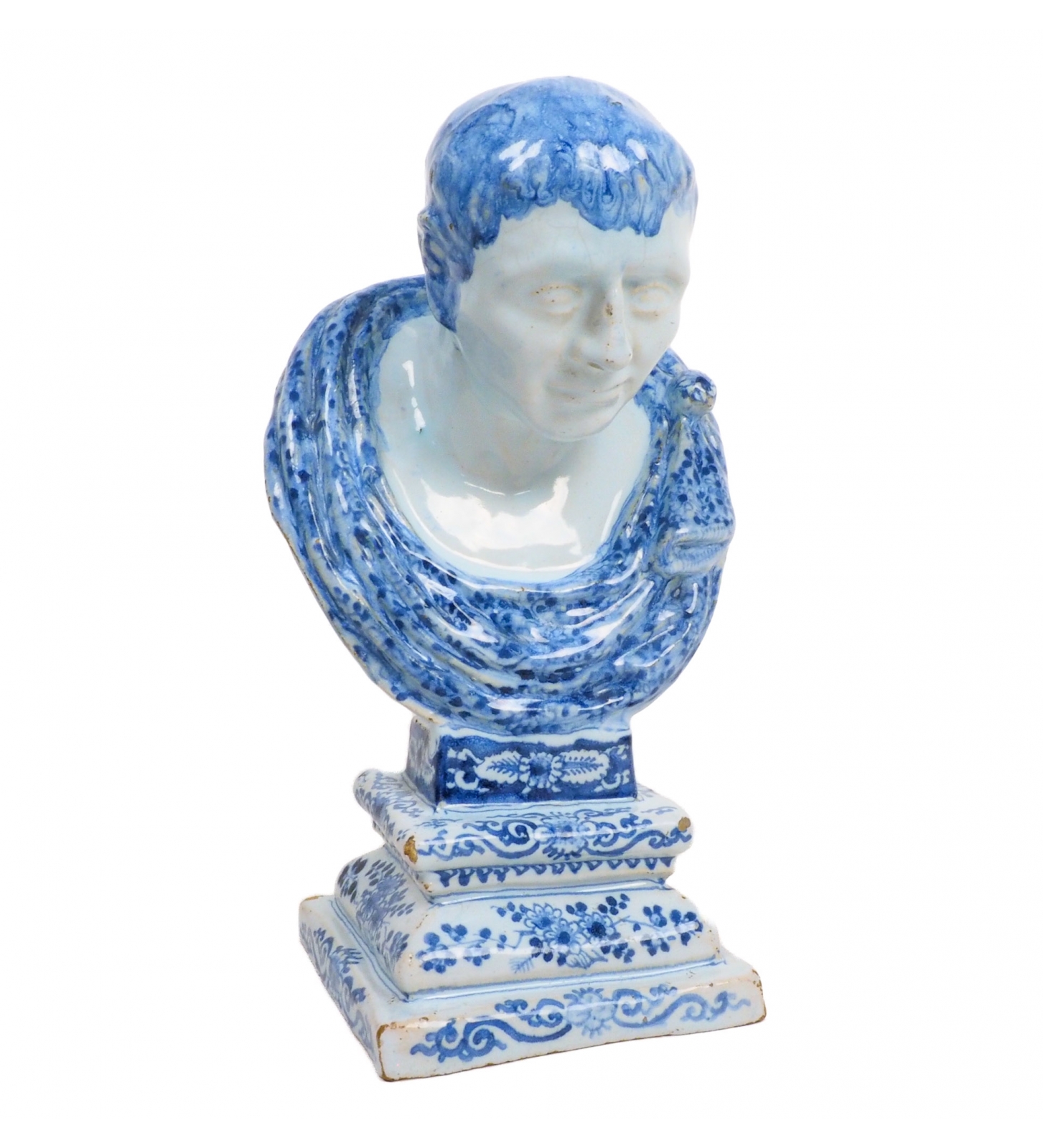
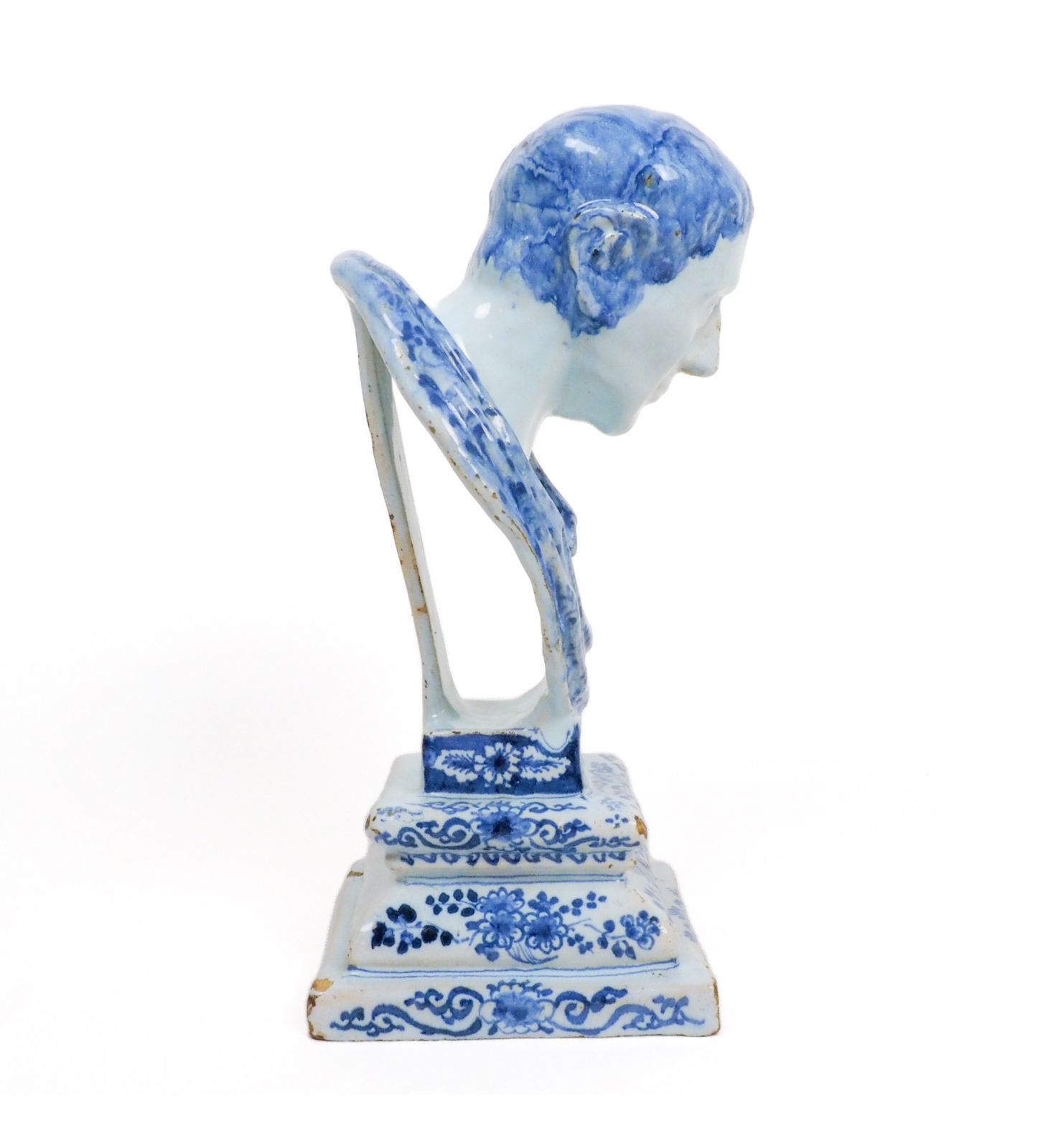
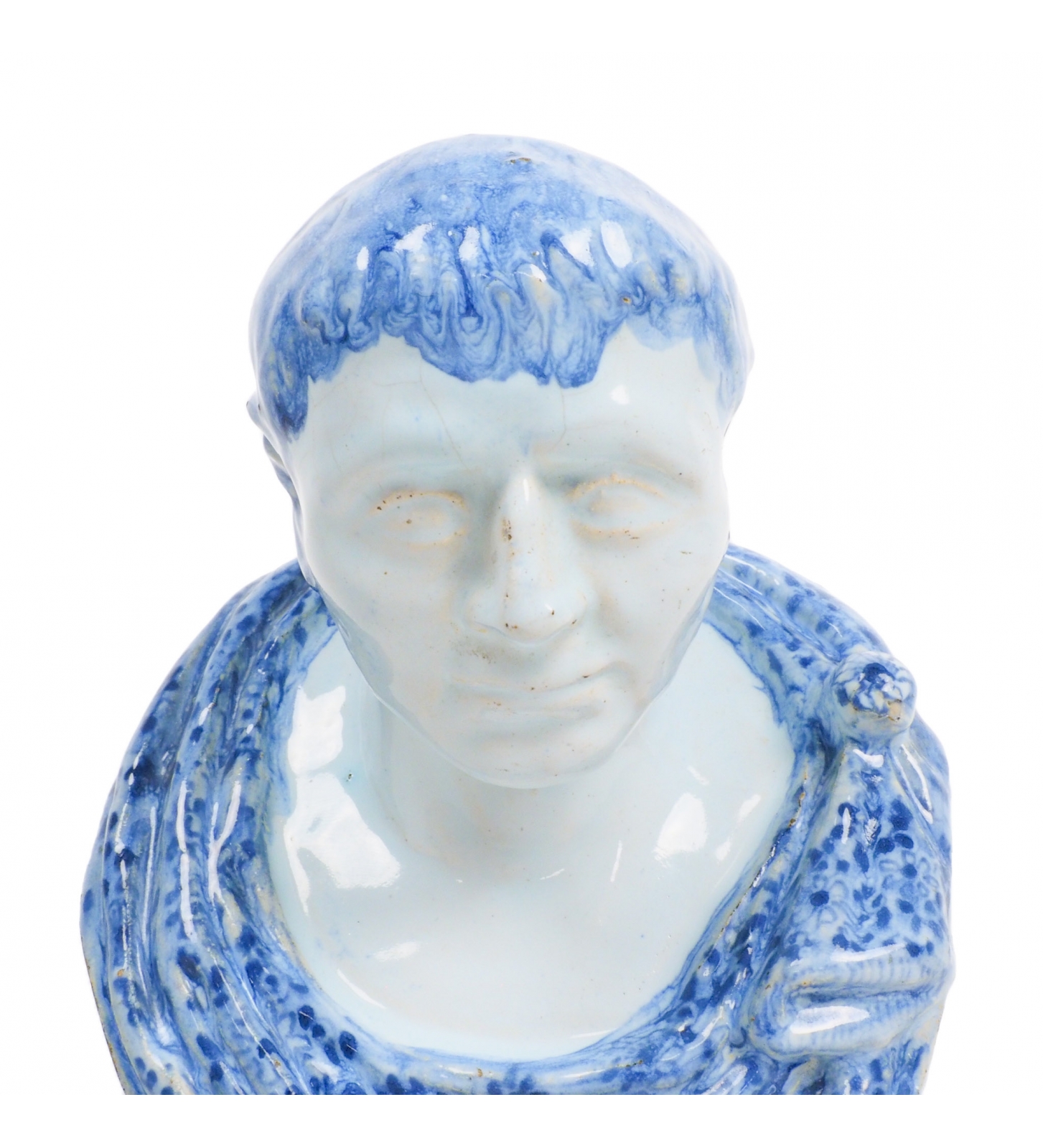
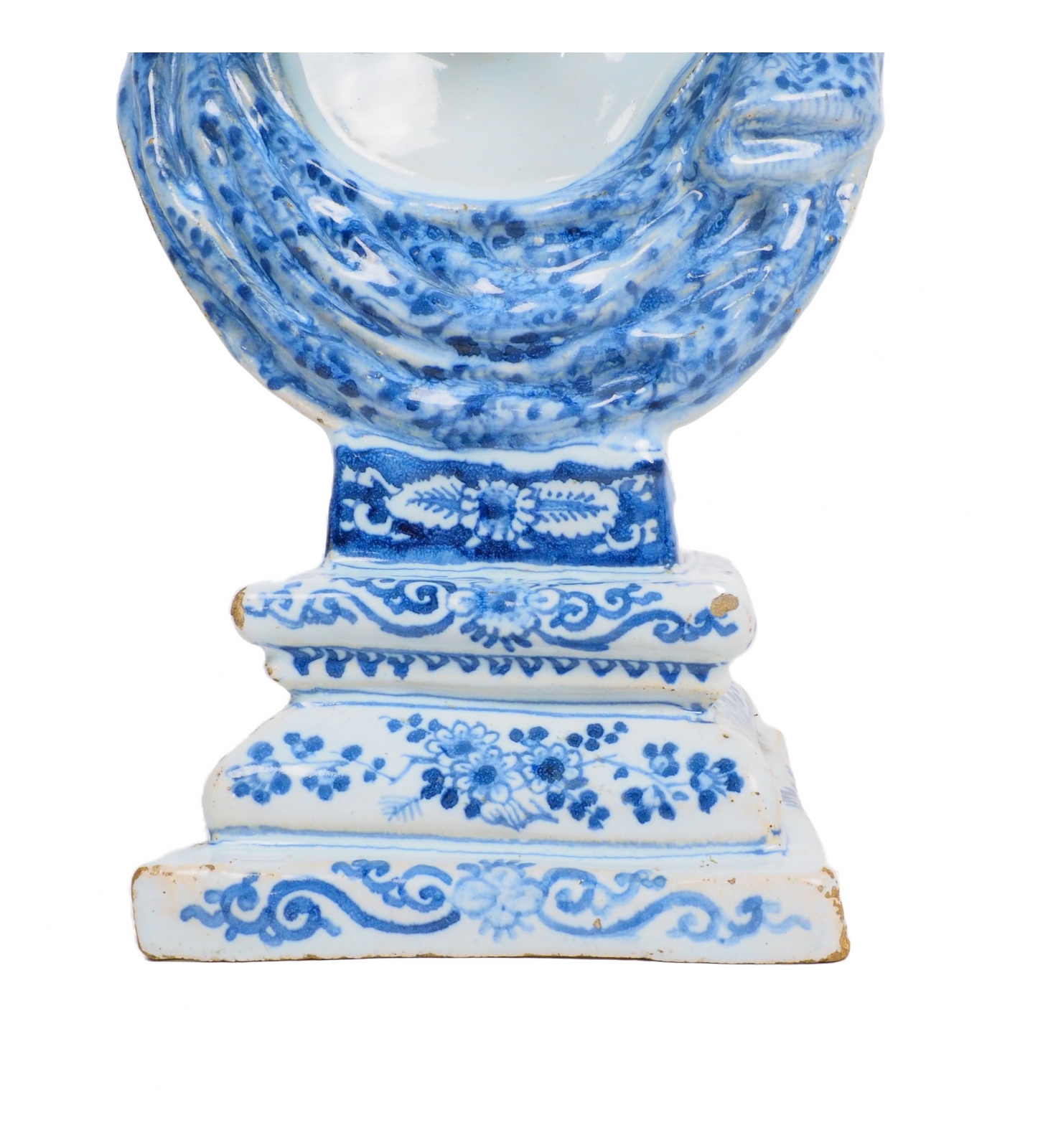
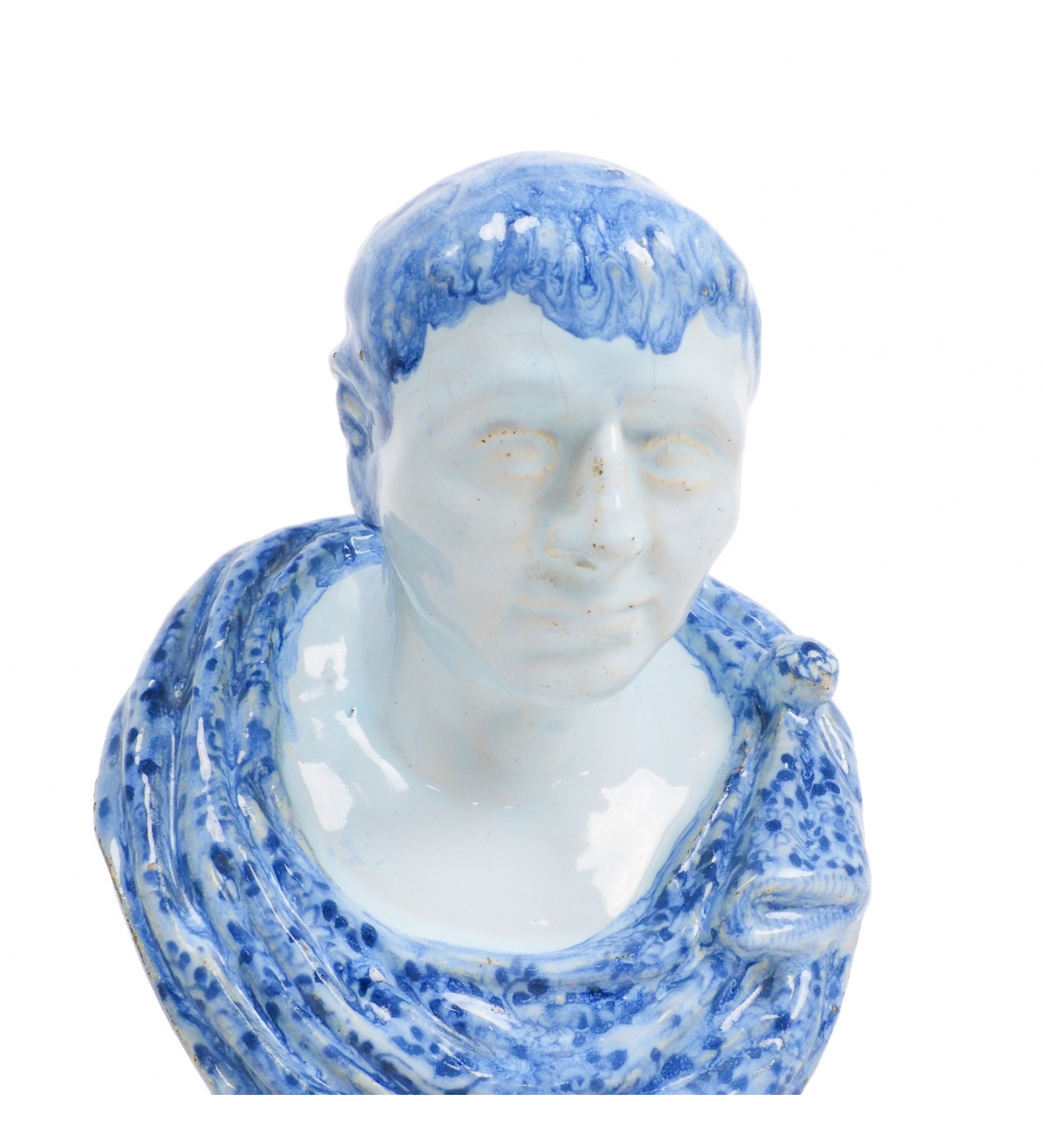
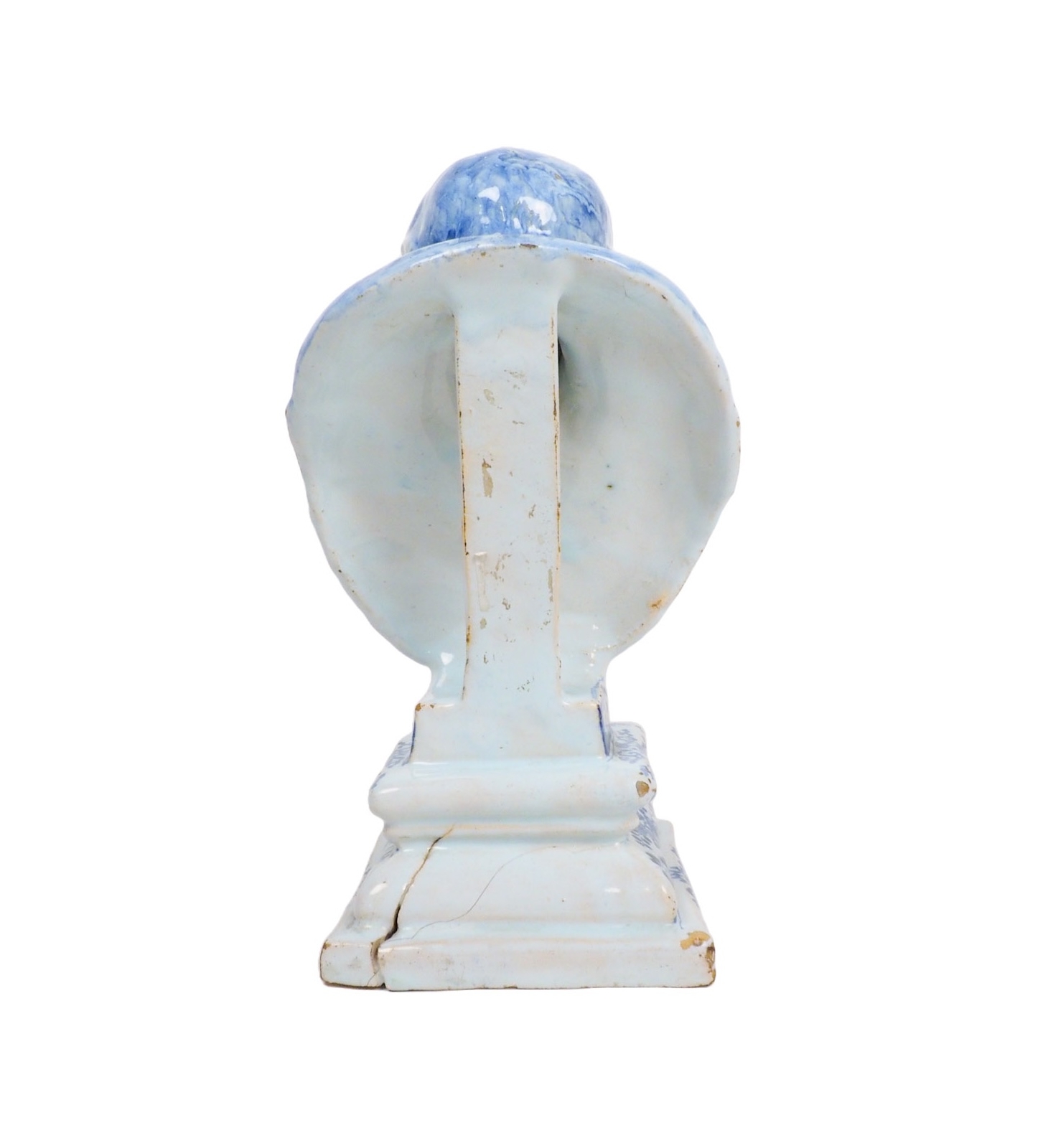
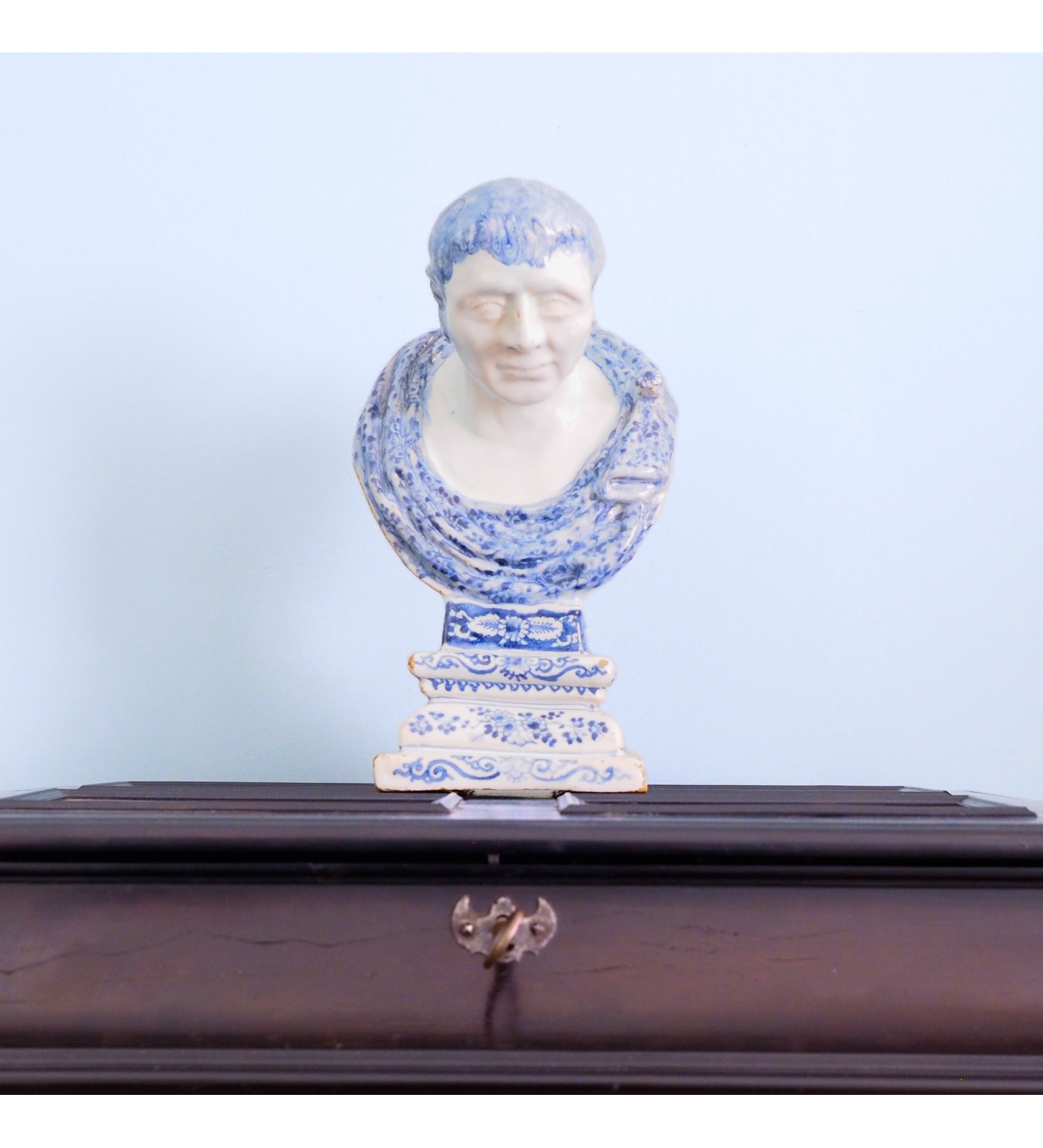
An Earthenware refined buste of a Roman emperor or statesmen wearing a toga, 17th century, around 1690, (probably) Delft, Holland.
Blue and white
Dimensions: 25 cm height.
 Secure payment
100% secure payment
 Worldwide shipping
Fast delivery
 Free shipping in EU
On all orders
 Professional packaging
Professional order packaging
This rare blue-and-white tin-glazed earthenware bust dates to the late 17th century. Earthenware of this period is renowned not only for its painted decoration but also for the start of its ambitious figurative sculptural production. Busts such as these were made using sophisticated multi-part plaster molds, often taken from sculpted clay or wax models that themselves could be derived from classical sculpture or contemporary engravings. These molds were valuable workshop assets and were frequently reused, repaired, and subtly reworked, which explains why closely related busts can survive with small but telling differences in facial detail.
Unlike flat wares, large sculptural objects were hollow-cast to reduce weight and stress during firing, with separate sections joined by hand while still leather-hard. Tool marks and seam lines, sometimes still faintly visible beneath the glaze, are important indicators of authentic 17th-century production. Achieving sharp facial features under a thick tin glaze was particularly difficult, as the glaze tends to soften contours during firing; expressive eyes, noses, and mouths therefore signal a highly skilled modeler and kiln master. The high failure rate in the kiln made successful busts costly luxury objects.
Related examples are preserved in museum collections such as Paleis Het Loo and the Rijksmuseum Amsterdam. The present bust represents a classical, imperial figure inspired by Roman antiquity. There are a few other comparable classical Delft potted busts known, such as a figure of Minerva or Alexander the Great (Inventory nr. RL 5, Paleis het Loo). Although this bust has not been marked, it is obvious that it was made by a high skilled potter. There is a possibility that this bust can be attributed to for example the well known Delft factory De Grieksche A (1657-1818), but early high skilled factories from Berlin or French cannot be excluded.
While the exact identity of the figure remains under study, it most likely represent Julius Caesar (100–44 BC). Also a found print of Marcus Tullius Cicero (106–43 BC) comes very close to the bust. Both celebrated Roman statesmen frequently portrayed in classical sculpture. This bust stands as a vivid testament to technical ingenuity and its fascination with classical antiquity.
Reference
For comparable and related examples, see:
-Groninger Museum, object nr. 1960.0076. (Buste women)
-Kunstmuseum Den Haag, inventory nr. 0400577. (Buste women)
-Kunstmuseum Den Haag, inventory nr. 0400576. (Buste women)
-Musées royaux d'art et d'histoire, inventory nr. Ev.736. (Buste women)
-Musées royaux d'art et d'histoire, inventory nr. Ev.730B. (Buste man)
-Musées royaux d'art et d'histoire, inventory nr. Ev.739. (Buste man)
-Museum of fine arts Boston, accession nr. 2012.589. (Buste of Peter the Great)
-National Ceramics Museum at Sèvres, acquisiton 2021.2.1 Drouot le 24 septembre 2021. (Buste man or Alexander the Great)
-Paleis het Loo, inventory nr. RL 1042; RL 1161. (Buste of orientalists)
-Paleis het Loo, inventory nr. RL 5. (Buste of Minerva or Alexander the Great)
-Rijksmuseum, inventory nr. BK-NM-12400-93. (Buste of Willem III)
-Rijksmuseum, inventory nr. BK-1960-11. (Buste of Mary)
-Stadtmuseum Berlin, inventory nr. KGK 78/2. (Figure)
-*In that case see also: Christies New York, the 3th February 2024, 'Elegance & Wonder: The Jordan Saunders Collection', lot nr. 1083.
-The Metropolitan Museum of Art, object nr. 36.159.2. (Buste of Charles I)
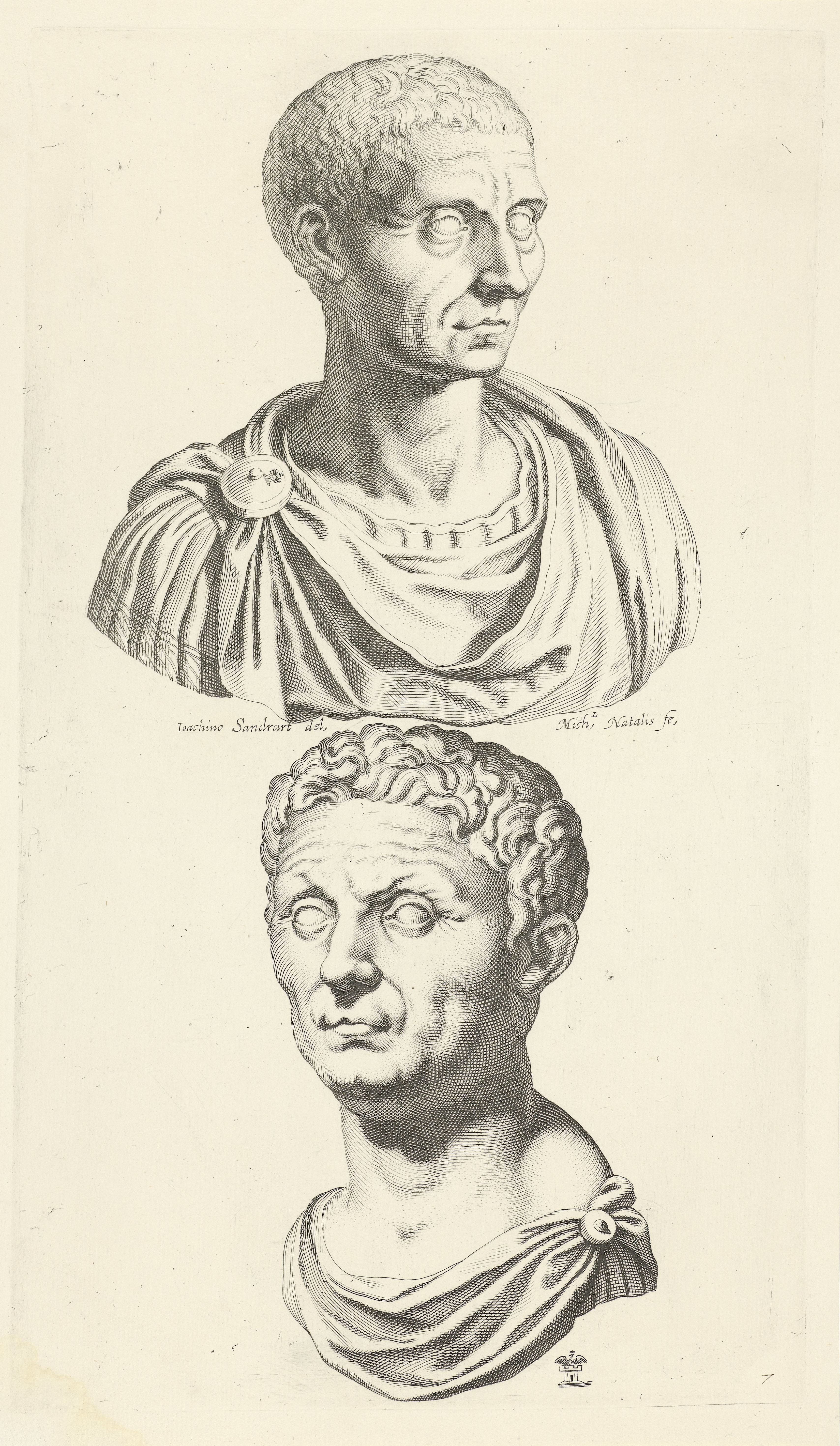

‘Buste van Julius Caesar en buste van Pompeius’, ‘Buste van Marcus Tullius Cicero’, Hans Witdoeck’ 1638.
source: www.rijksmuseum.com
An Earthenware refined buste of a Roman emperor or statesmen wearing a toga, 17th century, around 1690, (probably) Delft, Holland.
Blue and white
Dimensions: 25 cm height.
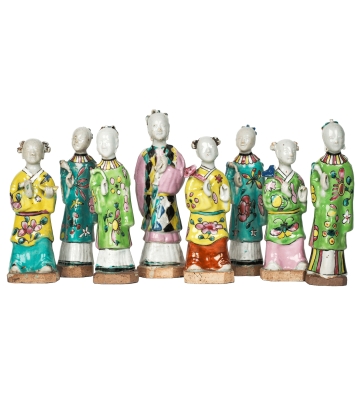
A colorful set of eight Jiaqing period (1796-1820) immortal figures made 'emaille sur biscuit', 18th/19th century, around 1800, Jingdezhen, China.
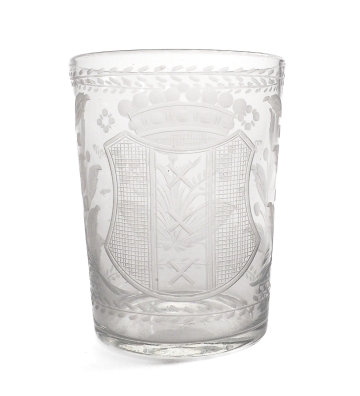
A hand-blown beaker engraved with the coat of arms of the city of Amsterdam, 18th century, around 1775-1800, Holland.
Dimensions: 15 cm. height, 12 cm width.
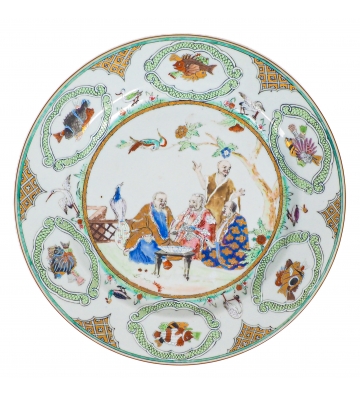
A Chinese verte plate after the 'Doctors Visit' design of Cornelis Pronk on the instructions of the Dutch East India Company, 18th century, around 1738, China, Jingdezhen.
Dimensions: 22,5 cm. diameter.
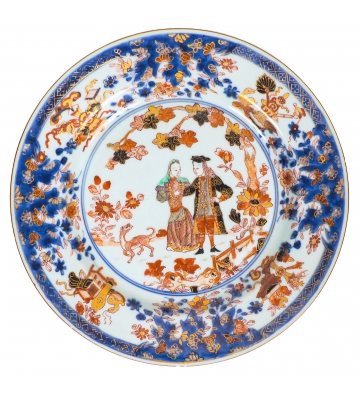
A Yongzheng period (1722-1735) plate with 'Governor Duff' decoration in Chinese verte-imari, 18th century, around 1725-1730, Jingdezhen, China.
Chinese verte-imari
Dimensions: 23,5 cm diameter.
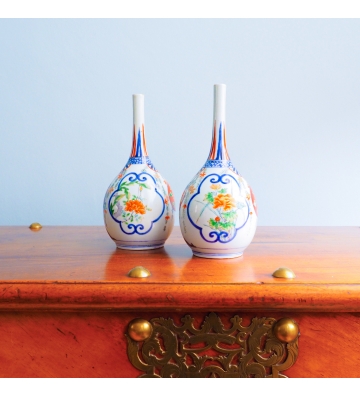
A fine pair of Kenjo-style Imari pear form bottle vases with pointed neck and flowering decoration, 17-18th century, around 1680-1720, Japan, Imari.
Dimensions: 23,5 cm height
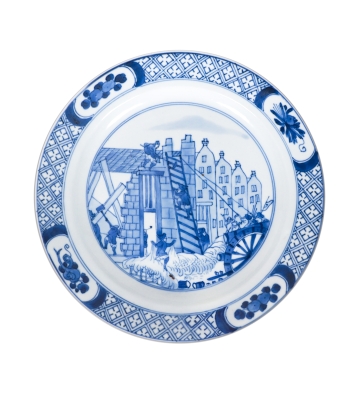
A Kangxi period (1662-1722) plate depicting a scene of the Costerman uprising in Rotterdam with Chengua (1465-1487) six-character mark on the back, 17th century, around 1690-1695, Jingdezhen, China.
Blue and white
Dimensions: 20 cm. diameter.
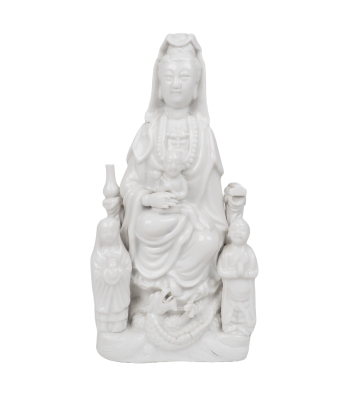
A Kangxi period (1662-1722) Blanc de Chine figure of a seated Guanyin holding a child surrounded by a girl (Longnü), a boy (Sudhana) and dragon, 17th century, around 1680-1700, Dehua, China.
Dimensions: 22,5 cm height.
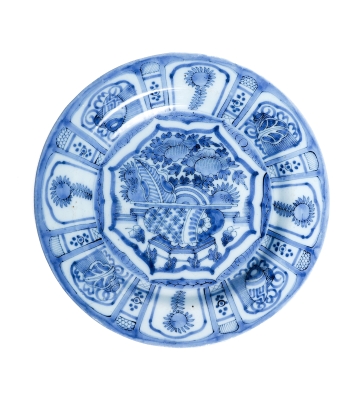
A Dutch Delft plate with Chinese Wanli Kraak decor, 17th century, around 1680-1700, Delft, Holland.
Blue and white
Dimensions: 30,5 cm. diameter.
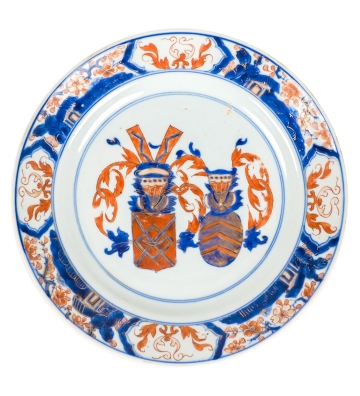
A Chinese Kangxi (1662-1722) porcelain Imari-style armorial wedding plate for the Dutch market, 18th century, around 1700-1720, Jingdezhen/Canton, China.
Chinese Imari
Dimensions: 24 cm. diameter.
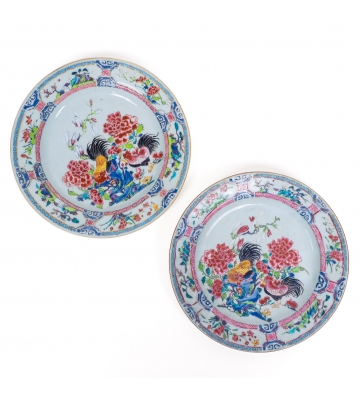
A beautiful set of Chinese Yongzheng period (1723-1735) famille rose plates with flower decoration between two roosters, 18th century, around 1730, Jingdezhen, China.
Dimensions: 22,5 cm diameter.
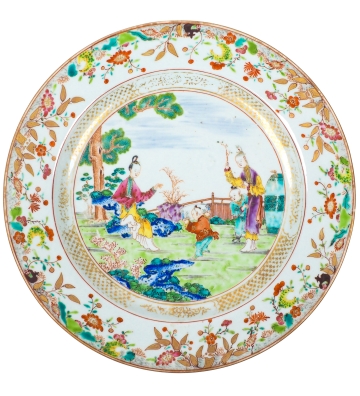
A fine Chinese Qianlong period (1736-1795) plate decorated with a scene of 'Sanniang jiao zi' depicting Long Elizas (mother) and playing children (son) in a garden, 18th century, around 1740-1760, Jingdezhen, China.
Famille rose
Dimensions: 22.8 cm diameter
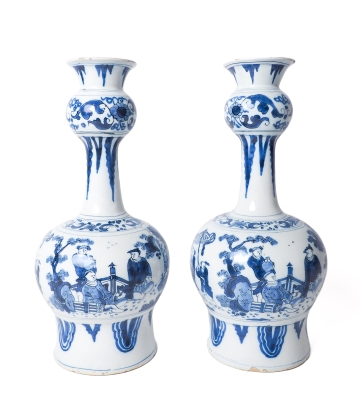
A pair of Dutch Delft garlic neck vases in Chinese Transitional style, 17th century, around 1690-1700, Delft, Holland.
Blue and white.
Marked '6=' (unknown maker)
Dimensions: 35 cm. height.
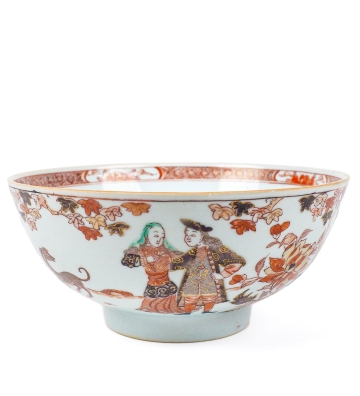
A Yongzheng period (1722-1735) bowl with 'Governor Duff' decoration in Chinese verte-imari, 18th century, around 1725-1730, Jingdezhen, China.
Chinese verte-imari
Dimensions: 17,5 cm diameter.
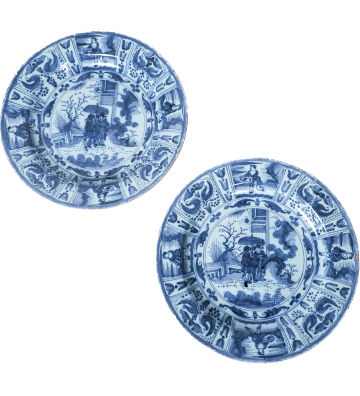
A pair of large Dutch Delft plates in Chinese 'Transition' style with parasol subjects, around 1680-1700, Delft, Holland.
Blue and white
Dimensions: 39 cm. (2x)
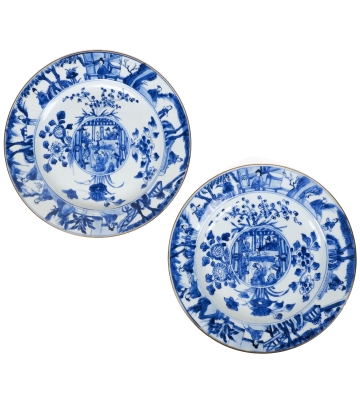
A pair of transitional late Kangxi (1661-1722) to early Yongzheng period (1722-1735) plates within the center a court in session decorated, 18th century, around 1710-1735, Jingdezhen, China.
Blue and white
Dimensions: 23 cm diameter.
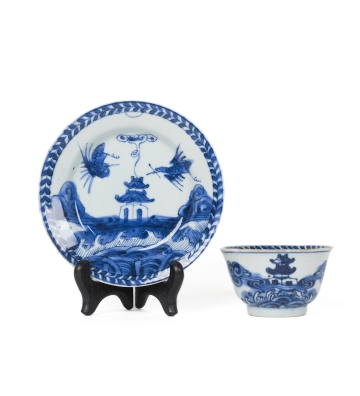
A Kangxi period (1662-1722) cup and saucer with cranes and pagoda decoration out of the former collection of August II the Strong, around 1700-1720, Jingdezhen, China.
Blue and white
Dimensions: 13,7 cm. (saucer) 8 cm. (cup) diameter.