- Out-of-Stock
Reference: 10060
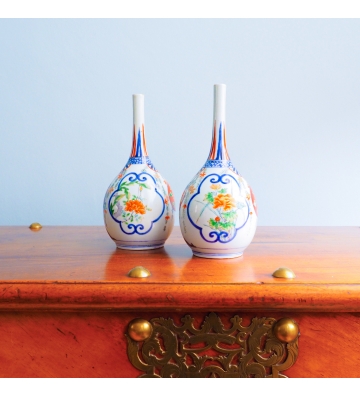
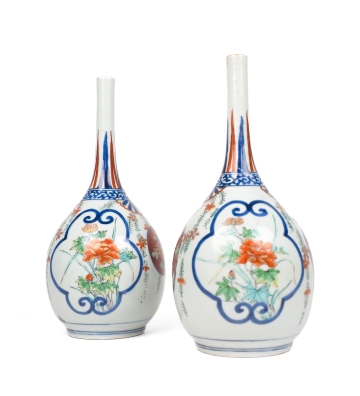
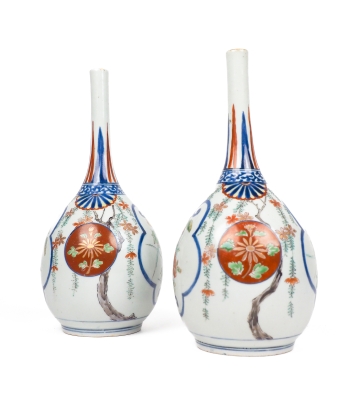
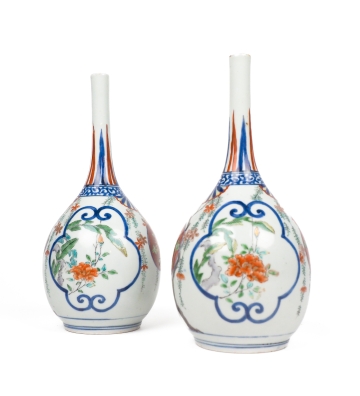
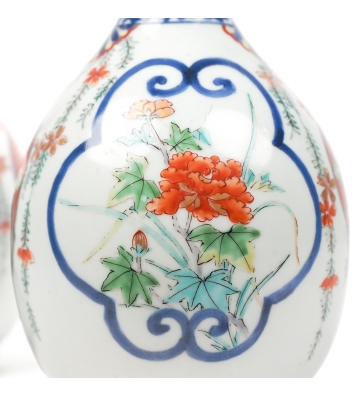
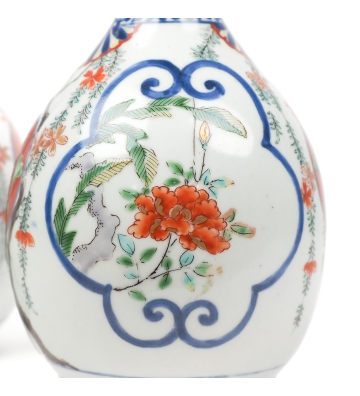
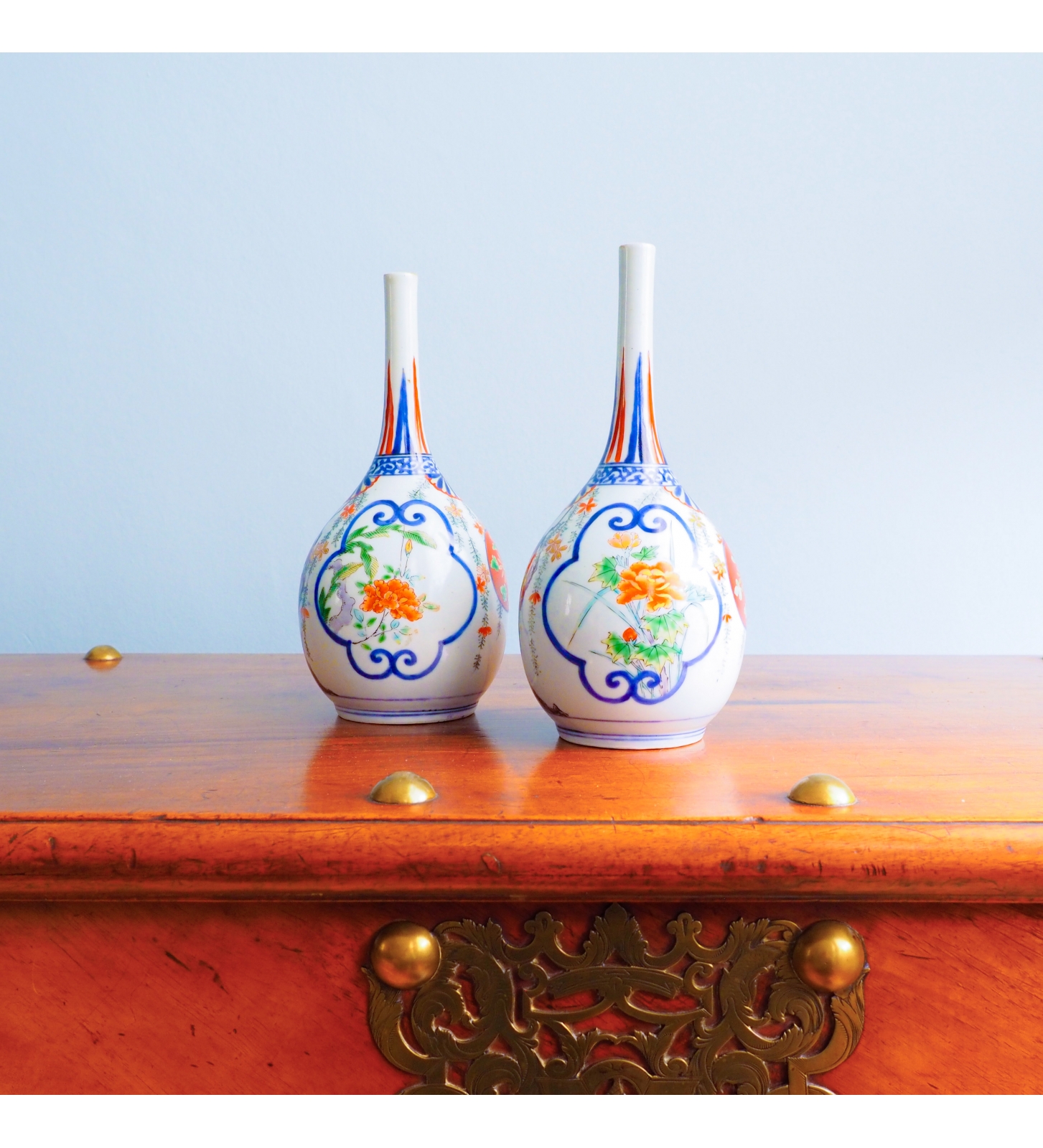
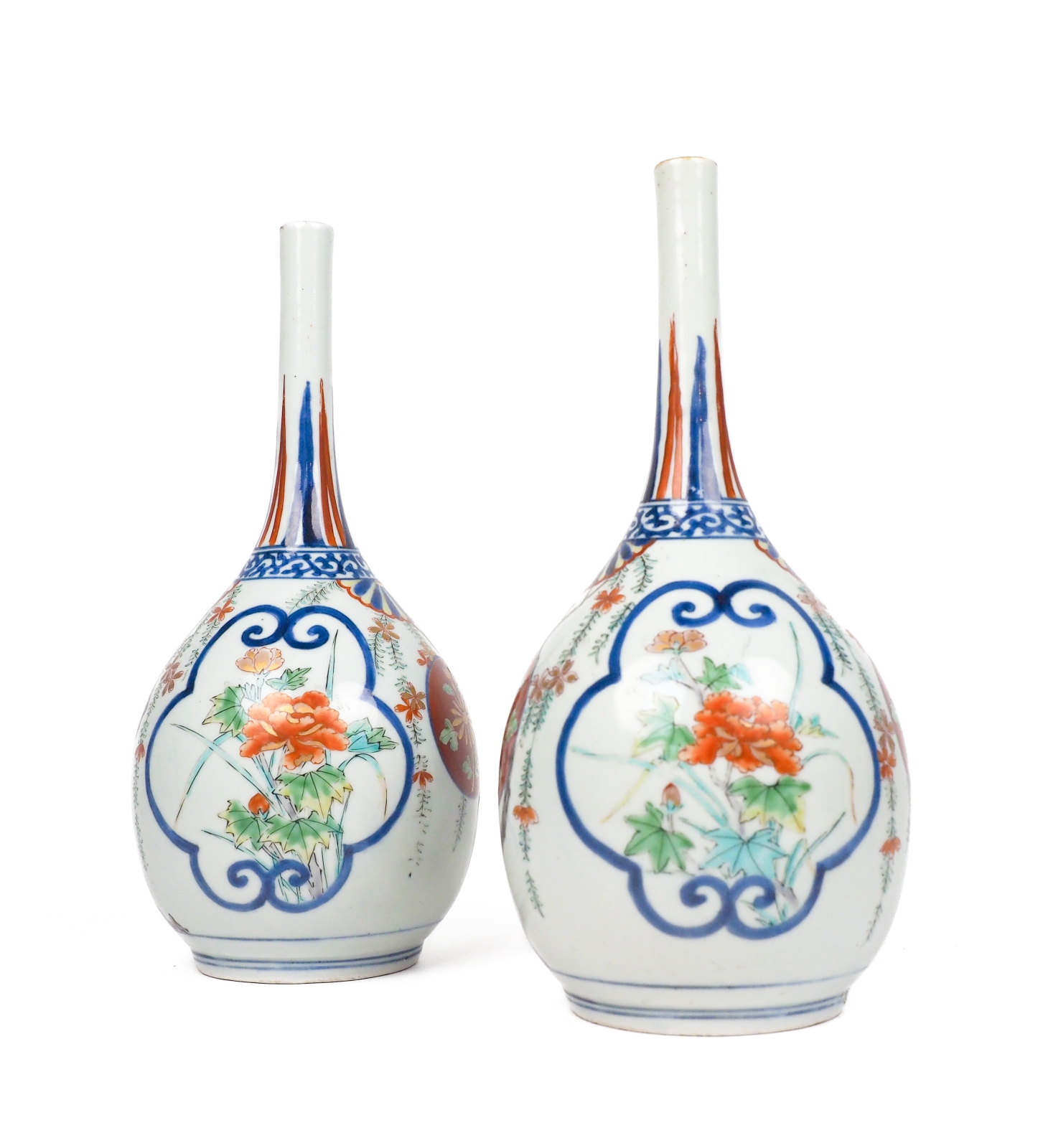
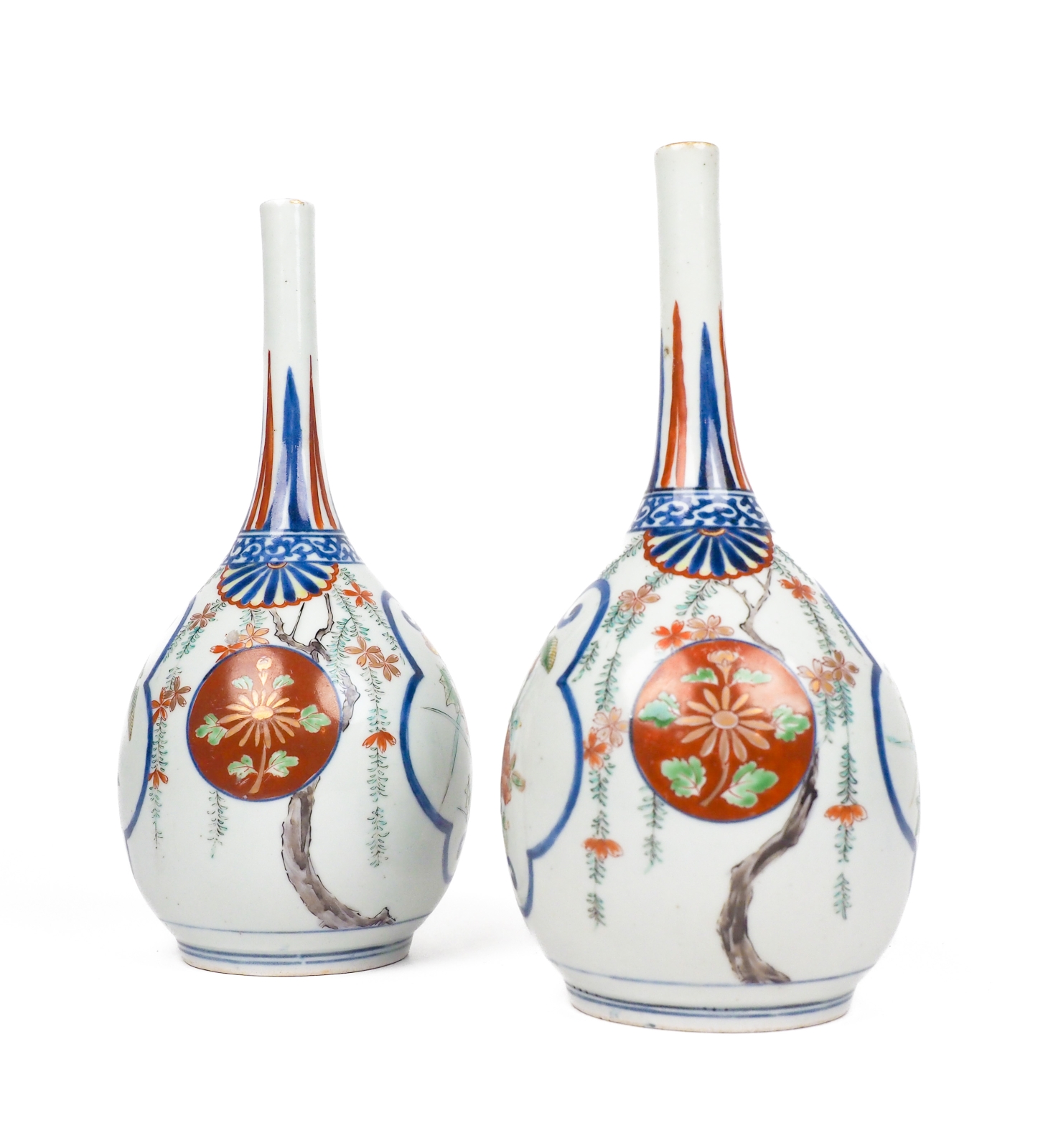
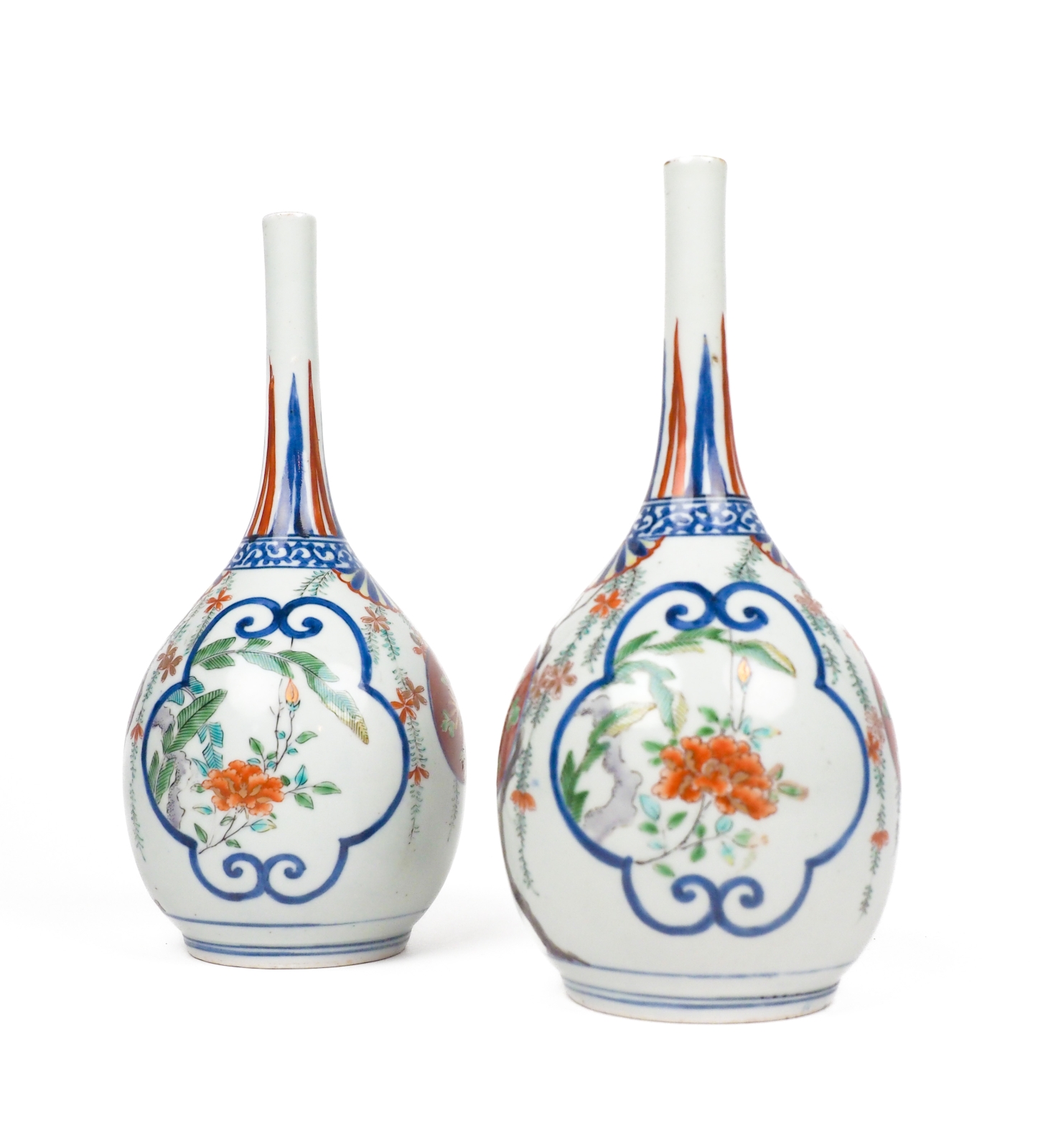
A fine pair of Kenjo-style Imari pear form bottle vases with pointed neck and flowering decoration, 17-18th century, around 1680-1720, Japan, Imari.
Dimensions: 23,5 cm height
 Secure payment
100% secure payment
 Worldwide shipping
Fast delivery
 Free shipping in EU
On all orders
 Professional packaging
Professional order packaging
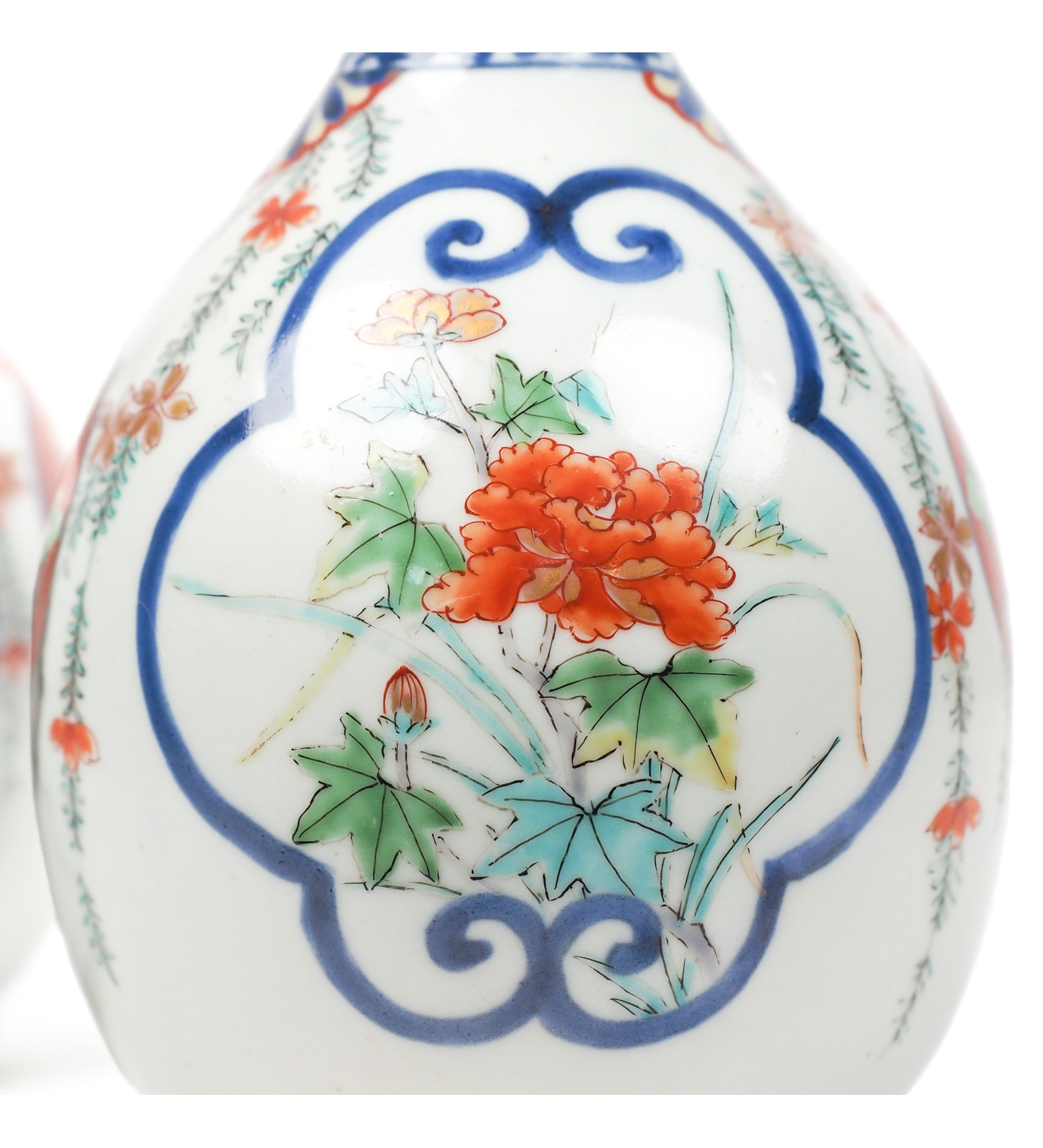
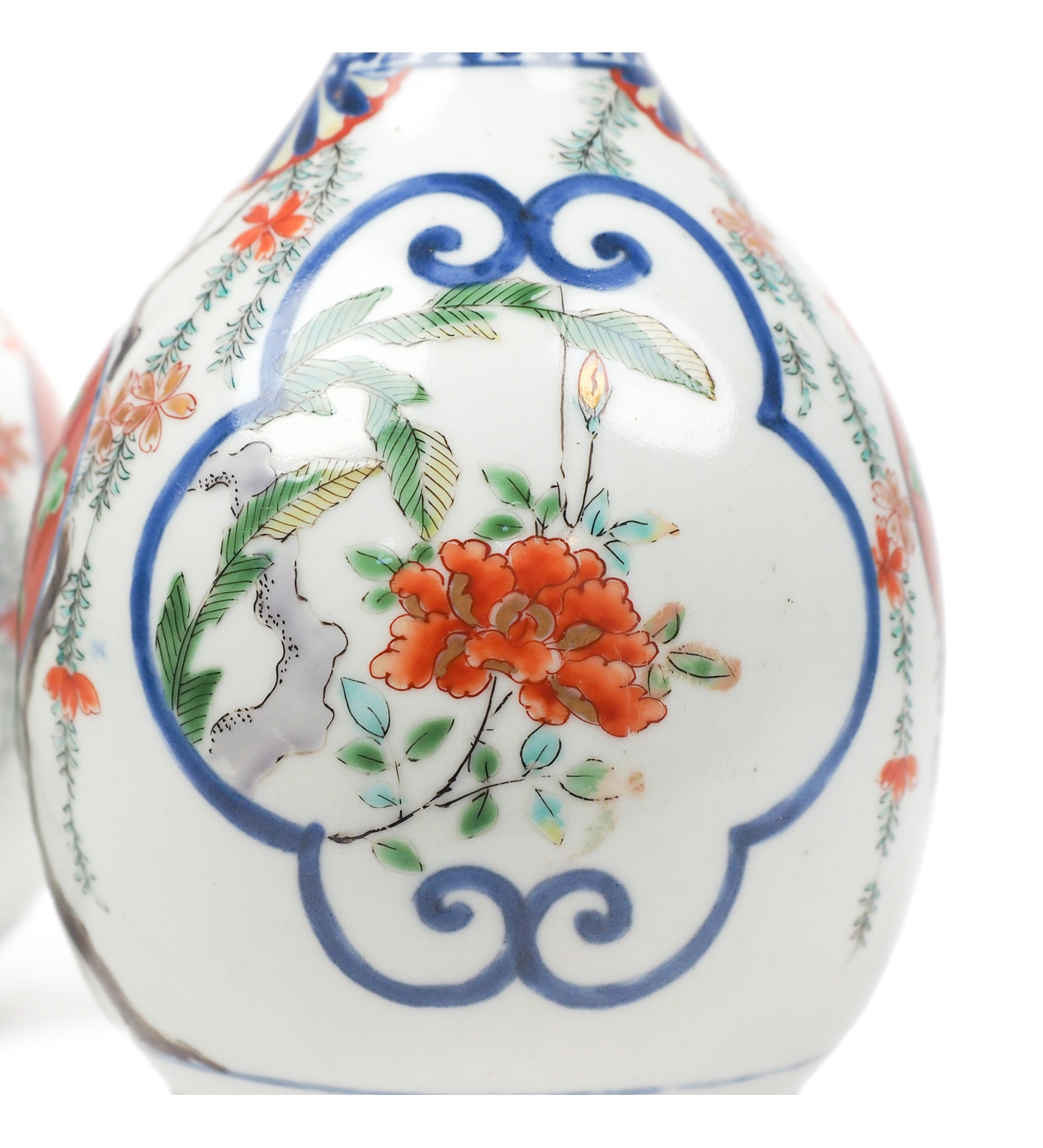
Each vase has a European pear form with tall narrow neck, decorated in the 'Kenjo-style' in iron red, green, yellow, aubergine and black enamels. On the underglaze blue there can also be found gilt. The bottles have two cartouches (panels of flowering plants) with peonies. The panels are divided by two red circular reserves with a spray of chrysanthemum, each against a weeping cherry tree below a half chrysanthemum flowerhead. The neck of the bottles begin with a band of 'karakusa' pattern and is followed by a band of elongated triangles above. The foot has three circumferential lines.
The difference between normal 'Imari' and 'Kenjo Imari' porcelain lies in their specific styles. Imari refers broadly to the porcelain produced in Imari, Japan, often only in underglaze blue and overglaze red with gold. In contrast, Kenjo Imari (or Kakiemon) is a more refined style known for its delicate, detailed designs and a lighter color palette, often emphasizing natural motifs.
Reference:
-A similar example can be found in Musée de la Compagnie des Indes Citadelle.
-See: Christies 19 December 2014, Online Auction 5932 'Japanese Art at the English court', lot nr. 58.
For comparable examples see:
-Rijksmuseum object nr. AK-RBK-1972-201-B ; AK-RAK-2017-20 ; AK-NM-6454.
A fine pair of Kenjo-style Imari pear form bottle vases with pointed neck and flowering decoration, 17-18th century, around 1680-1720, Japan, Imari.
Dimensions: 23,5 cm height
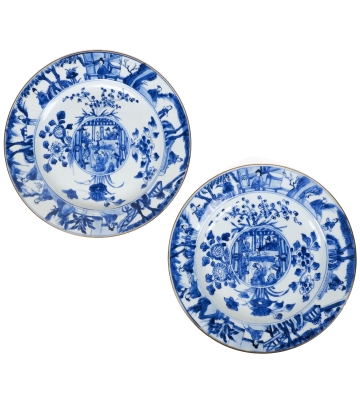
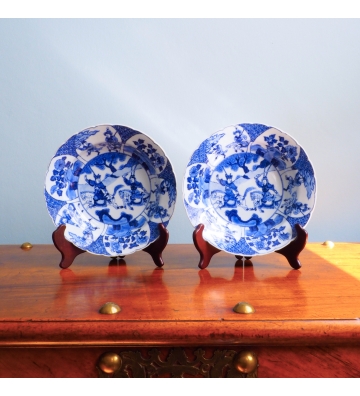
A pair of transitional late Kangxi (1661-1722) to early Yongzheng period (1722-1735) plates within the center a court in session decorated, 18th century, around 1710-1735, Jingdezhen, China.
Blue and white
Dimensions: 23 cm diameter.
Information to be filled.
Dimenions: 37 cm diamater (2x).
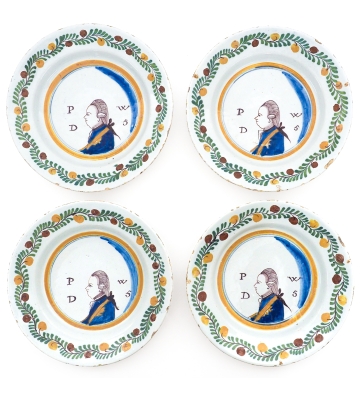
A set of four Orangistic plates depicting stadtholder Willem V ‘en profil’, 18th century, around 1780-1795, Delft, Holland.
Polychrome
Dimensions: 26 cm. diameter.
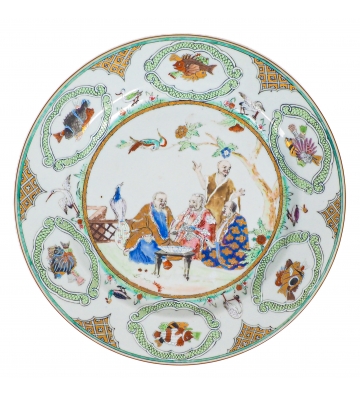
A Chinese verte plate after the 'Doctors Visit' design of Cornelis Pronk on the instructions of the Dutch East India Company, 18th century, around 1738, China, Jingdezhen.
Dimensions: 22,5 cm. diameter.
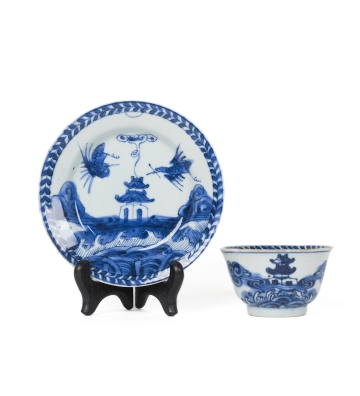
A Kangxi period (1662-1722) cup and saucer with cranes and pagoda decoration out of the former collection of August II the Strong, around 1700-1720, Jingdezhen, China.
Blue and white
Dimensions: 13,7 cm. (saucer) 8 cm. (cup) diameter.
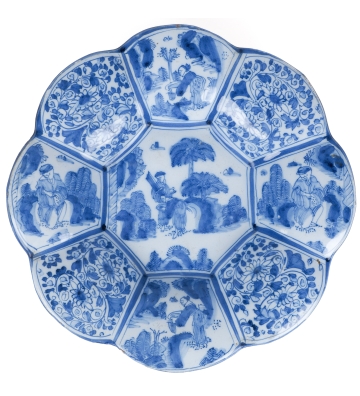
Dutch Delft Lobbed dish with in the center oriental figures surrounded by palm trees, 17th century, around 1670-1680, Delft, Holland.
Blue and white
Dimensions: 33 cm. diameter.
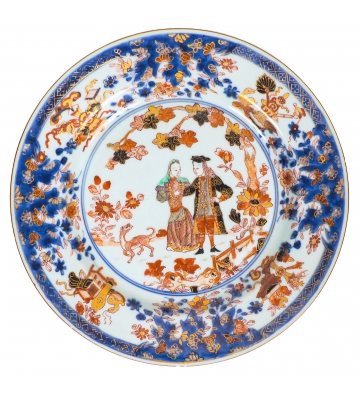
A Yongzheng period (1722-1735) plate with 'Governor Duff' decoration in Chinese verte-imari, 18th century, around 1725-1730, Jingdezhen, China.
Chinese verte-imari
Dimensions: 23,5 cm diameter.
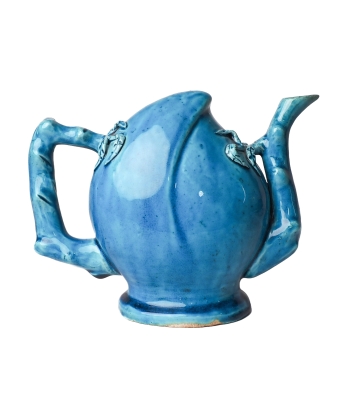
A rare turquoise 'Cadogan' wine pot of biscuit porcelain shaped as Longevity Peach, 18th century, Jingdezhen, China.
Emaille sur biscuit.
Dimensions: around 17 cm. height.
A set of Kangxi (1662-1722) period deep plates with Warriors and decoration on the back of the plates, 17th century, around 1700, Jingdezhen, China.
Blue and white
Dimensions: 23.5 cm diameter.
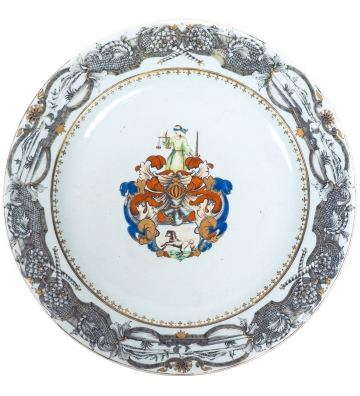
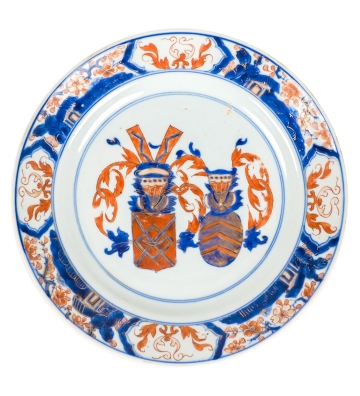
A Chinese Kangxi (1662-1722) porcelain Imari-style armorial wedding plate for the Dutch market, 18th century, around 1700-1720, Jingdezhen/Canton, China.
Chinese Imari
Dimensions: 24 cm. diameter.
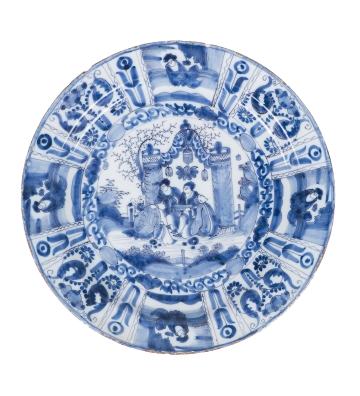
A pair of large Dutch Delft plates in Chinese 'Transition' style with oriental subjects near an arbor, around 1680-1700, Delft, Holland.
Blue and white
Dimensions: 35 cm. diameter.
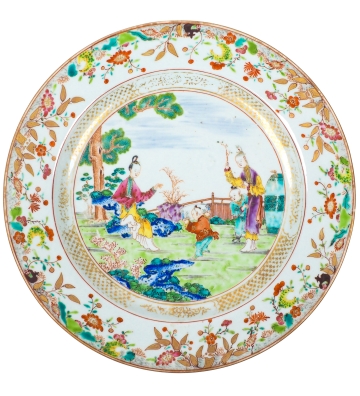
A fine Chinese Qianlong period (1736-1795) plate decorated with a scene of 'Sanniang jiao zi' depicting Long Elizas (mother) and playing children (son) in a garden, 18th century, around 1740-1760, Jingdezhen, China.
Famille rose
Dimensions: 22.8 cm diameter
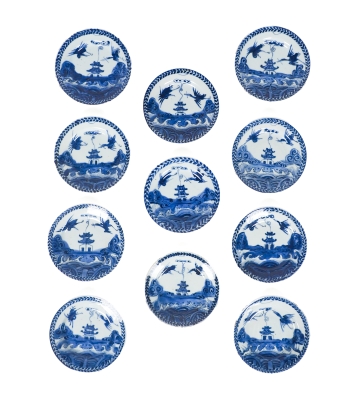
Kangxi period (1662-1722) saucers with cranes and pagoda decoration partly out of the former collection of August II the Strong, around 1700-1720, Jingdezhen, China.
Blue and white
Dimensions: 13,7 cm. diameter
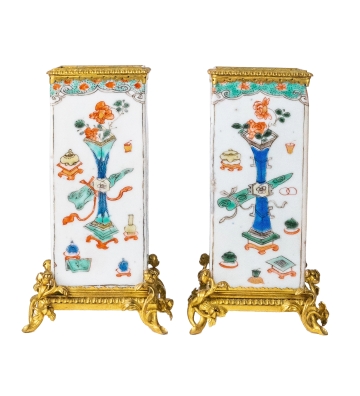
A pair of Kangxi period (1662-1722) famille verte vases with the ‘Hundred Treasures’ decor and gilt-bronze mounts, around 1700, Jingdezhen, China.
Famille Verte
Dimensions: 16.8 cm. height.
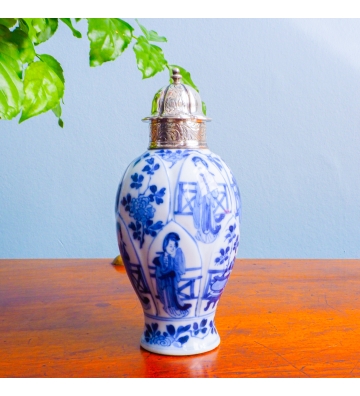
A very fine Kangxi period (1662-1722) porcelain tea caddy depicting Long Eliza's with a 19th century mounted lid, 18th century, around 1700-1720, China, Jingdezhen.
Blue and white
Dimensions: ca. 17 centimeters height.
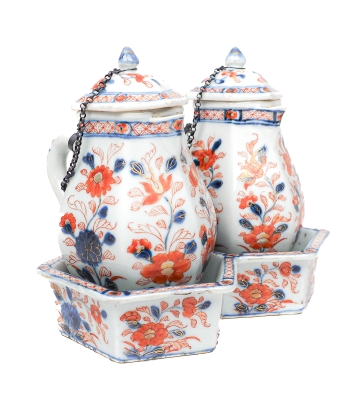
A Chinese Kangxi period (1662-1722) Imari style oil and vinegar set for the European market, 18th century, around 1700-1720, Jingdezhen, China.
Imari
Dimensions: around 15 cm. height