- Out-of-Stock
Reference: 10083
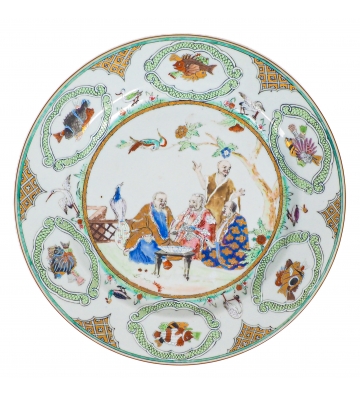
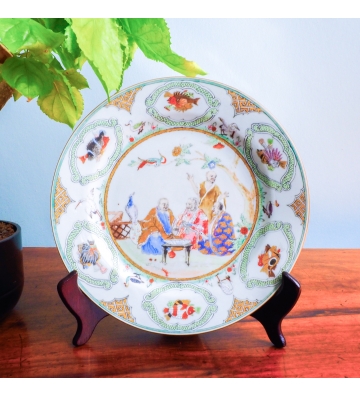
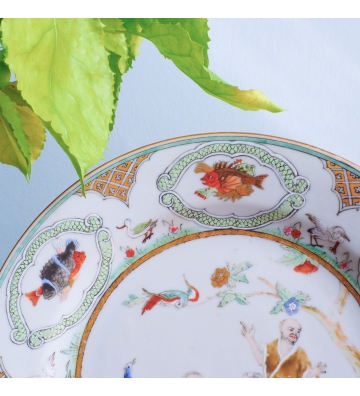
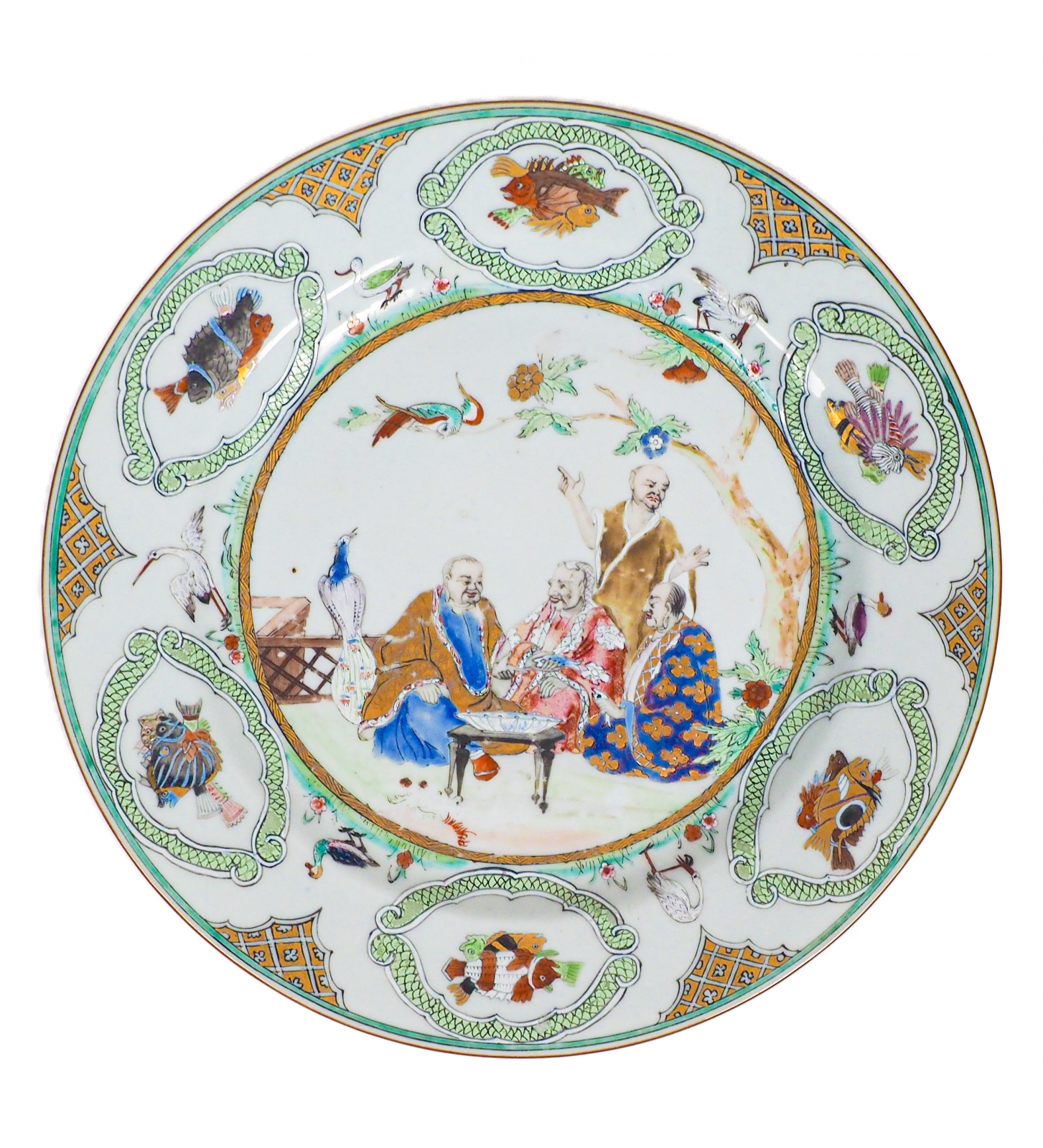
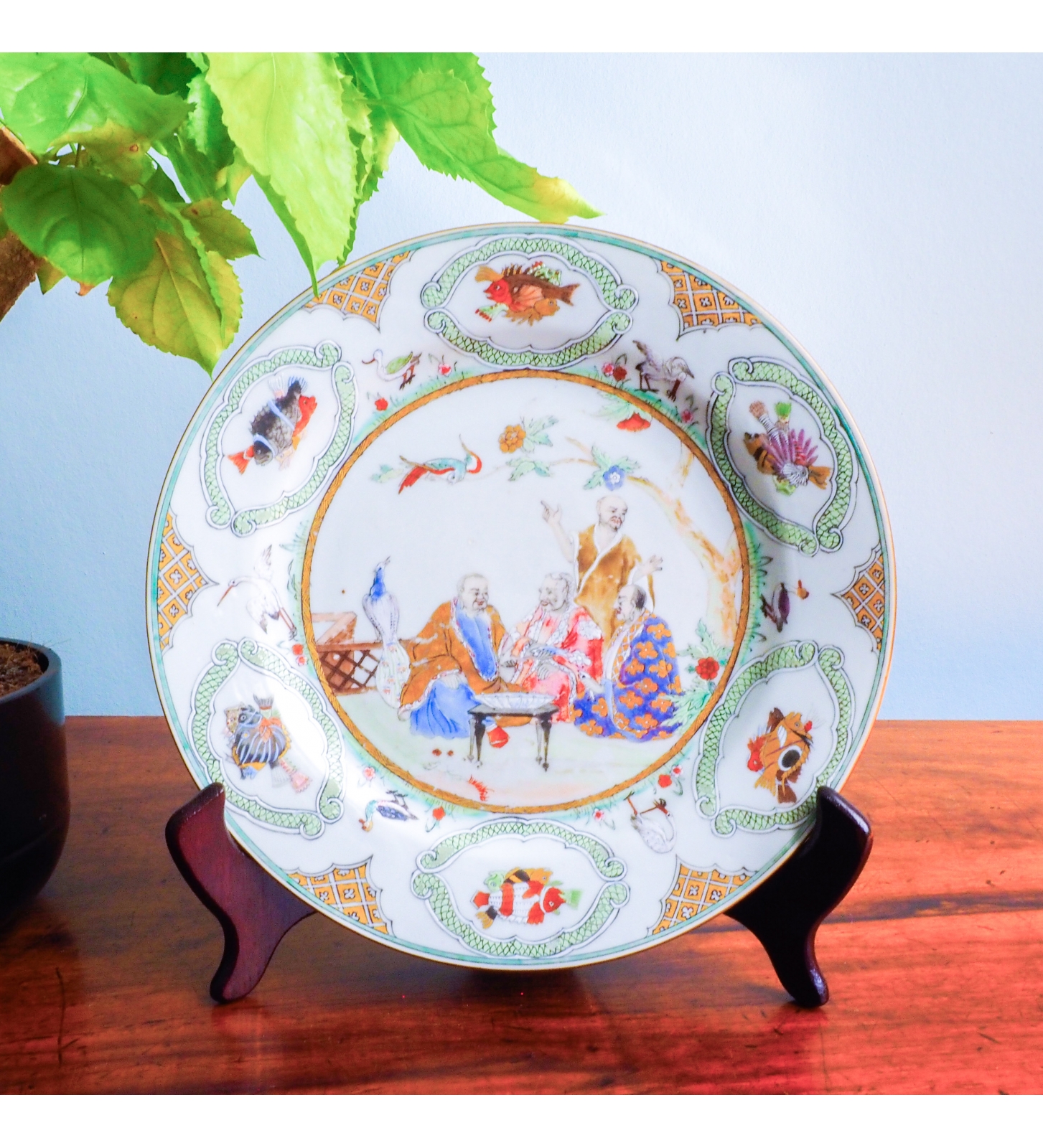
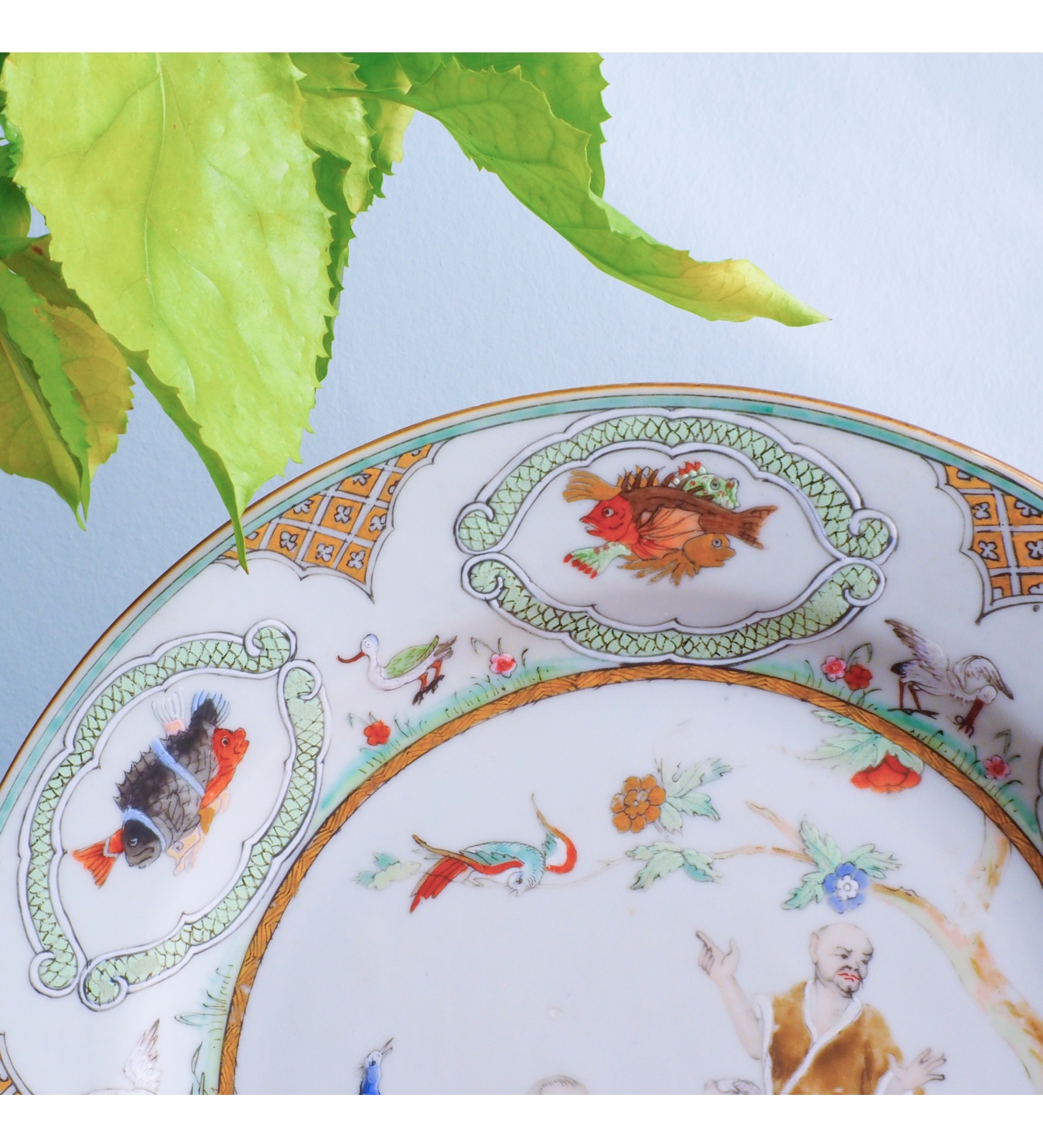
A Chinese verte plate after the 'Doctors Visit' design of Cornelis Pronk on the instructions of the Dutch East India Company, 18th century, around 1738, China, Jingdezhen.
Dimensions: 22,5 cm. diameter.
 Secure payment
100% secure payment
 Worldwide shipping
Fast delivery
 Free shipping in EU
On all orders
 Professional packaging
Professional order packaging
Cornelis Pronk (1691–1759) was a Dutch artist from Amsterdam known for his precise drawings of towns, landscapes, and historic buildings. After training as a portrait painter under Arnold Boonen (1669-1729), he became especially respected for his detailed topographical drawings, many of which were later engraved and published. In addition to painting and drawing, Pronk also created decorative designs, including patterns for porcelain.
In 1734 the Dutch East India Company (VOC) commissioned Pronk to design porcelain that could be produced in China for the European market. He signed a three-year contract with the Company and received a salary of about 1,200 guilders per year. Each year he was required to produce a new design, including both the shape of the pieces and the decorative motifs. Several copies of the drawings were made so they could be sent on different ships to Asia. Some of these drawings are still preserved at the Rijksmuseum.
At that time Chinese goods such as tea, silk, and porcelain formed an important part of the VOC’s trade. After China reopened its maritime trade in 1684, Chinese merchants regularly sailed with large junks to Batavia. From 1729 onwards the Company also organised direct voyages to Canton in order to secure supplies for the European market. Pronk’s designs were sent to Asia and the VOC ordered a limited assortment including dinner services, tea services, vases with basins, and decorative mantelpiece sets. These were produced in several colour schemes, such as blue-and-white, enamel decoration, and the colourful Imari style with iron-red and gold.
The project was ambitious but complicated. The designs had to travel from the Netherlands to Asia before production could begin, and the finished porcelain then had to be shipped back to Europe, a process that could take several years. Because of the cost and complexity, the quantities produced were relatively limited. Pronk ultimately supplied four series of designs during his collaboration with the VOC. Today “Pronk porcelain” is valued as an important example of early Chinese export porcelain designed for European taste, illustrating the close artistic and commercial connections between Europe and China in the 18th century.
The design known as “The Doctor's visit to the Emperor” or “Four doctors” was the second porcelain pattern created by Cornelis Pronk for the VOC. The original design was sent to Asia in 1736, although delays in shipping meant that production only began later. The composition exists in two versions: an early, more detailed design and a simplified version introduced around 1739.
The scene shows three seated figures engaged in conversation while holding fish, with a fourth man standing behind them. A flowering tree appears in the background and a peacock stands on a fence nearby. The decorative border contains cartouches with fish and birds. Although the exact meaning of the scene is uncertain, it may have been inspired by Chinese imagery connected to the Taoist star gods, who were sometimes depicted together in stories and legends.
Like the earlier 'parasol design', the production of this pattern faced practical difficulties. When the VOC agents in Canton requested prices from Chinese dealers, the costs were again considered very high, and only small quantities were initially ordered. It is known that two orders came to Holland with the VOC ship ‘Hogersmilde’ (built 1723, lost in 1750). The simplified version of the design was later introduced in an attempt to reduce costs and make production easier.
Provenance: The Dutch collection of J. Leegstra (1937-2025).
Similar plates are in the collection of:
-Metropolitan Museum of Art, object nr. 79.2.1118.
-Victoria and Albert Museum, accession number C.43-1912.
Condition: Perfect.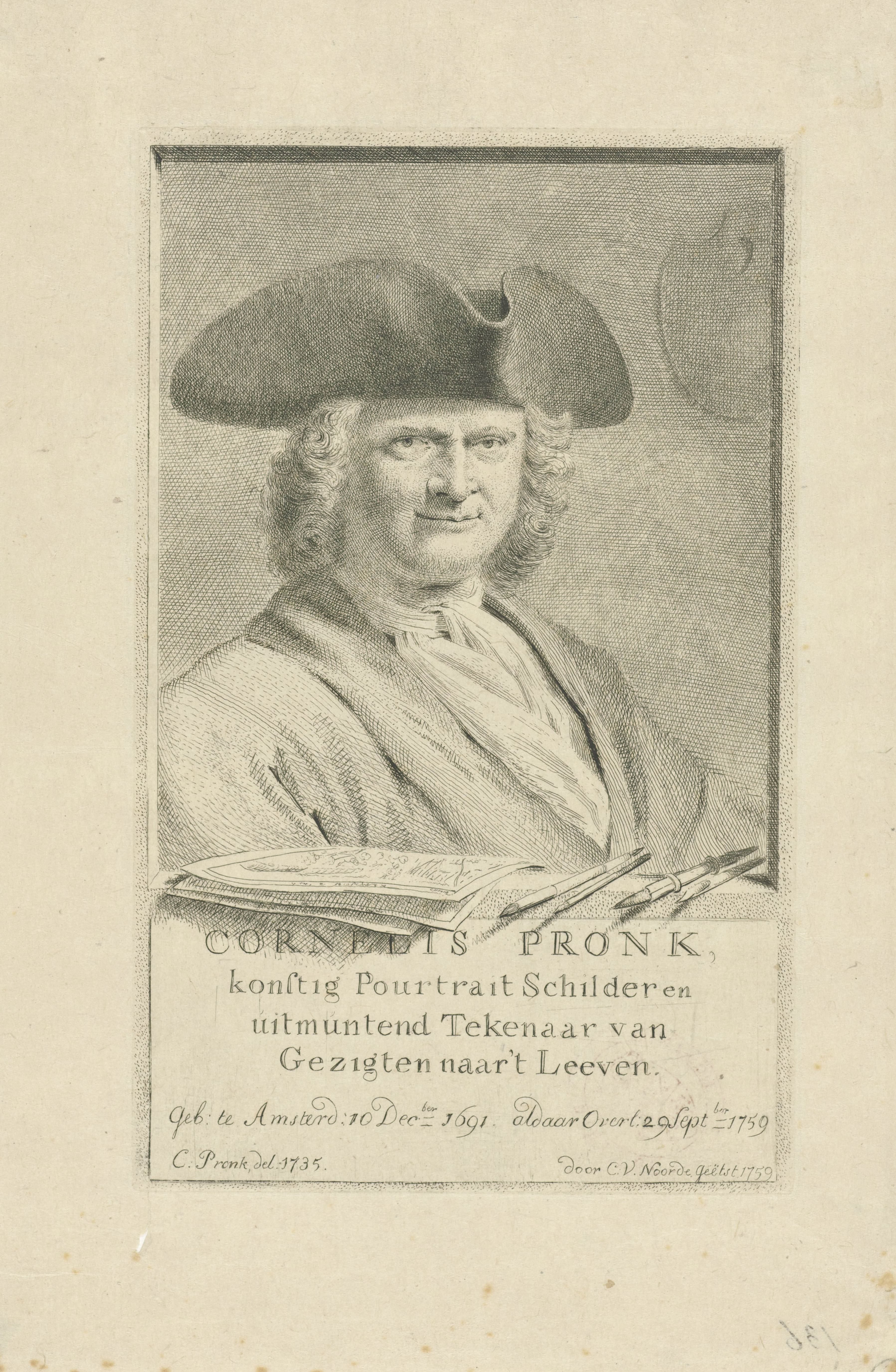
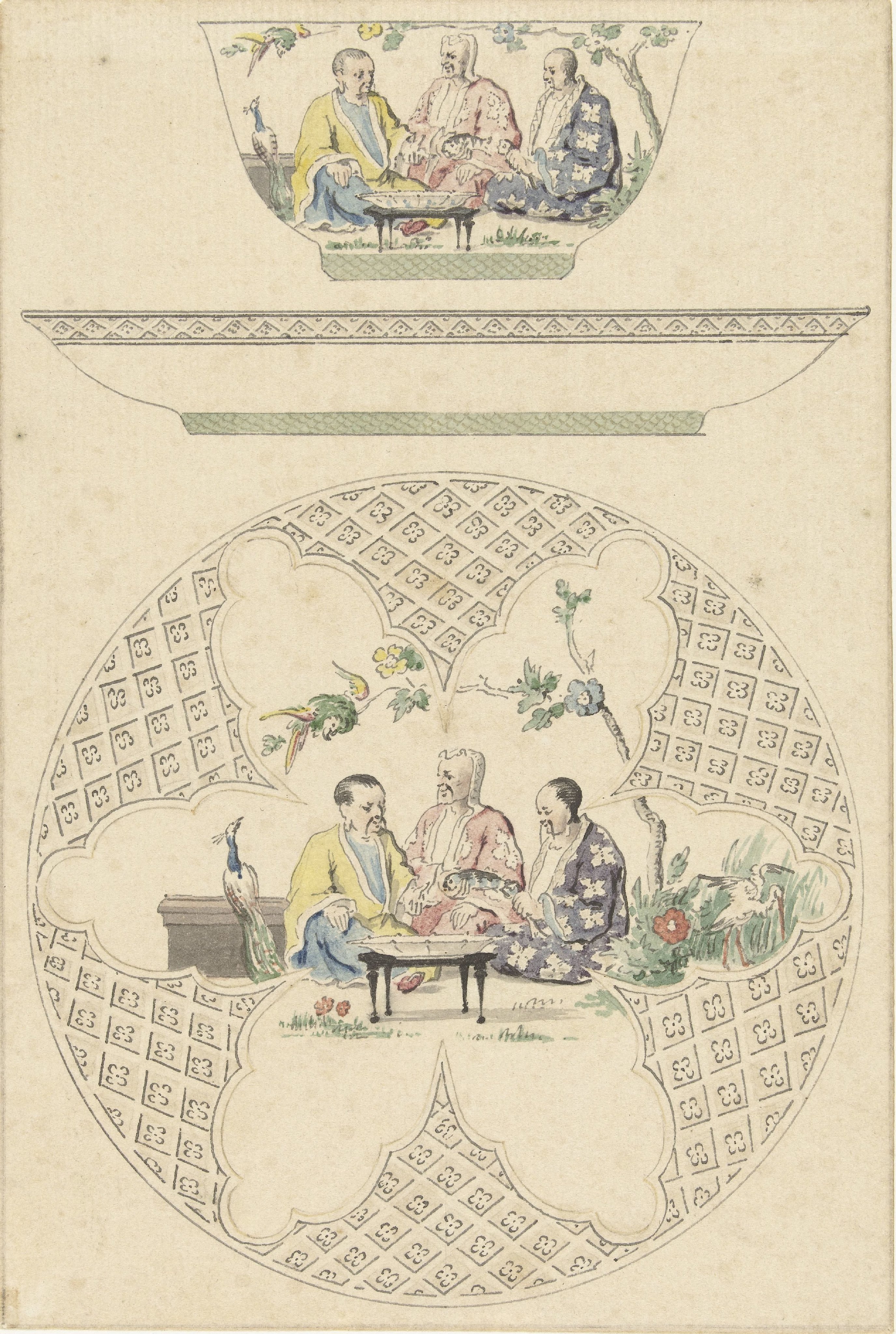
'Portret van Cornelis Pronk, Cornelis van Noorde 1759' 'De doktersvisite aan de keizer, Cornelis Pronk, 17341736'
source: www.rijksmuseum.com.
source: C.J.A. Jorg, 'Pronk Porcelain', 1980.
A Chinese verte plate after the 'Doctors Visit' design of Cornelis Pronk on the instructions of the Dutch East India Company, 18th century, around 1738, China, Jingdezhen.
Dimensions: 22,5 cm. diameter.
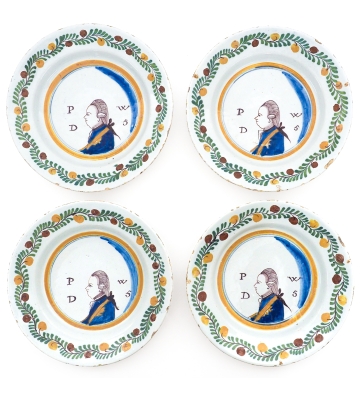
A set of four Orangistic plates depicting stadtholder Willem V ‘en profil’, 18th century, around 1780-1795, Delft, Holland.
Polychrome
Dimensions: 26 cm. diameter.
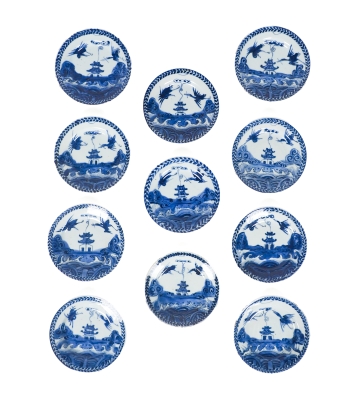
Kangxi period (1662-1722) saucers with cranes and pagoda decoration partly out of the former collection of August II the Strong, around 1700-1720, Jingdezhen, China.
Blue and white
Dimensions: 13,7 cm. diameter
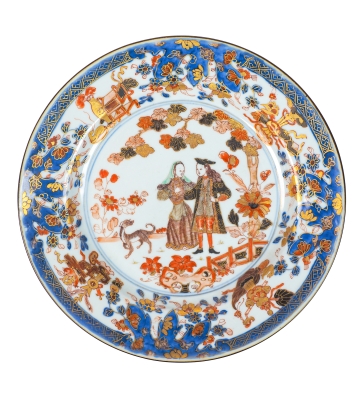
A Yongzheng period (1722-1735) plate with 'Governor Duff' decoration in Chinese verte-imari, 18th century, around 1725-1730, Jingdezhen, China.
Chinese verte-imari
Dimensions: 23,3 cm diameter.
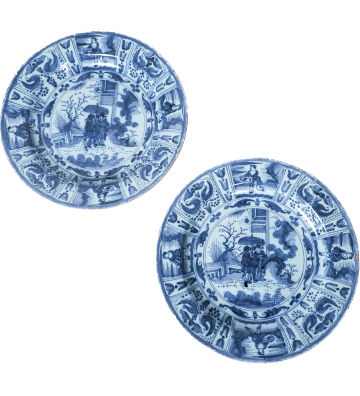
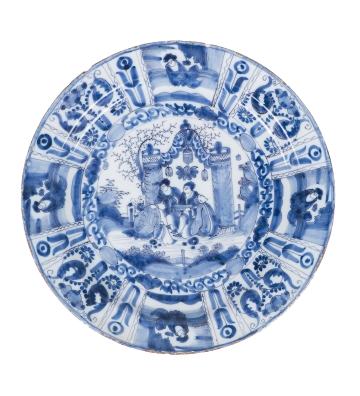
A pair of large Dutch Delft plates in Chinese 'Transition' style with parasol subjects, around 1680-1700, Delft, Holland.
Blue and white
Dimensions: 39 cm. (2x)
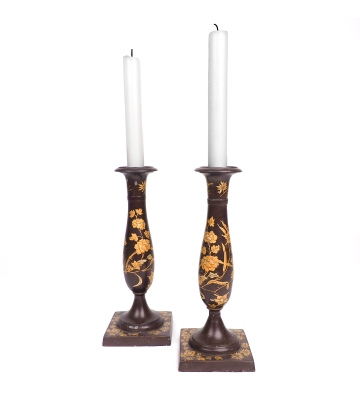
A pair of tin Empire candlesticks in lacquer with floral motifs, 19th century, around 1815, Holland.
Dimensions: 22.5 cm. height.
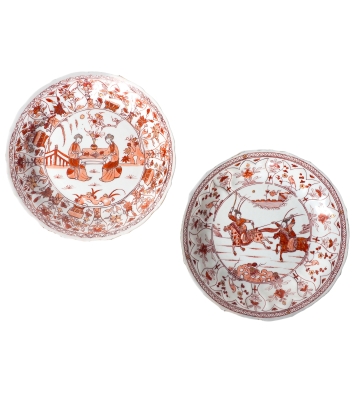
A set of late Kangxi (1654-1722) to early Yongzheng (1722-1735) period plates in so called ‘milk and blood’ painting, 18th century, around 1725, Jingdezhen, China.
Overglazed iron-red and gold
Dimensions: 22.5 cm diameter.
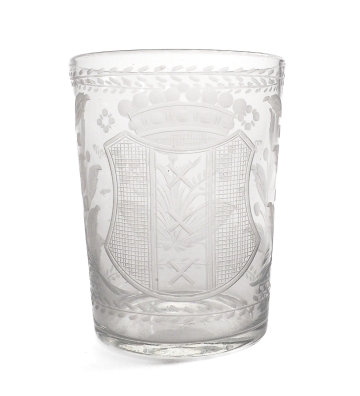
A hand-blown beaker engraved with the coat of arms of the city of Amsterdam, 18th century, around 1775-1800, Holland.
Dimensions: 15 cm. height, 12 cm width.
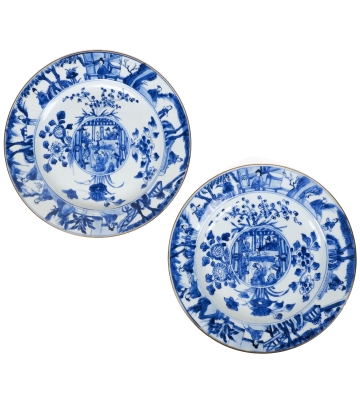
A pair of transitional late Kangxi (1661-1722) to early Yongzheng period (1722-1735) plates within the center a court in session decorated, 18th century, around 1710-1735, Jingdezhen, China.
Blue and white
Dimensions: 23 cm diameter.
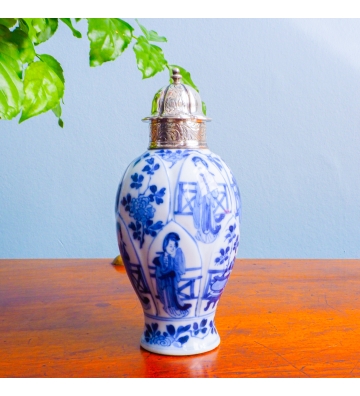
A very fine Kangxi period (1662-1722) porcelain tea caddy depicting Long Eliza's with a 19th century mounted lid, 18th century, around 1700-1720, China, Jingdezhen.
Blue and white
Dimensions: ca. 17 centimeters height.
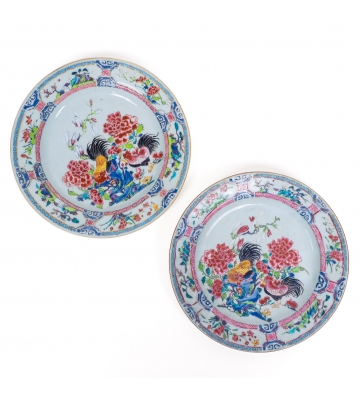
A beautiful set of Chinese Yongzheng period (1723-1735) famille rose plates with flower decoration between two roosters, 18th century, around 1730, Jingdezhen, China.
Dimensions: 22,5 cm diameter.
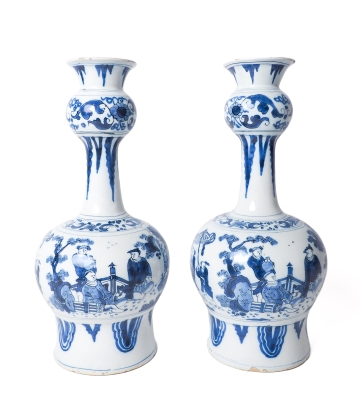
A pair of Dutch Delft garlic neck vases in Chinese Transitional style, 17th century, around 1690-1700, Delft, Holland.
Blue and white.
Marked '6=' (unknown maker)
Dimensions: 35 cm. height.
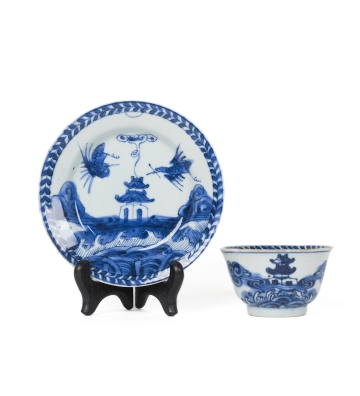
A Kangxi period (1662-1722) cup and saucer with cranes and pagoda decoration out of the former collection of August II the Strong, around 1700-1720, Jingdezhen, China.
Blue and white
Dimensions: 13,7 cm. (saucer) 8 cm. (cup) diameter.
An Earthenware refined buste of a Roman emperor or statesmen wearing a toga, 17th century, around 1690, (probably) Delft, Holland.
Blue and white
Dimensions: 25 cm height.
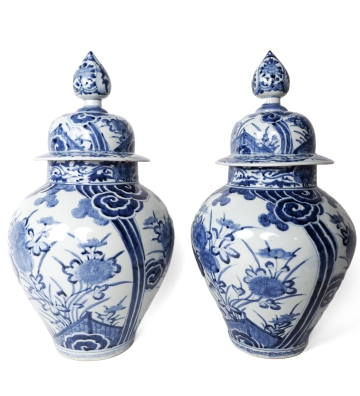
A pair of large Japanese Arita blue and white baluster vases with domed covers painted with panels of peony sprays divided by ruyi-bands, 18th century, around 1700-1730, Arita, Japan.
Blue and white
Dimensions: 52 cm. height.
A pair of large Dutch Delft plates in Chinese 'Transition' style with oriental subjects near an arbor, around 1680-1700, Delft, Holland.
Blue and white
Dimensions: 35 cm. diameter.
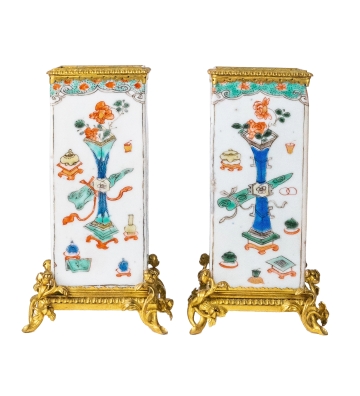
A pair of Kangxi period (1662-1722) famille verte vases with the ‘Hundred Treasures’ decor and gilt-bronze mounts, around 1700, Jingdezhen, China.
Famille Verte
Dimensions: 16.8 cm. height.