Reference: 10103
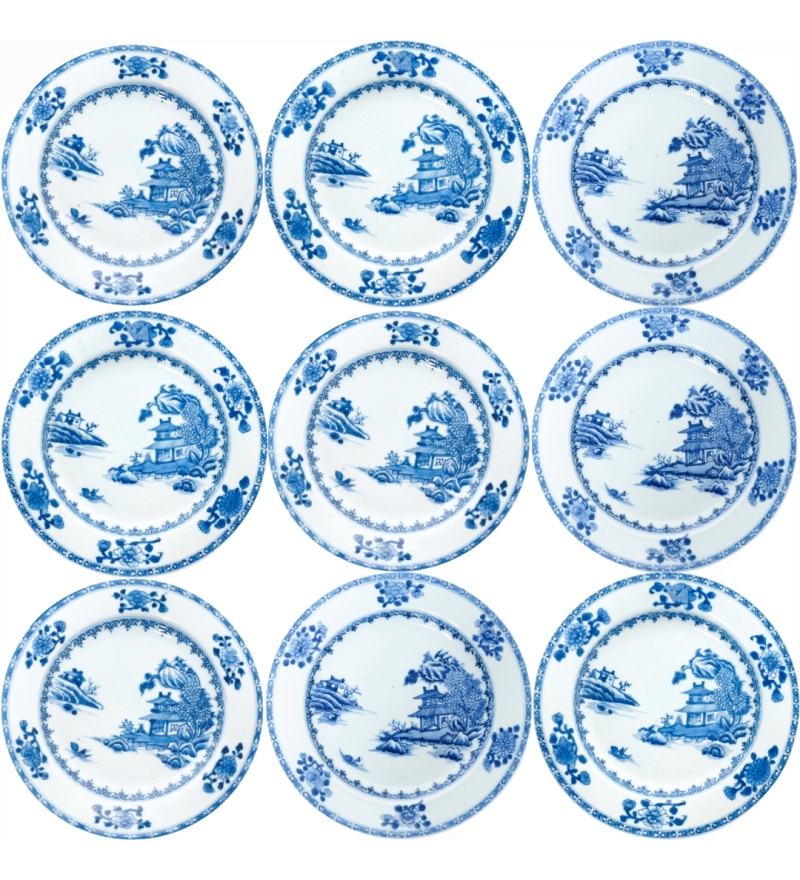
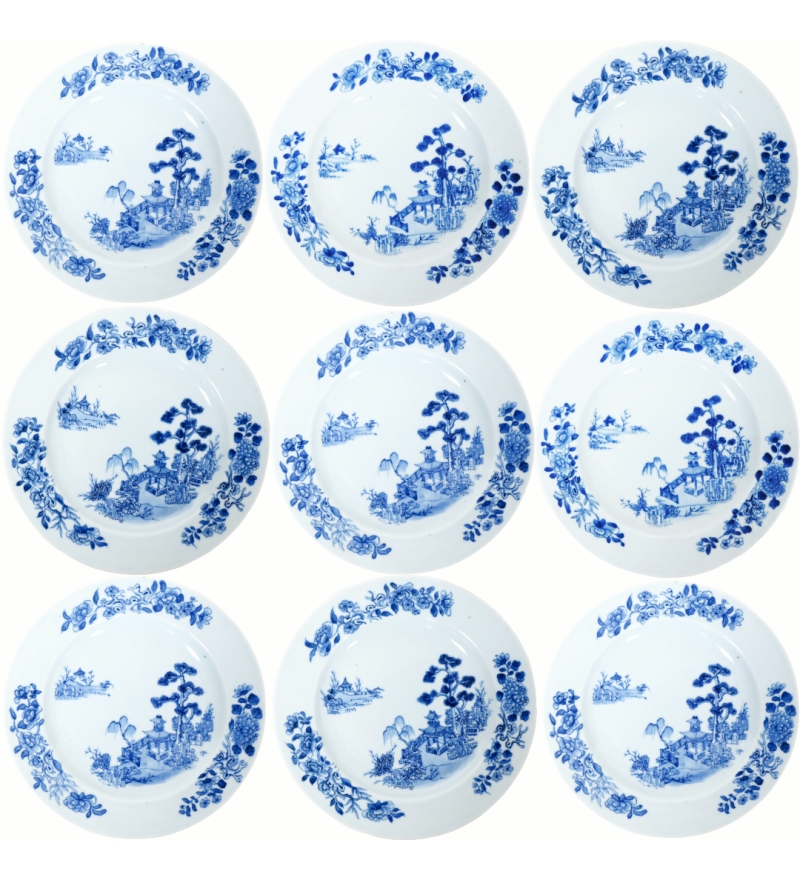
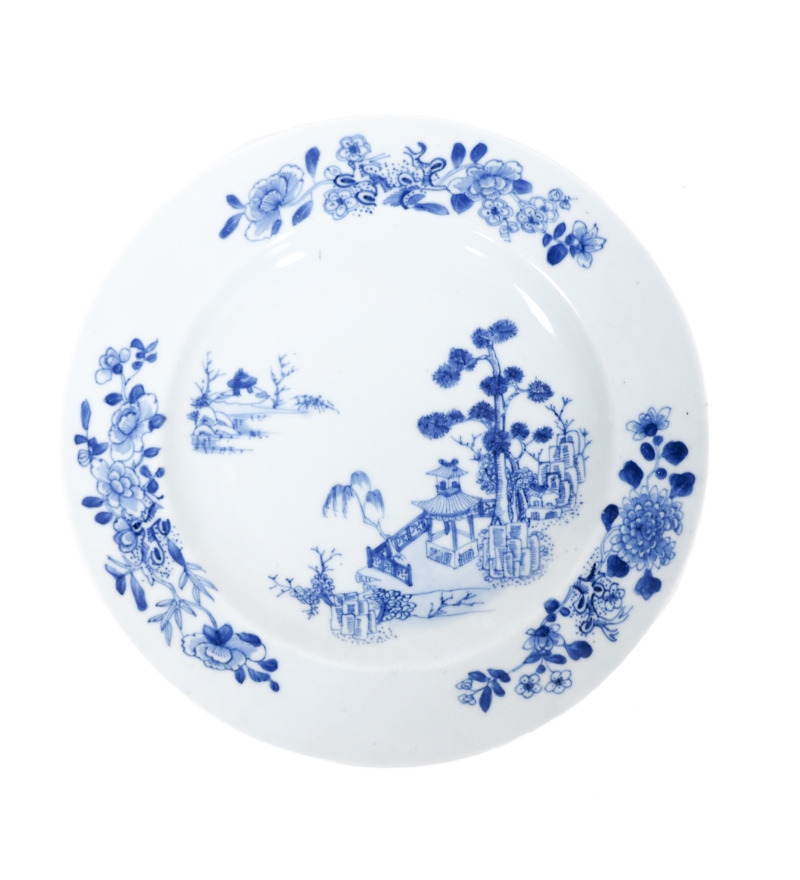
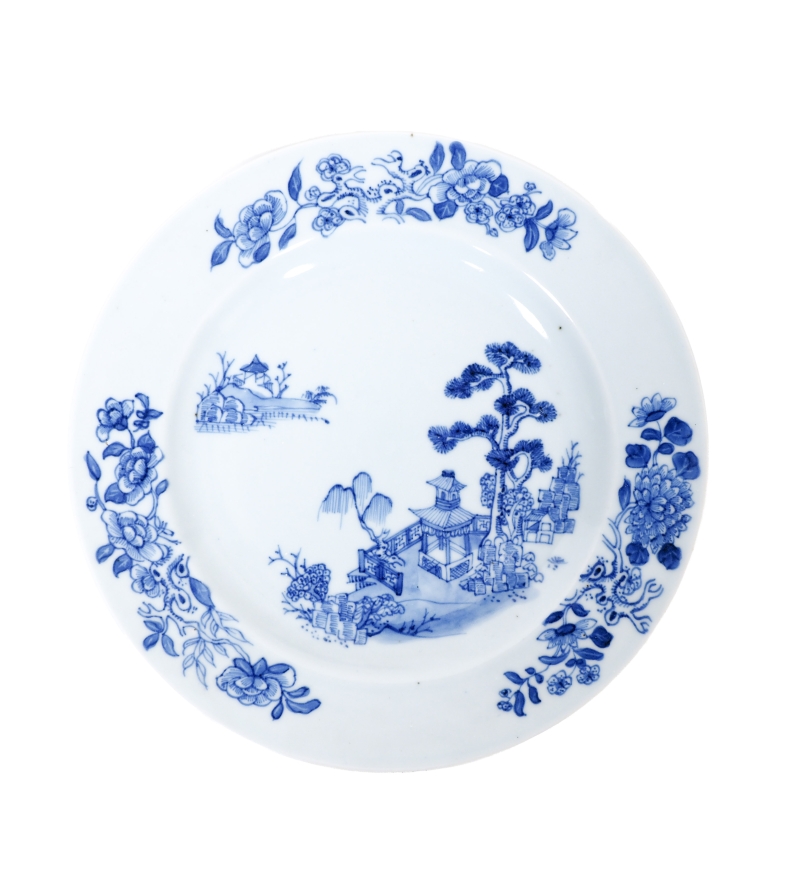
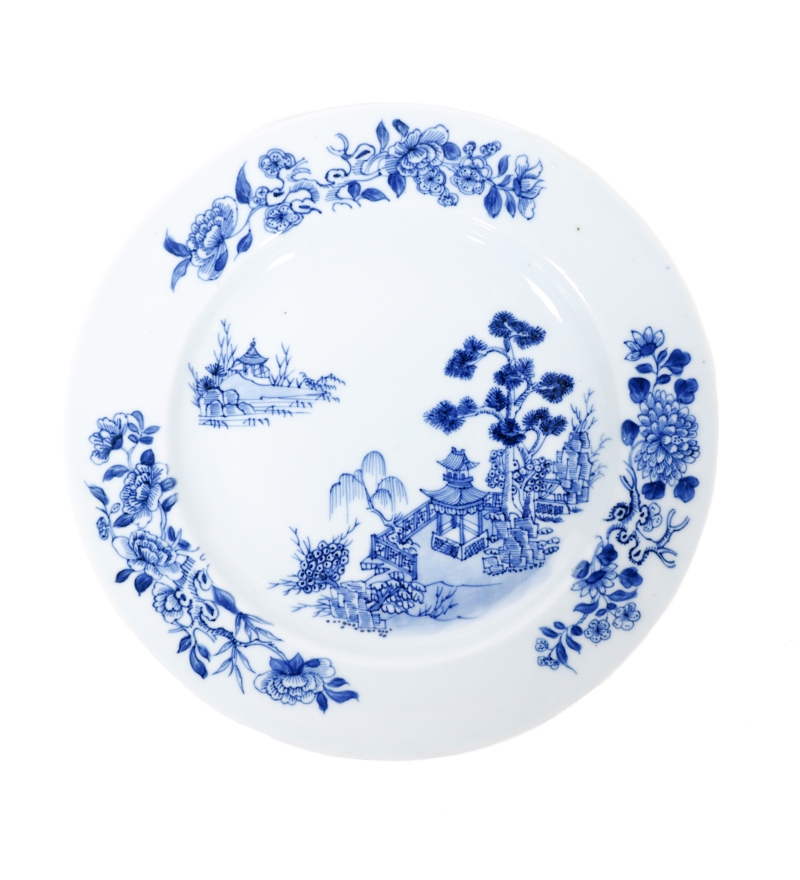
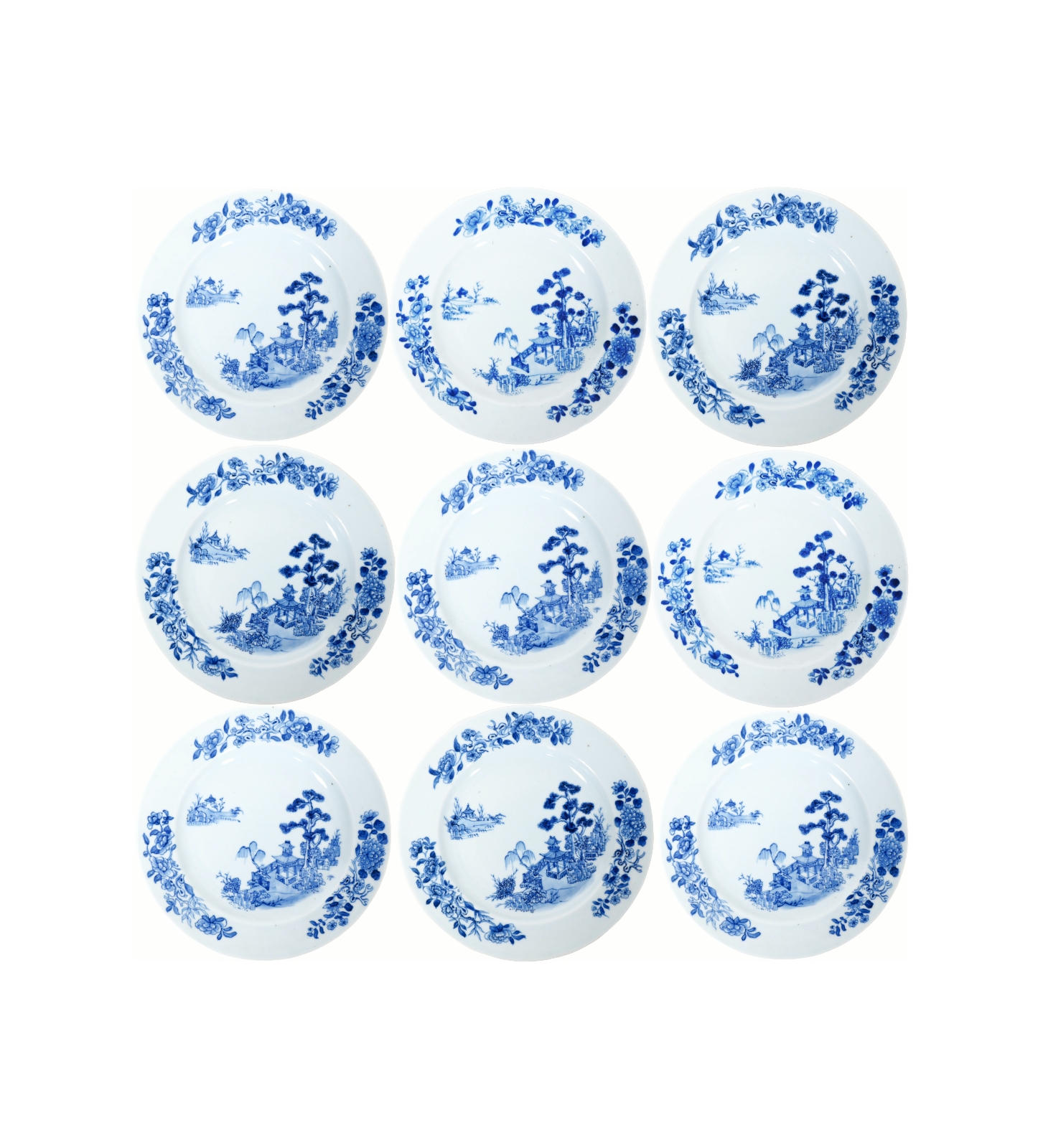
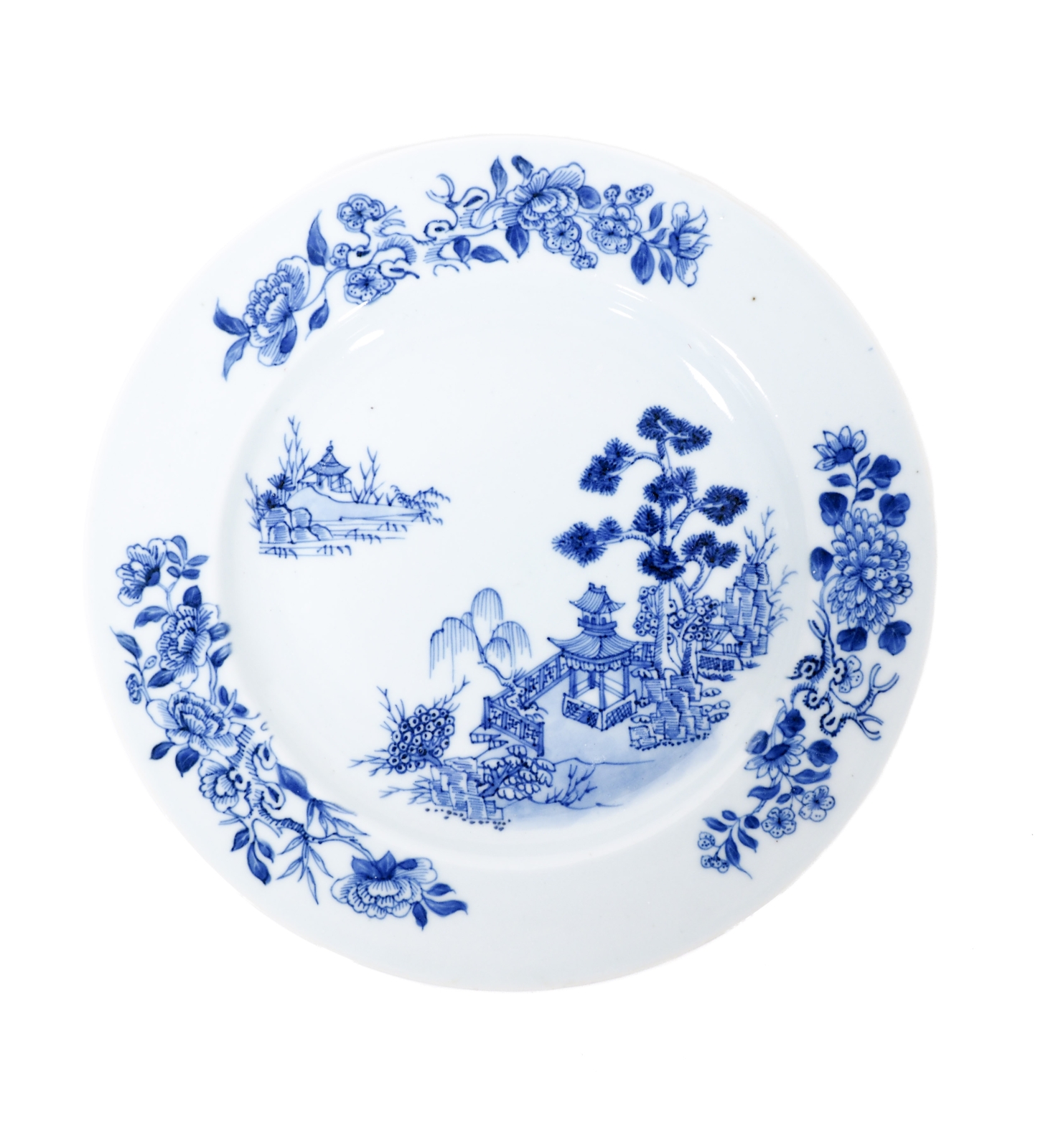
A set of 12 Qianlong Period (1736-1795) Nanking cargo '"Lattice-fence pattern" plates out of the sunken ship VOC Ship Geldermalsen, 18th century, around 1750, Jingdezhen, China.
Dimensions: ca. 23,5 cm. diameter
 Secure payment
100% secure payment
 Worldwide shipping
Fast delivery
 Free shipping in EU
On all orders
 Professional packaging
Professional order packaging
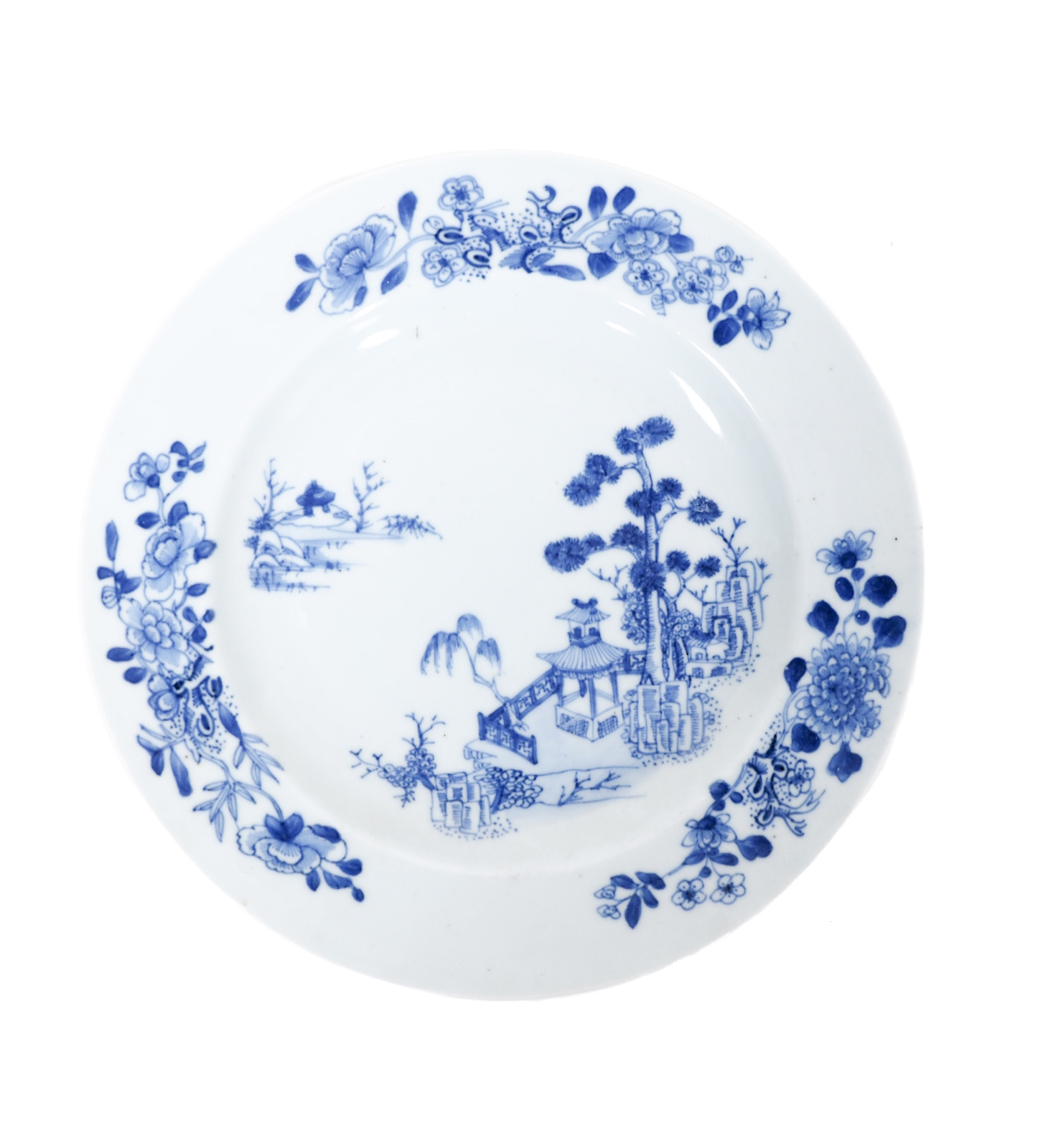
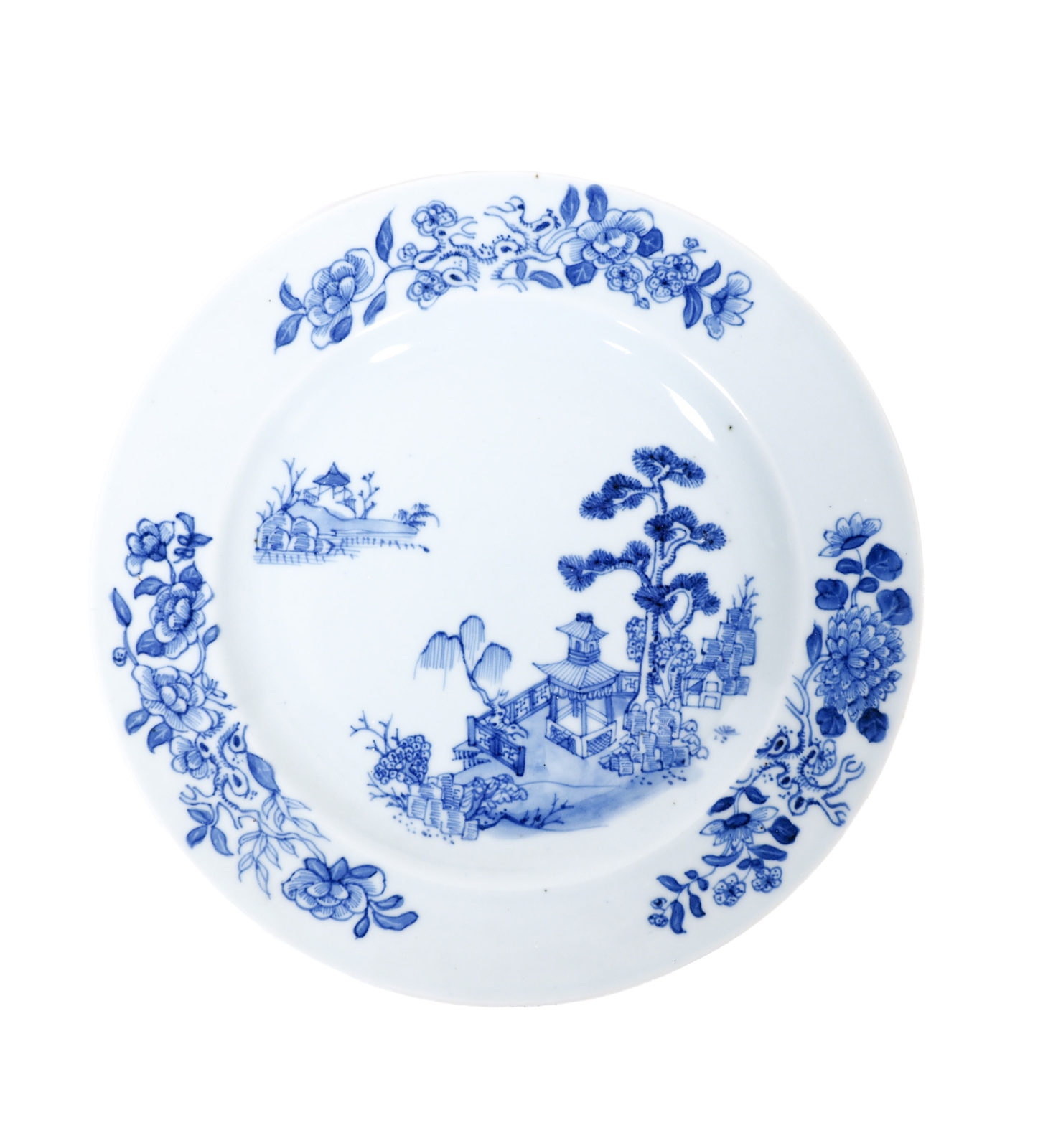
These plates are cecorated with a river landscape featuring a pavilion beside pine trees, the 'Wutong Shan' Mountain, and stylized rock formations set on a fenced terrace. Also there can be seen aa willow tree in the corner. In the background, there is a a rocky bank with a smaller pavilion nestled among trees and bamboo. The rim depicts three clusters of flowering branches featuring chrysanthemums, Prunus, daisies, bamboo, and three peonies.
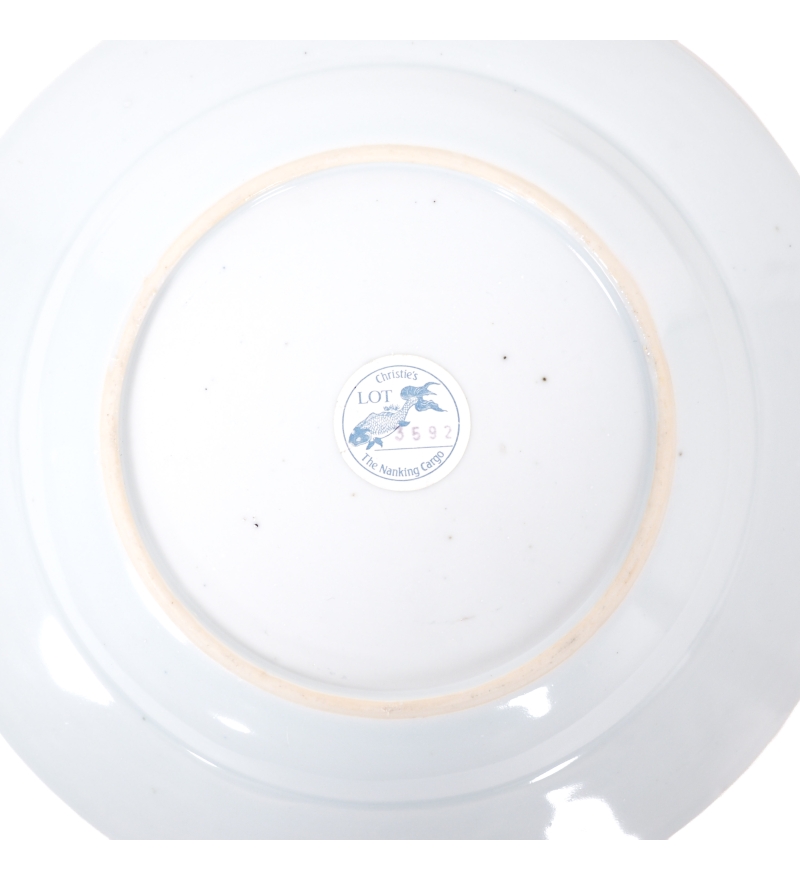
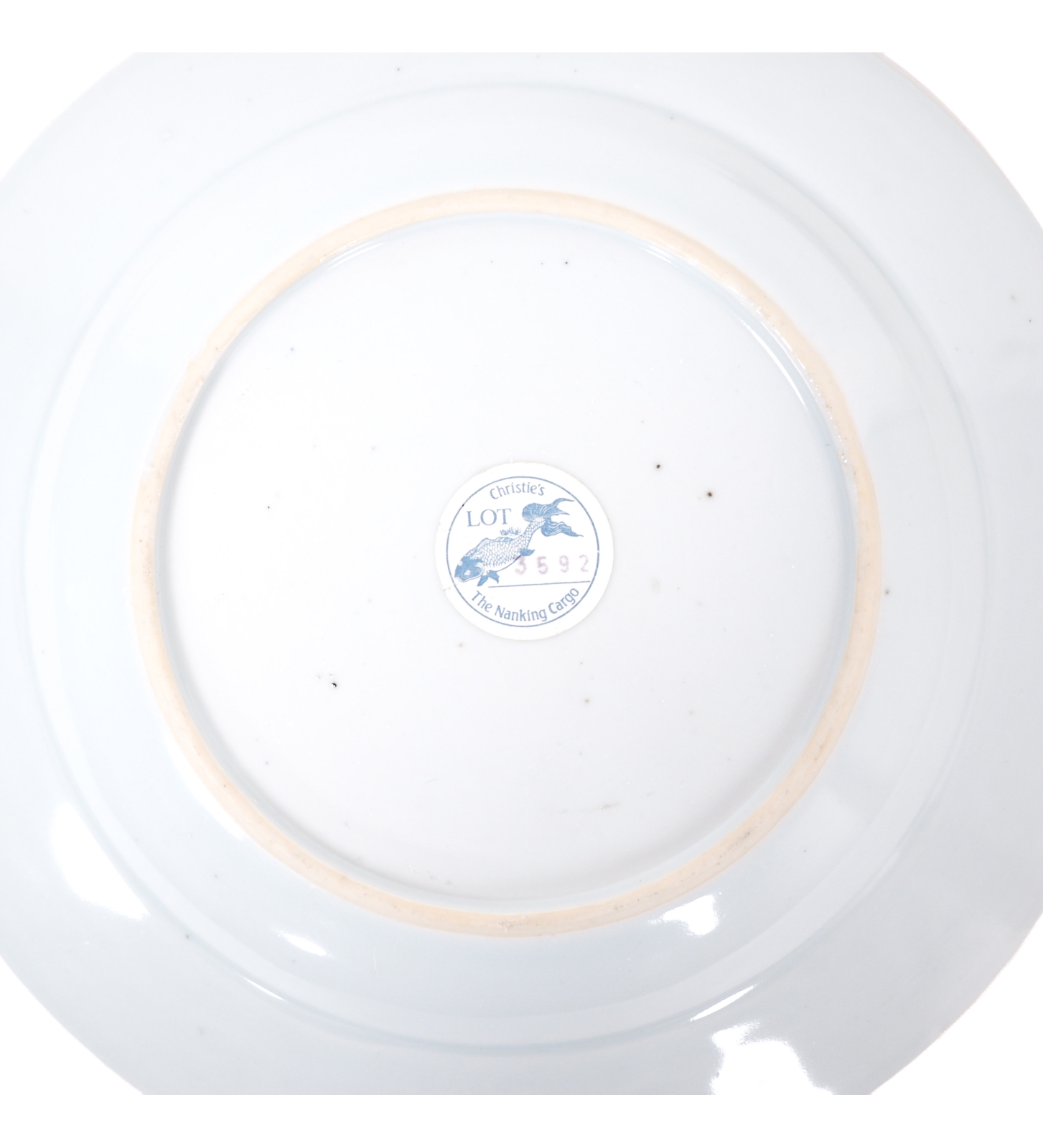
Originating from the Nanking Cargo, these set of plates has a remarkable past. In 1752, the Dutch VOC Ship 'The Geldermalsen' sunk in the South Chinese Sea en route from Canton (modern-day Guangzhou) to Batavia (Jakarta, Indonesia), close to Nanking. Among the cargo lost were an array of ceramics such as plates, bowls, dishes, cups, saucers, vases, teapots, and personal belongings of the crew. In 1985, Michael Hatcher's expedition uncovered the sunken ship and its precious cargo. Remarkably, the porcelain retained its condition despite resting on the ocean floor for over two centuries. This preservation was due to the substantial amount of tea in the cargo that buried the porcelain serving as a protective layer against the corrosive effects of the seawater. In 1986 the porcelain and other treasuries of the Nanking cargo were auctioned at Christie’s, Amsterdam. Back at their original destination, but almost 250 years later!
Condition: 2 plates with small hairlines in the center , and one with a tiny chip/fritting. No restorations or cracks.
Provenance: Christie’s Amsterdam 28th of April 1986, ‘The Nanking Cargo Chinese export porcelain and gold and European glass and stoneware’, lot nr. xx
Reference: see C.J.A. Jörg, 'The Geldermalsen - History and Porcelain' 1986.
-Groninger Museum object nr. 1986.0085.
A set of 12 Qianlong Period (1736-1795) Nanking cargo '"Lattice-fence pattern" plates out of the sunken ship VOC Ship Geldermalsen, 18th century, around 1750, Jingdezhen, China.
Dimensions: ca. 23,5 cm. diameter
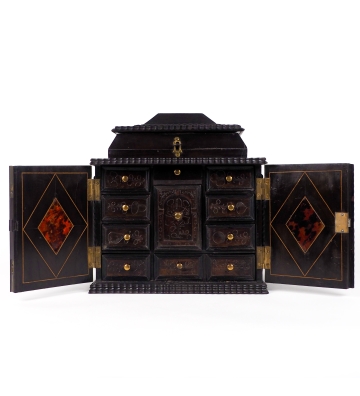
A Flemish table art cabinet made out of ebony wood and inlayed with red tortoiseshell, 17th century, around 1650, Antwerp, Southern Netherlands.
Dimensions: 36 x 22 x 34 cm.
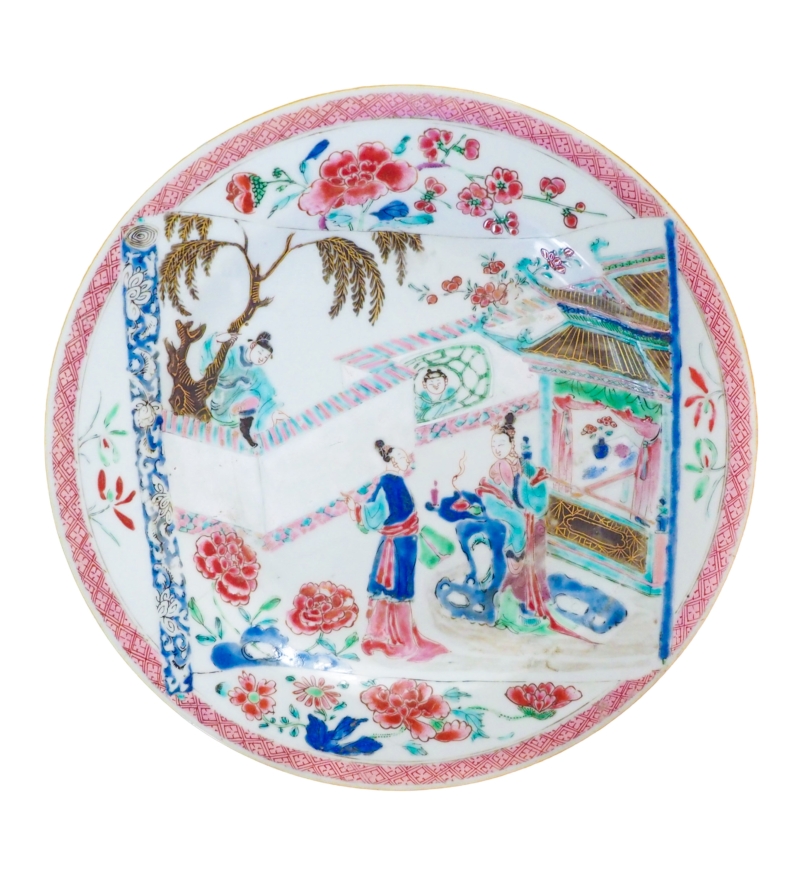
A Chinese Yongzheng period (1723-1735) Famille Rose plate depicting a scene from the ‘Romance of the Western Chamber’, 18th century, around 1730, Jingdezhen, China.
Famille rose
Dimensions: 22,5 cm diameter.
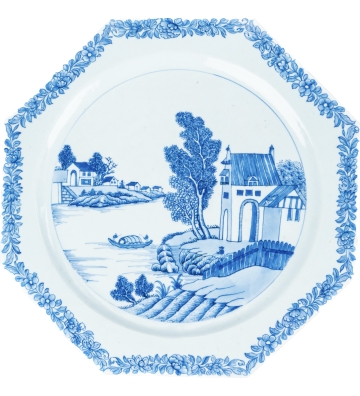
A large octangle shaped Chinese Qianlong period (1735-1796) plate with a Western subject after a design from Esaias van de Velde, 18th century, around 1750, Jingdezhen, China.
Blue and white
Dimensions: 38,5 x 38 cm.
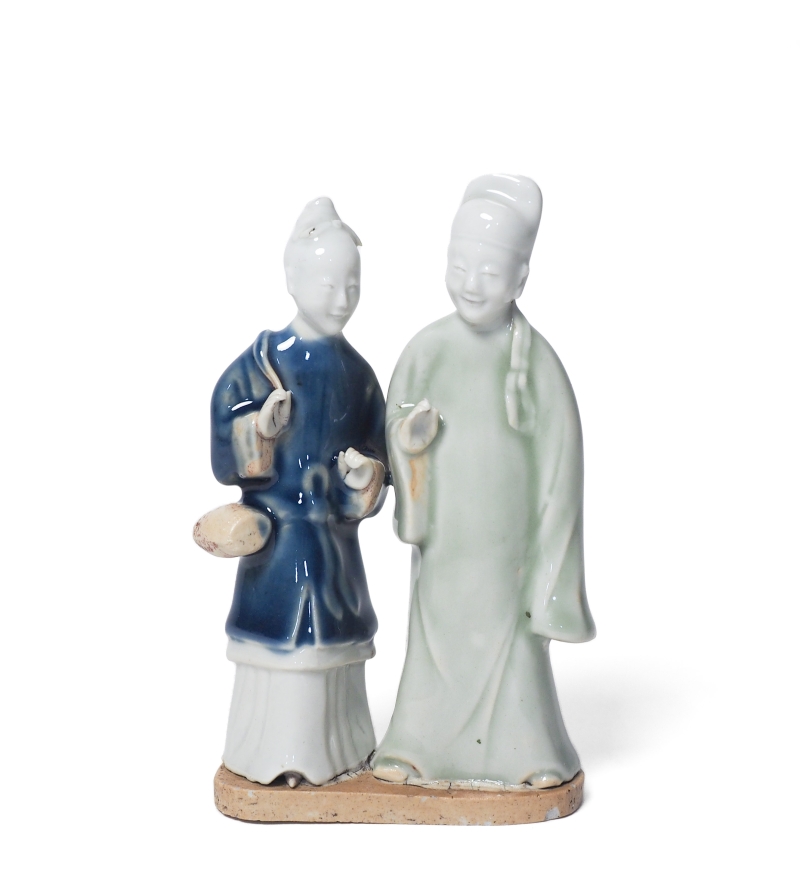
A finely modelled Qianlong period (1736-1795) Chinese biscuit porcelain group depicts a standing couple in conversation, 18th century, around 1740-1750, Jingdezhen, China.
Celadon and Blue
Dimensions: ca. 17 cm. height.
A set of 12 Qianlong Period (1736-1795) Nanking cargo '"Boatman and six-flower border" plates out of the sunken ship VOC Ship Geldermalsen, 18th century, around 1750, Jingdezhen, China.
Dimensions: ca. 23 cm. diameter
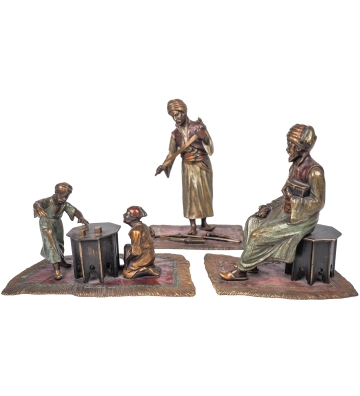
A set of three Vienna bronze oriental figures on tapestry, 20th century, around 1900, Vienna, Austria.
Dimensions: 10, 15 and 17 cm. height.
Marked 'HK' / 'HA' at the bottom (unknown artist) .
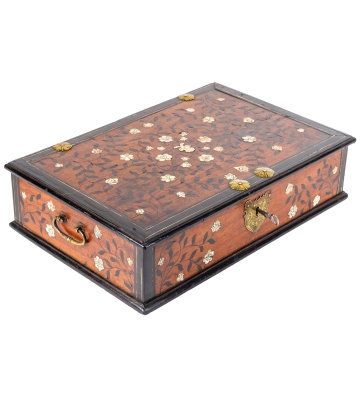
An exotic (Anglo-)Indian work box made of teak and ebony with bone inlaid floral motifs, 18th century, around 1700-1750, Vizagapatam, India.
Dimensions: 32,5 x 47,5 x 12 cm.
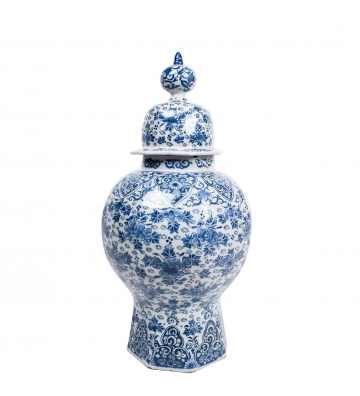
A Dutch Delft blue and white baluster vase painted with floral decoration, 18th century, around 1700-1720, Delft, Holland
Blue and White
Probably made by 'De Metaale Pot (1670-1775)' factory.
Dimensions: ca. 50 cm height.
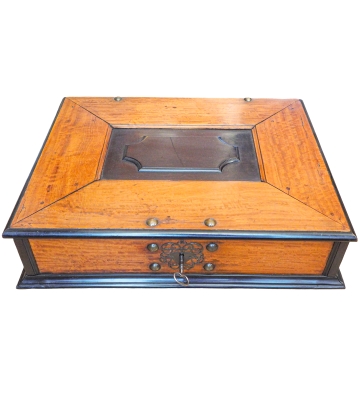
A very large Dutch colonial writing box on ball feet made out of teak and ebony wood finished with fine bronze mounts, 18th century, around 1750, Batavia (Jakarta), Indonesia.
Dimensions: 19x62x50 cm.
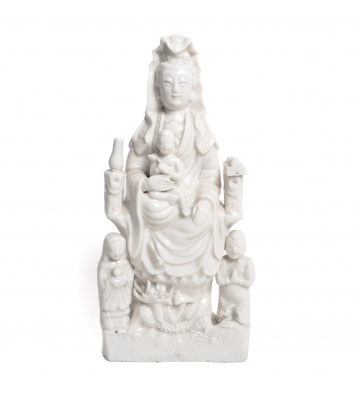
A Kangxi period (1662-1722) Blanc de Chine figure of a seated Guanyin holding a child surrounded by a girl (Longnü), a boy (Sudhana) and dragon, 17th century, around 1680-1700, Dehua, China.
Dimensions: 22 cm height.
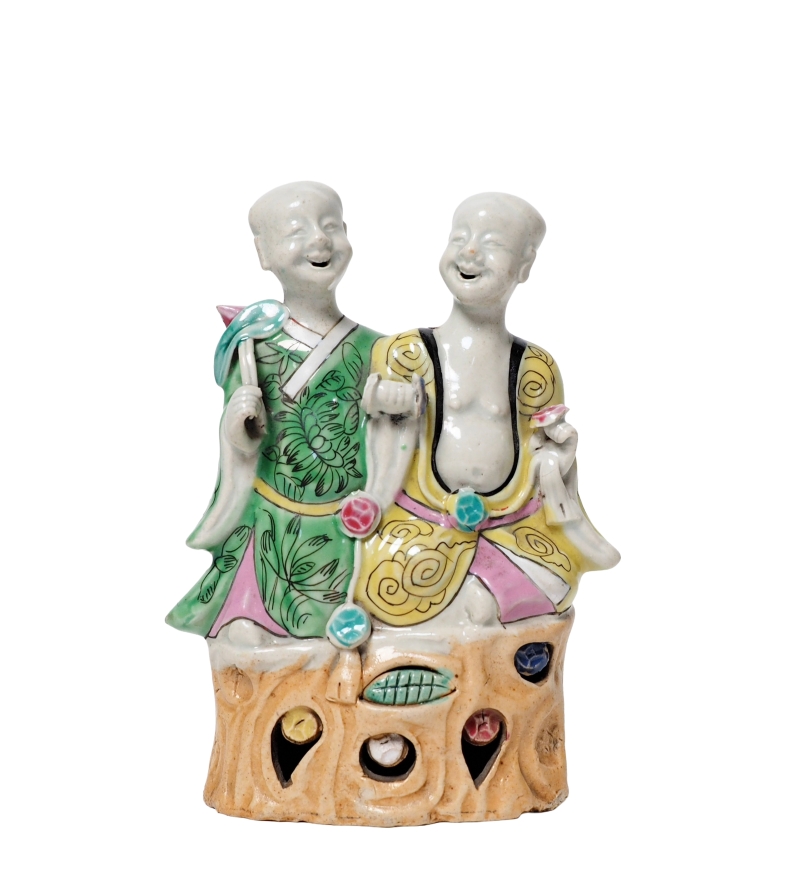
A famille rose Qianlong period (1736-1795) 'Hehe Erxian' or 'Two Immortals of Harmony and Union' group depicted on a rock wearing bright enamel robes, 18th century, around 1770-1790, Jingdezhen, China
Famille Rose
Dimensions: ca.16,5 cm height
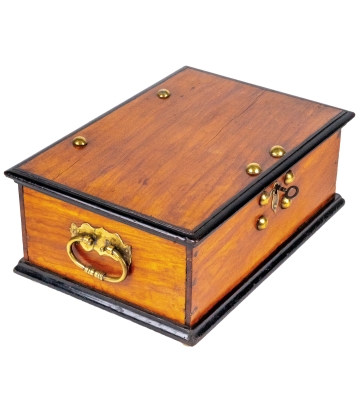
A Dutch padouk wood colonial document box with brass mounts, feet and handles, finished with ebonized edges, 18th century, around 1750, Batavia (Jakarta), Indonesia.
Dimensions: 24 x 35 x 15 cm.
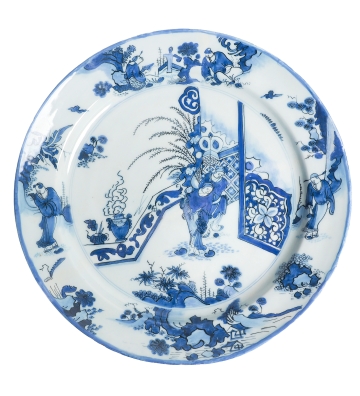
A large chinoiserie plate with Transition and Kangxi inspired decoration, 17th century, around 1680-1700, Delft, Holland.
Blue and white
Dimensions: 40 cm. diameter.
Signed D-PAUW for pottery factory ‘De Paauw / The Peacock’ (1651-1774).
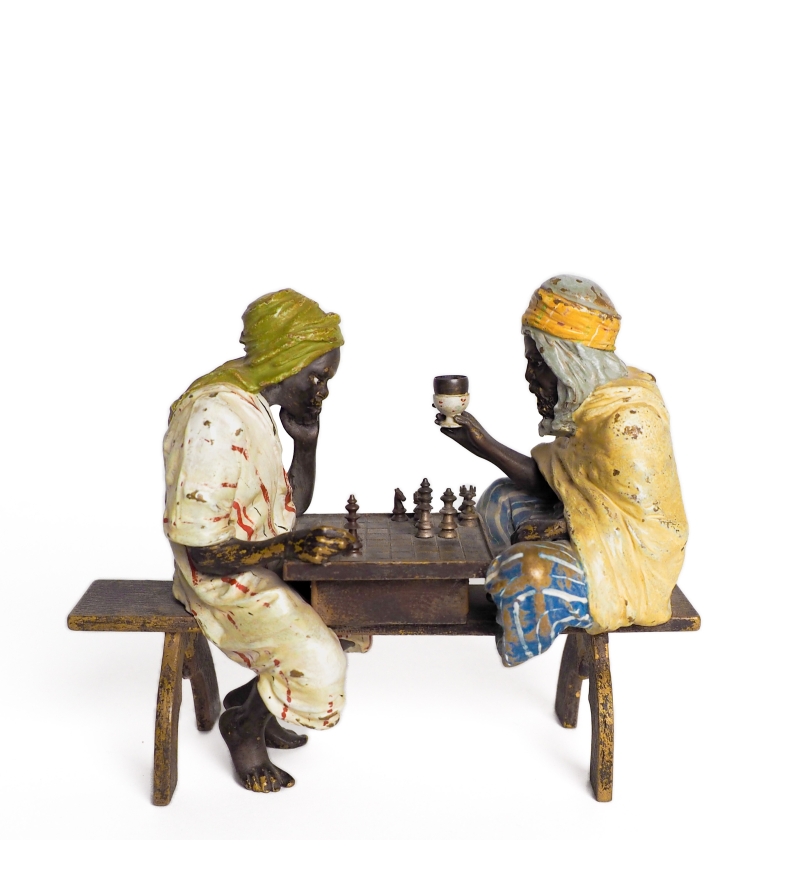
Two Vienna bronze oriental seated figures playing chess, 19th century, around 1875, Vienna, Austria.
By Franz Bergmann (1838-1894).
Dimensions: around 14,5 x 13 cm.
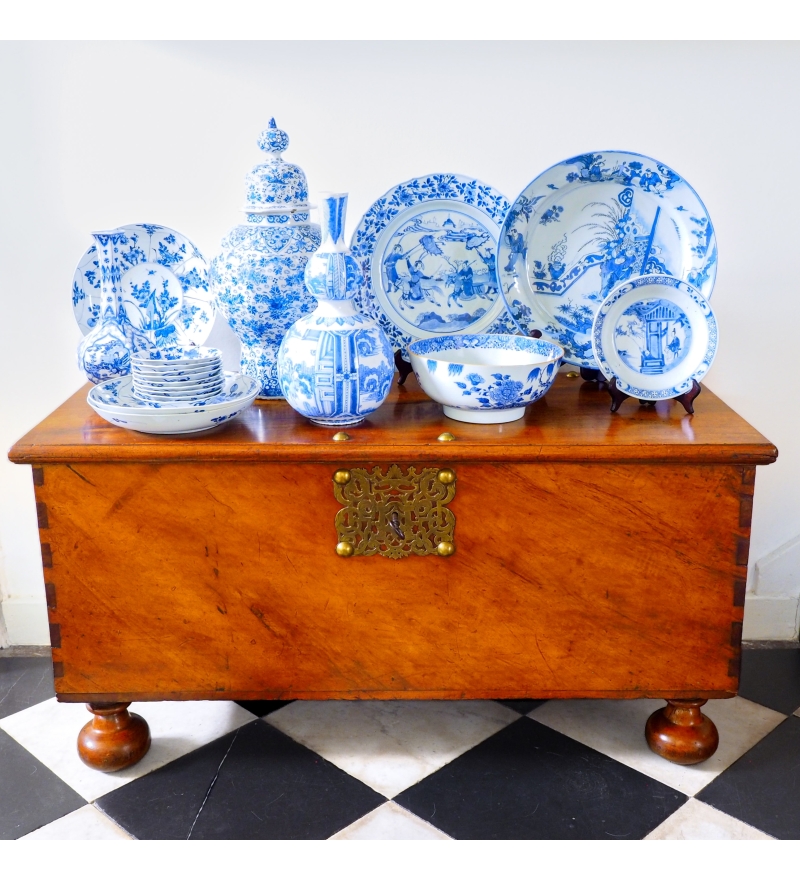
A Dutch colonial chest made out of tropical hardwood, 18th century, around 1700-1750, Indonesian archipel.
Dimensions: 49x119x61 cm.
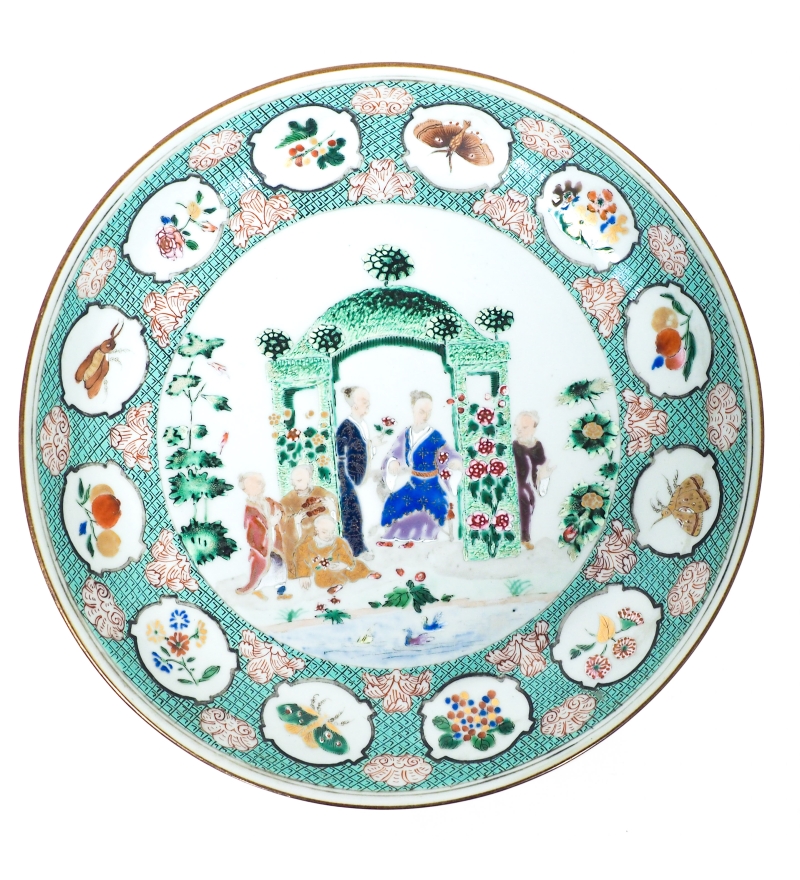
A Chinese verte deep plate after the 'Arbor' design of Cornelis Pronk on the instructions of the Dutch East India Company, 18th century, around 1739-40, China, Jingdezhen.
Dimensions: around 24,5 cm diamater.