Reference: 1009499
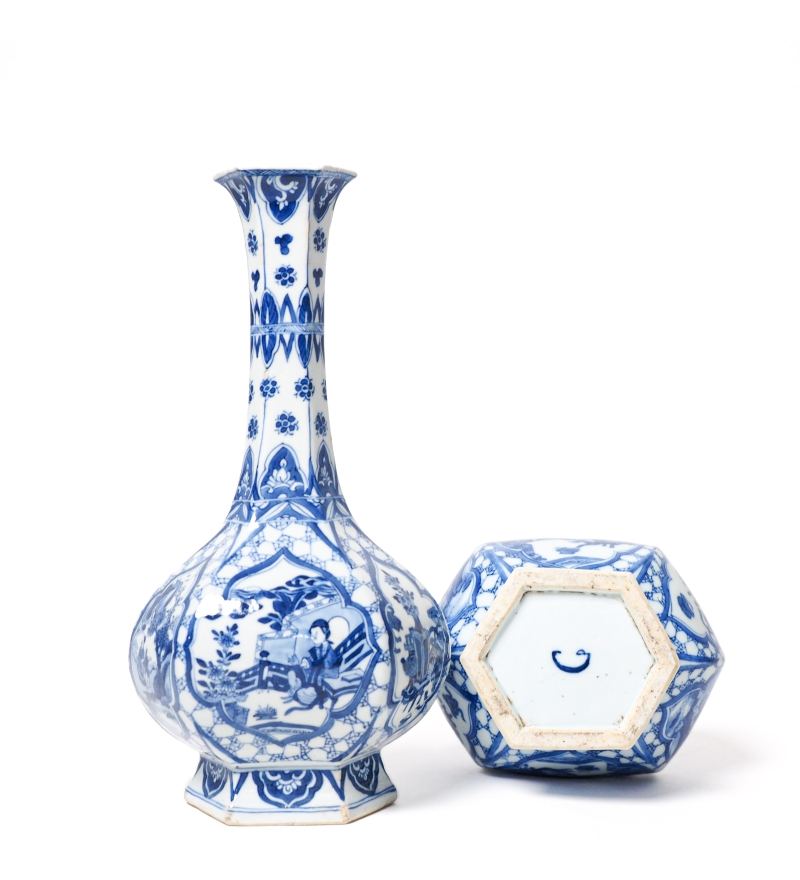
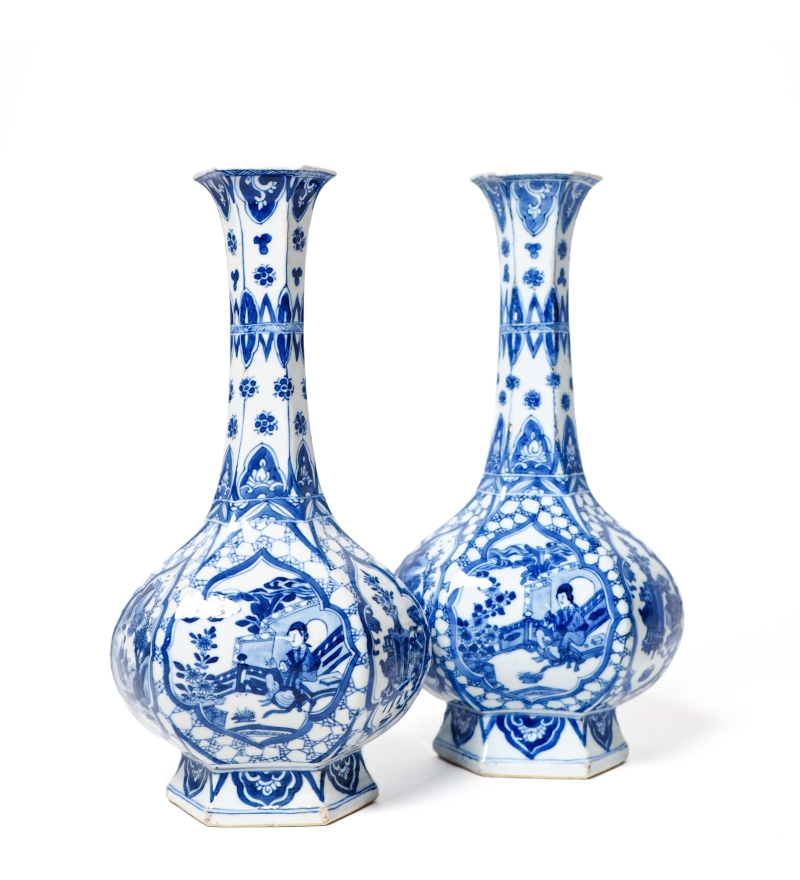
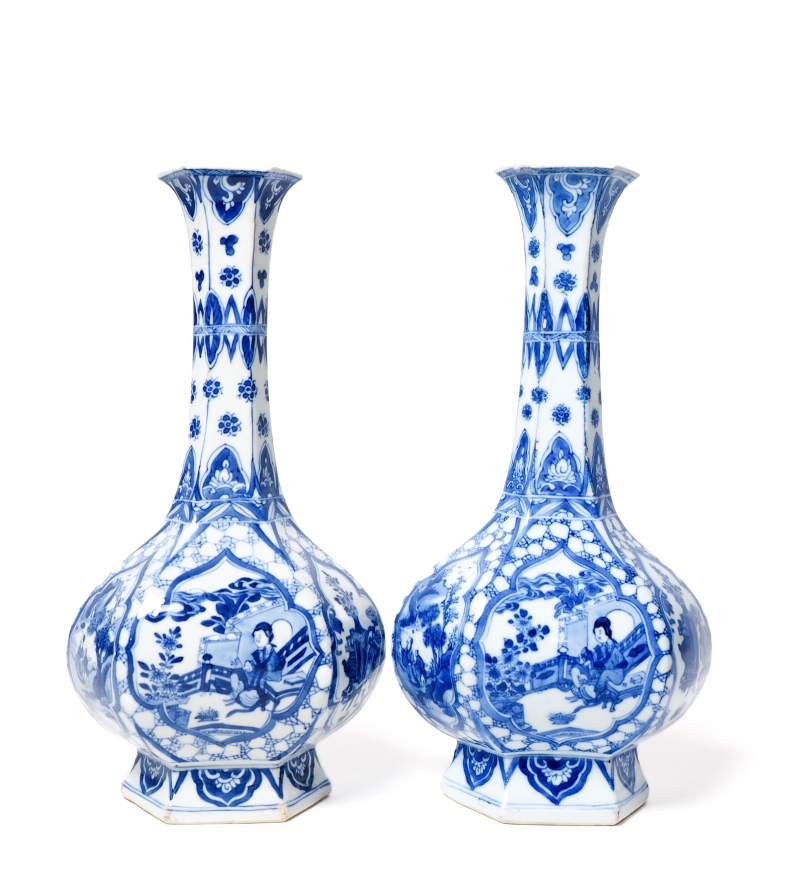
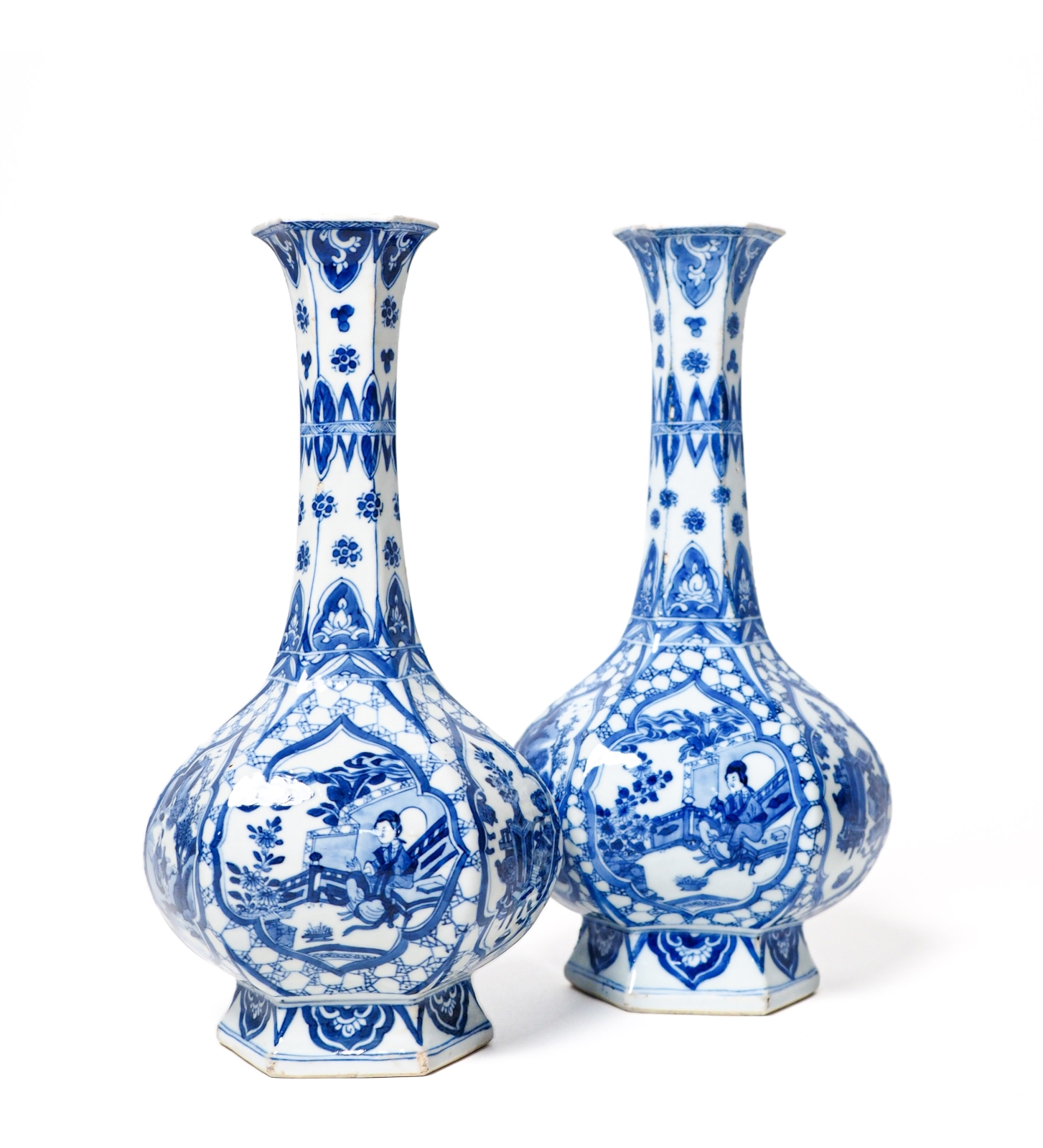
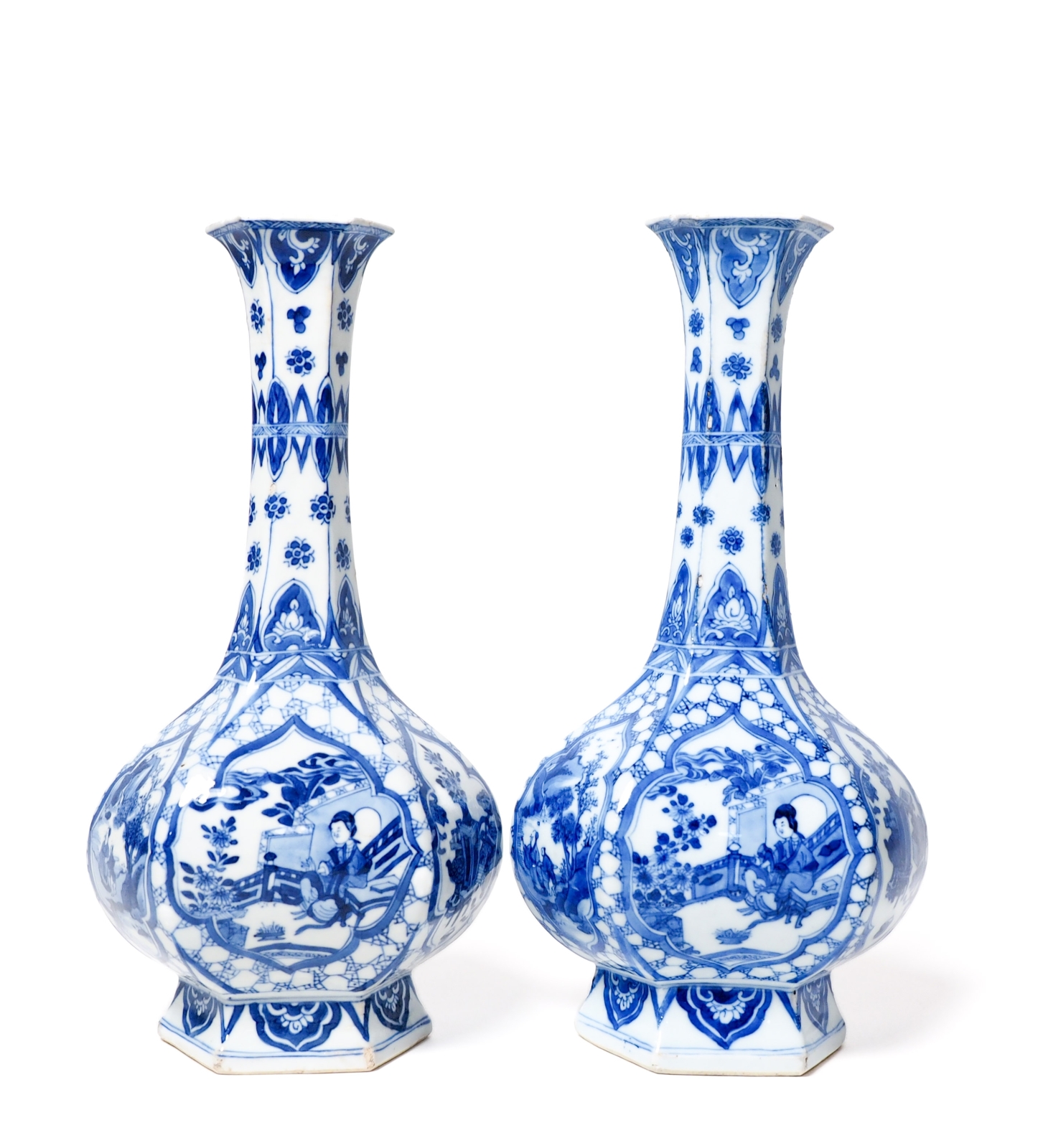
A pair of blue and white Kangxi Period (1662-1722) G-marked bottle vases with Persian panels depicting persons and treasures on a background of 'cracked-ice' motif, 17th century, around 1680-1700, Jingdezhen, China.
Blue and White
Dimensions: around 30 cm height. (2x)
 Secure payment
100% secure payment
 Worldwide shipping
Fast delivery
 Free shipping in EU
On all orders
 Professional packaging
Professional order packaging
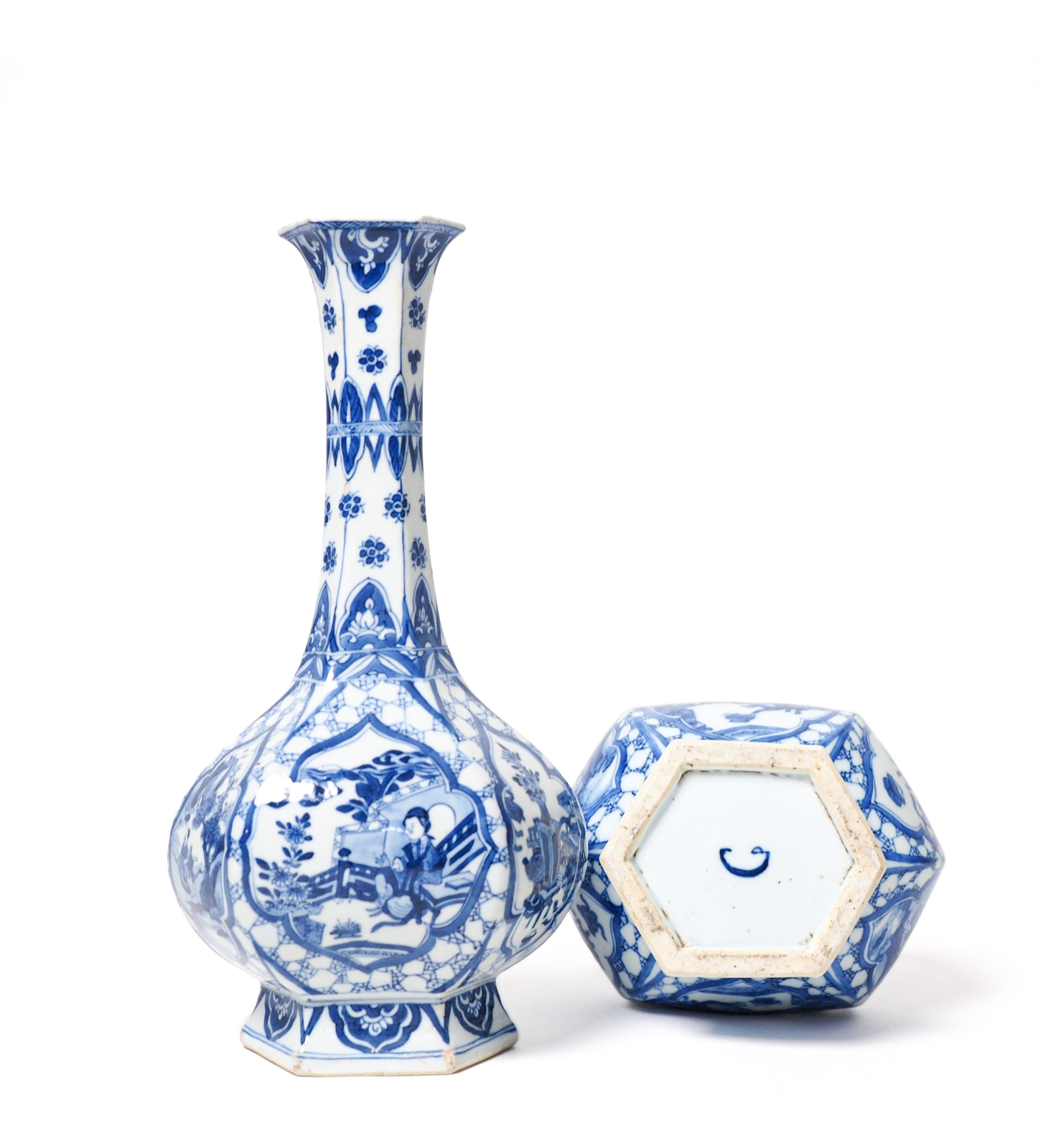
This elegant pair of Chinese blue and white porcelain vases has a hexagonal form with long, slender necks rising from a compressed body. The main front and back panels are finely painted with a lady sitting in a fenced garden surrounded by flowering plants in jardinieres. On the side panels precious objects known as 'The Hundred Antiques' together with Daoist symbols are depicted. For example, we can see an Incense Burner (for ancestral worship) and a Flower Vase (for female beauty and harmony). The other side panel displays two smaller persons in a landscape. The whole decoration is set against a delicate cracked-ice ground, while the neck and foot are enriched with stylised lappet or 'Vandyke' and ruyi borders. Both bases bear the distinctive underglaze blue letter “G”.
The meaning of this unusual mark has intrigued scholars for many years. Found only on a small group of high-quality Kangxi blue and white and famille verte porcelains, the mark has variously been interpreted as a Roman letter, an Arabic character, or even a Persian (Farsi) symbol for wealth. The most widely accepted theory is that it represents the initial of a European merchant or Dutch East Indian Company trader who commissioned these wares, much like the personalised marks found on some early Japanese export porcelain. The consistently high quality of the porcelain suggests that these pieces were produced as special commissions rather than for the general export market.
The distinctive vase form is thought to have been inspired by earlier Persian or North Indian metalwork, just like the Persian shape of the depicted panels on the vase. This reflecting the cultural exchange that characterised the international porcelain trade during the Kangxi period. Comparable examples with the same “G” mark are preserved in international museums, while and notable private collections, making this an exceptionally interesting and sought-after pair of early Chinese export porcelain.
Reference:
-The Art institute of Chicago, ref. nr. 1931.408
-Lady Lever Art Gallery, Collection no. LL6450, LL6451, LL6452.
-B. Macguire, 'Four Centuries of Blue and White: The Frelinghuysen Collection of Chinese and Japanese Export Porcelain' 2023, Object 156, p. 196,
-Christie's 16 March 2015, Live Auction 3721 'An era of inspiration: 17th century Chinese porcelains from the collection of Julia and John Curtis', lot nr. 3584.
Conndition: No restorations. Some frittings to the mounts and bodies. One chip to the glaze of the foot of one vase. They have slightly different colors and some small variation in size because they are painted and moulded by hand.
A pair of blue and white Kangxi Period (1662-1722) G-marked bottle vases with Persian panels depicting persons and treasures on a background of 'cracked-ice' motif, 17th century, around 1680-1700, Jingdezhen, China.
Blue and White
Dimensions: around 30 cm height. (2x)
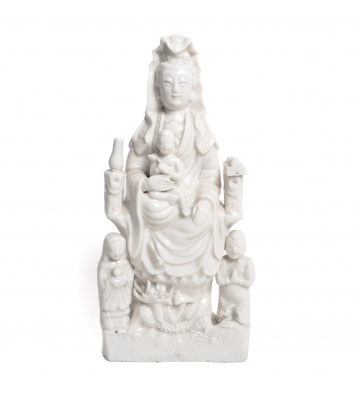
A Kangxi period (1662-1722) Blanc de Chine figure of a seated Guanyin holding a child surrounded by a girl (Longnü), a boy (Sudhana) and dragon, 17th century, around 1680-1700, Dehua, China.
Dimensions: 22 cm height.
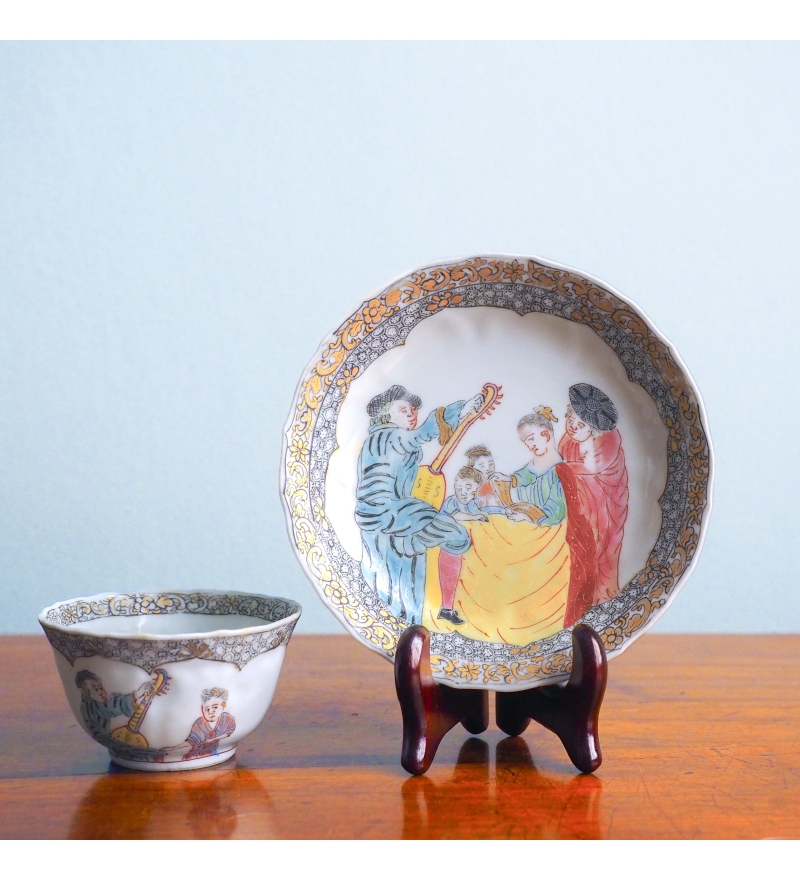
A Chinese Yongzheng Period (1723-1735) Dutch Decorated cup and saucer after a rococo print of a painting of Watteau, 18th century, around 1725-1735, Jingdezhen, China.
Dimensions: around 13,5 cm. diameter (saucer) ; 5x8 cm. (cup).
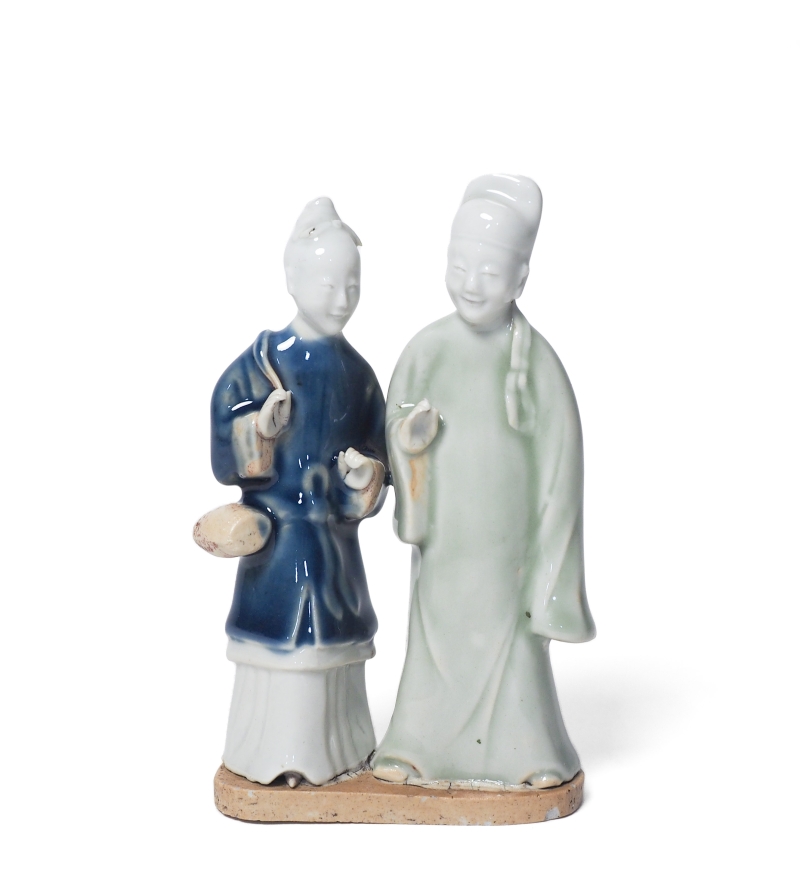
A finely modelled Qianlong period (1736-1795) Chinese biscuit porcelain group depicts a standing couple in conversation, 18th century, around 1740-1750, Jingdezhen, China.
Celadon and Blue
Dimensions: ca. 17 cm. height.
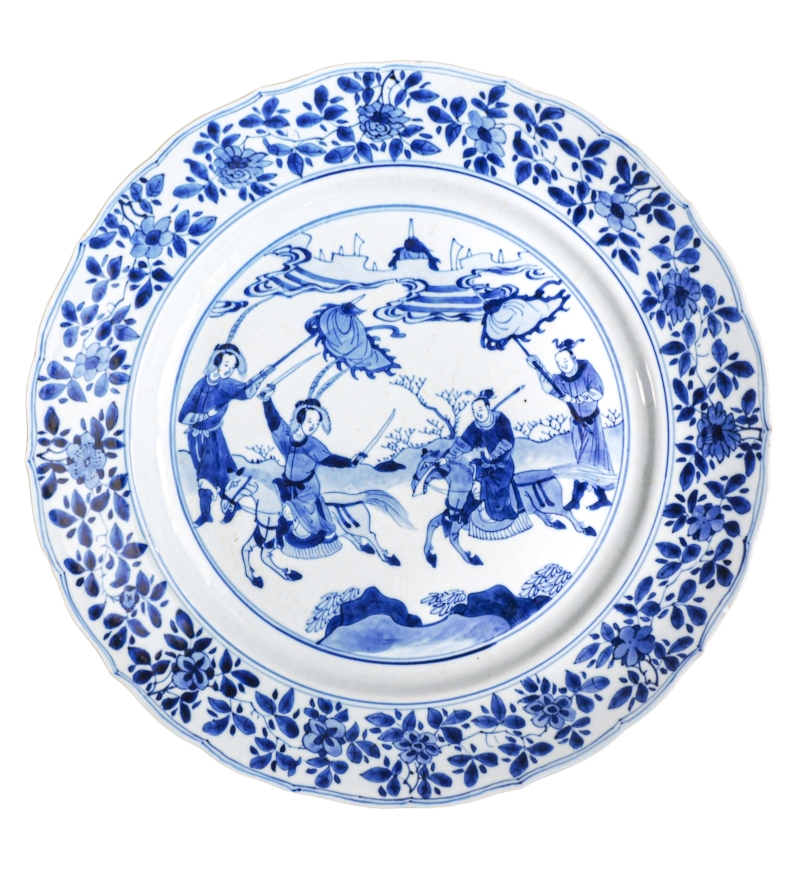
A large Kangxi Period (1662-1722) plate with scalloped rim depicting warriors on horseback accompanied by two standard-bearer with in the background the Chinese wall, 17th century, around 1700, Jingdezhen, China.
Dimensions: 36,5 cm diameter.
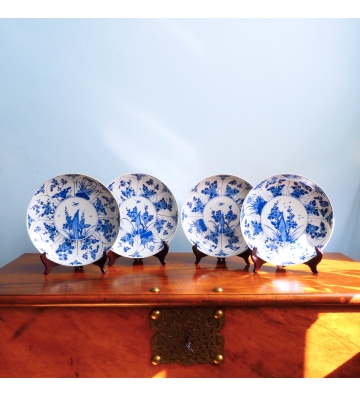
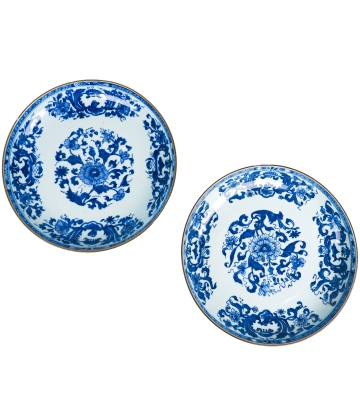
A set of 4 Chinese blue and white porcelain floral dishes of the Kangxi period (1662–1722) with divided in Persian-style panels filled with floral design, 17th-18th century, around 1690-1710, Jingdezhen, China.
Dimensions: ca. 27,5 cm. diameter.
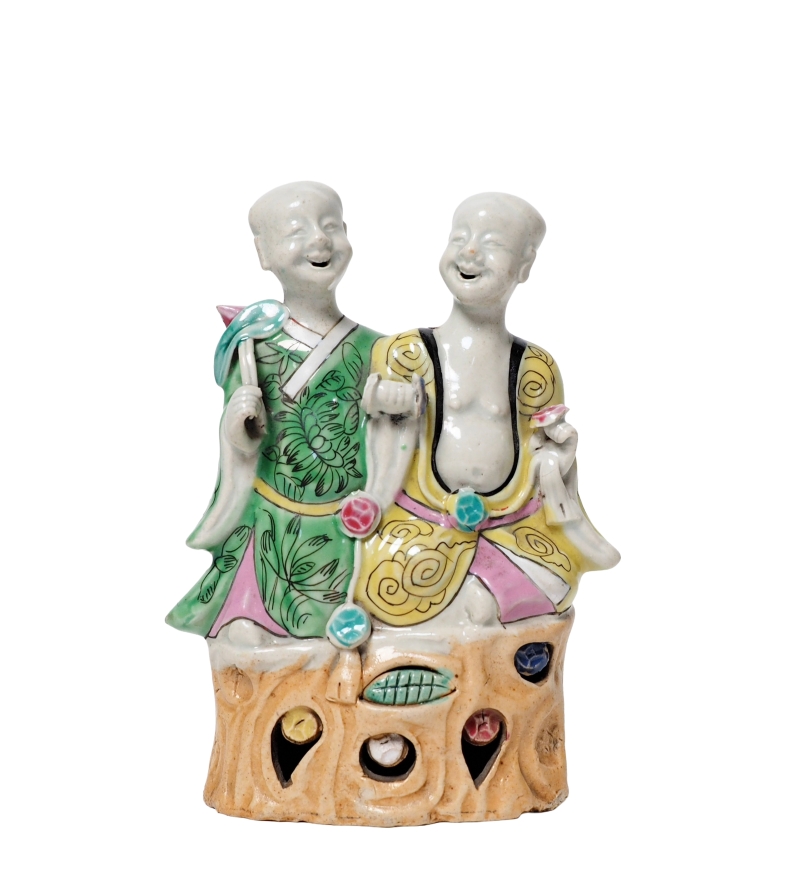
A famille rose Qianlong period (1736-1795) 'Hehe Erxian' or 'Two Immortals of Harmony and Union' group depicted on a rock wearing bright enamel robes, 18th century, around 1770-1790, Jingdezhen, China
Famille Rose
Dimensions: ca.16,5 cm height
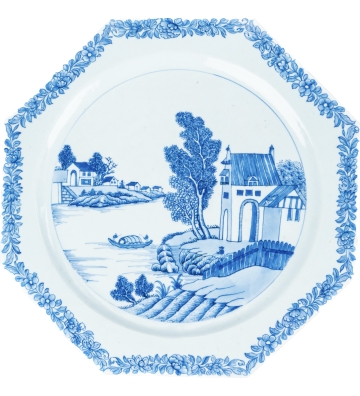
A large octangle shaped Chinese Qianlong period (1735-1796) plate with a Western subject after a design from Esaias van de Velde, 18th century, around 1750, Jingdezhen, China.
Blue and white
Dimensions: 38,5 x 38 cm.
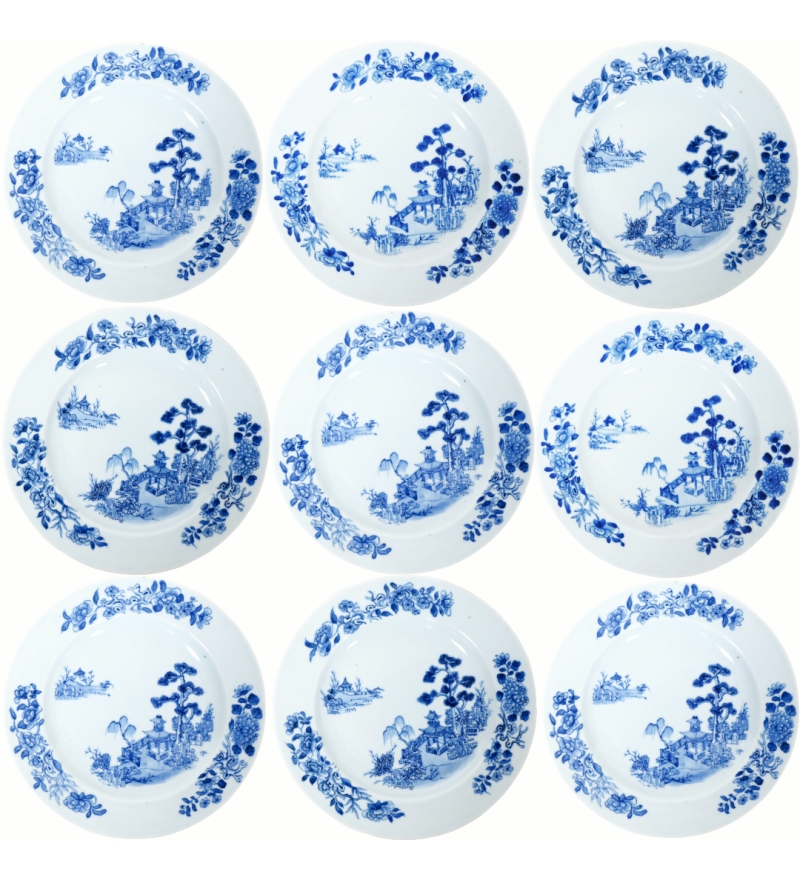
A set of 12 Qianlong Period (1736-1795) Nanking cargo '"Boatman and six-flower border" plates out of the sunken ship VOC Ship Geldermalsen, 18th century, around 1750, Jingdezhen, China.
Dimensions: ca. 23 cm. diameter
A beautiful pair of Qianlong period (1736-1795) Chinese export plates with ‘Madame de Pompadour’ decor, 18th century, around 1745, Jingdezhen, China.
Blue and white
Dimensions: 28 cm. diameter.
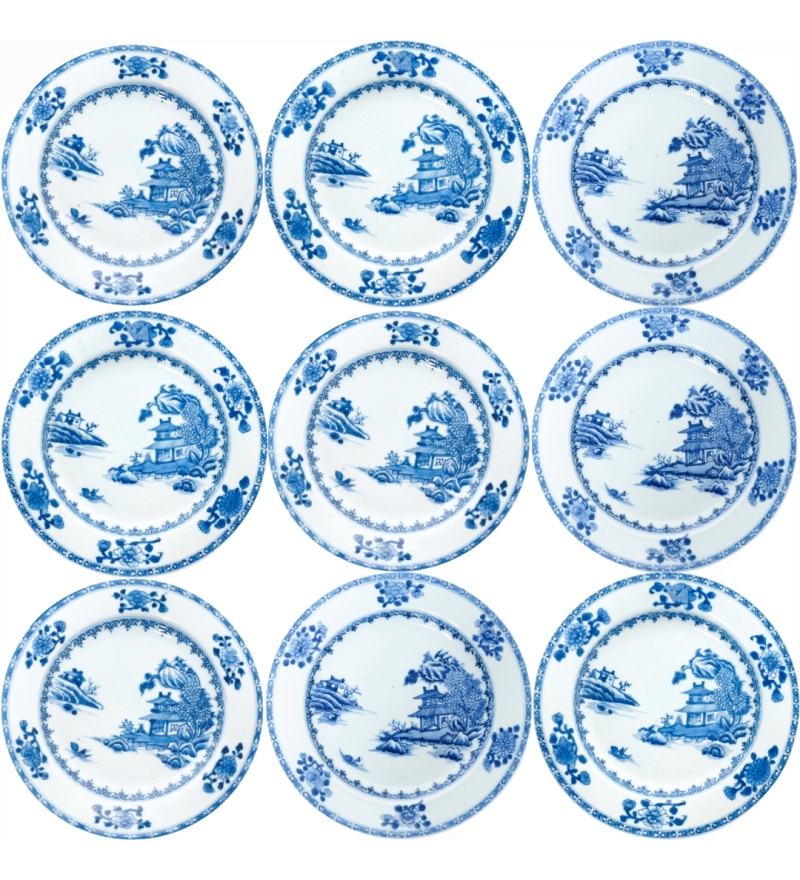
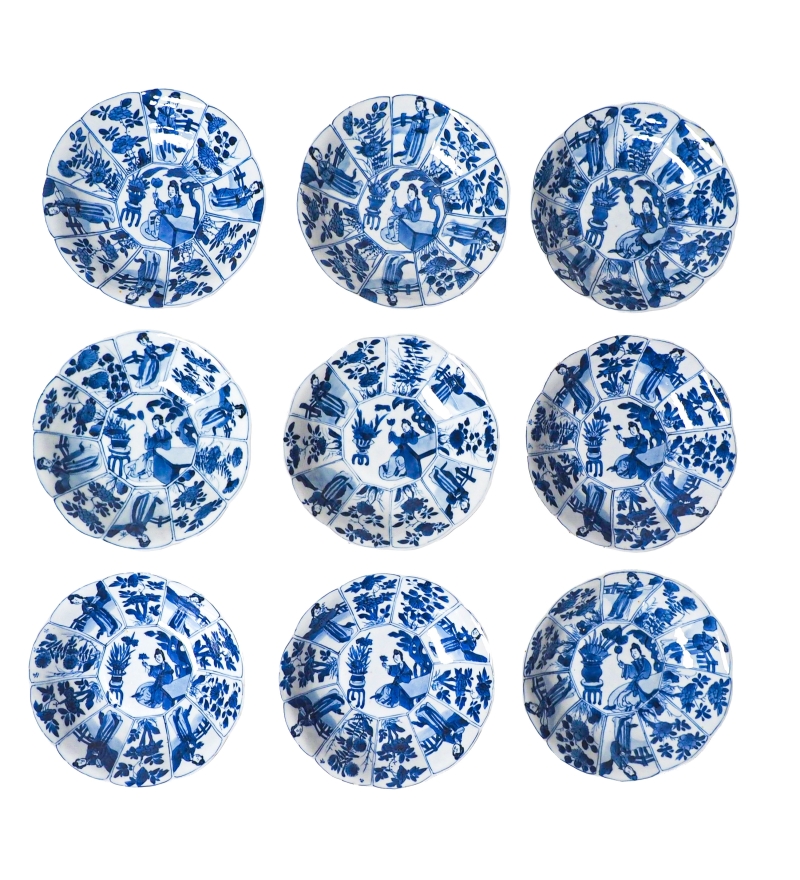
A set of 9 Chinese blue and white porcelain saucer dishes of the Kangxi period (1662–1722) with a Long Eliza figure, depicted seated beside a table and holding a lotus flower, 18th century, around 1700-1720, Jingdezhen, China.
Dimensions: ca. 15 cm. diameter
A set of 12 Qianlong Period (1736-1795) Nanking cargo '"Lattice-fence pattern" plates out of the sunken ship VOC Ship Geldermalsen, 18th century, around 1750, Jingdezhen, China.
Dimensions: ca. 23,5 cm. diameter
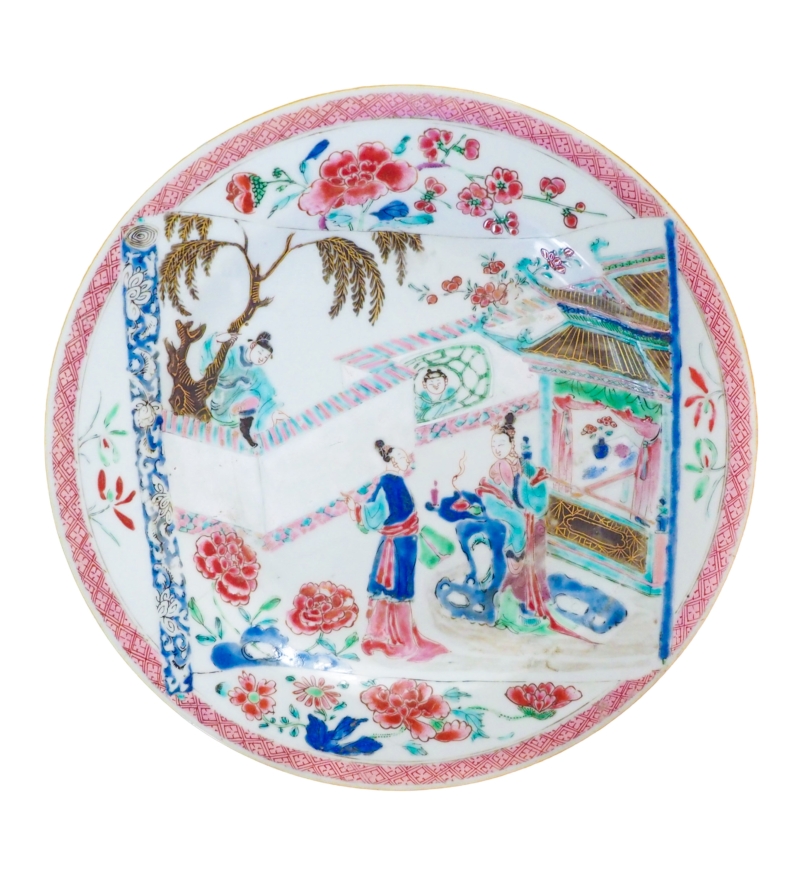
A Chinese Yongzheng period (1723-1735) Famille Rose plate depicting a scene from the ‘Romance of the Western Chamber’, 18th century, around 1730, Jingdezhen, China.
Famille rose
Dimensions: 22,5 cm diameter.
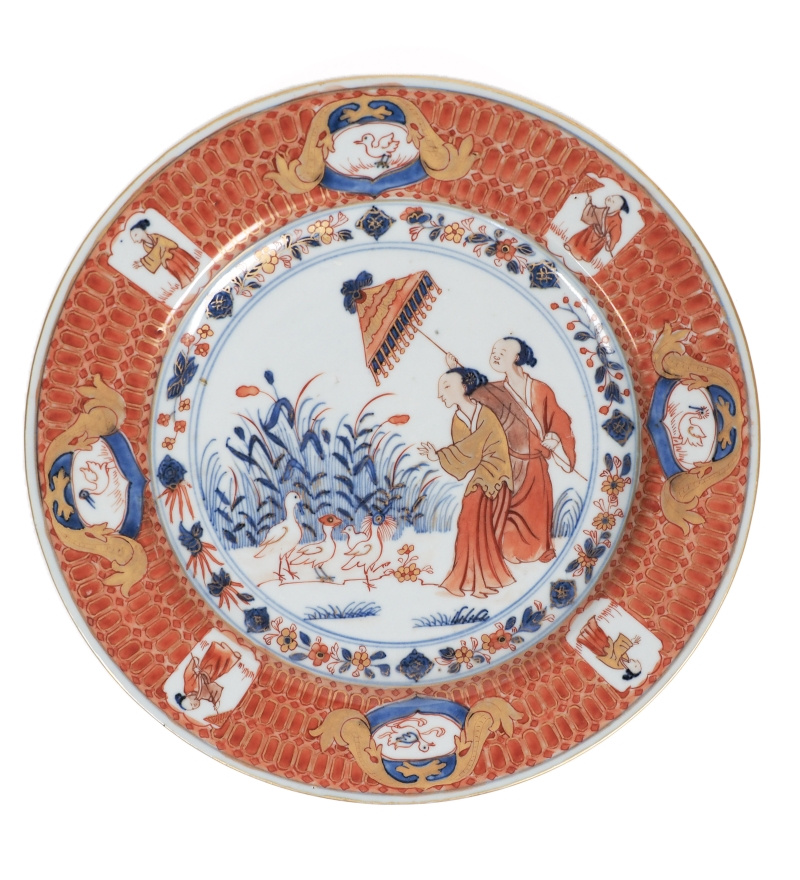
A Chinese Imari plate after the 'parasol ladies' design of Cornelis Pronk on the instructions of the Dutch East India Company, 18th century, around 1736-1738, China, Jingdezhen.
Dimensions: 23,5 cm. diameter.
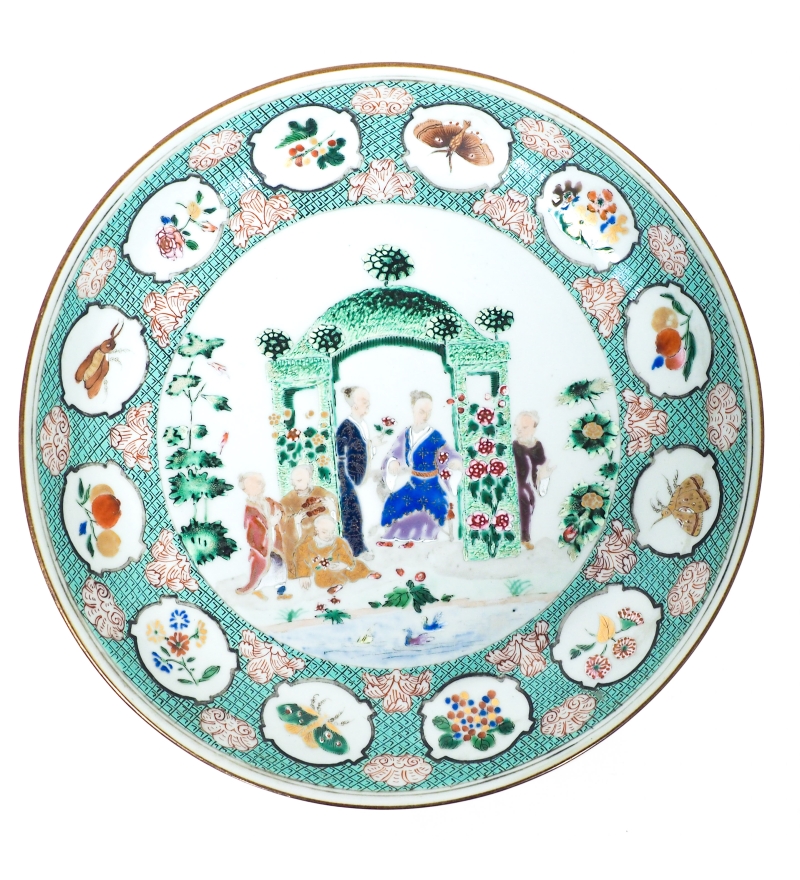
A Chinese verte deep plate after the 'Arbor' design of Cornelis Pronk on the instructions of the Dutch East India Company, 18th century, around 1739-40, China, Jingdezhen.
Dimensions: around 24,5 cm diamater.