- Out-of-Stock
Reference: 10100
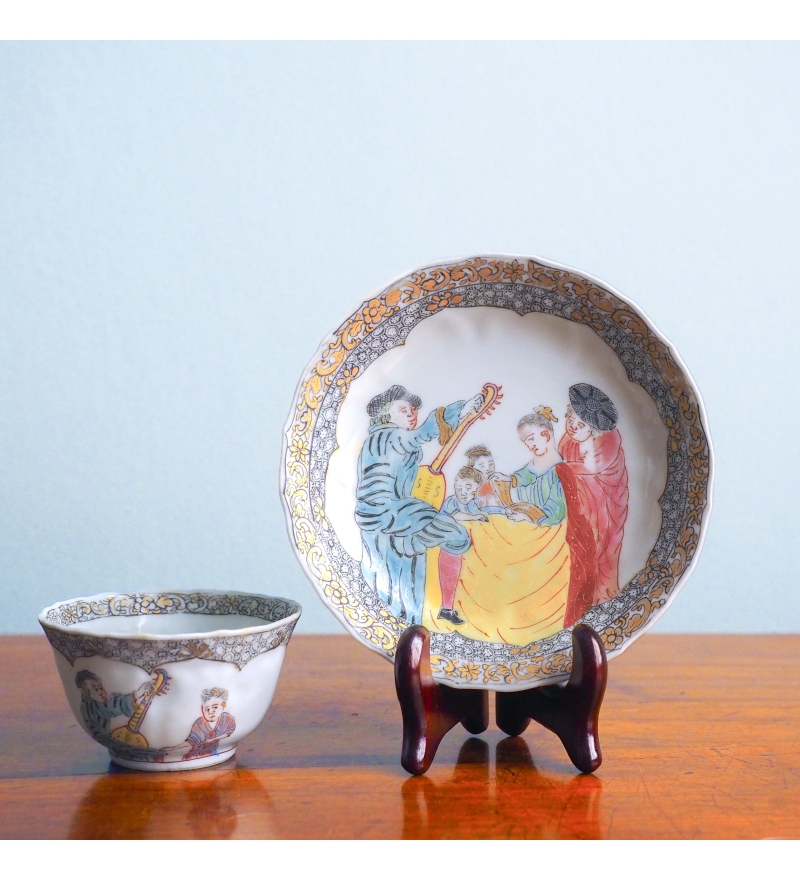
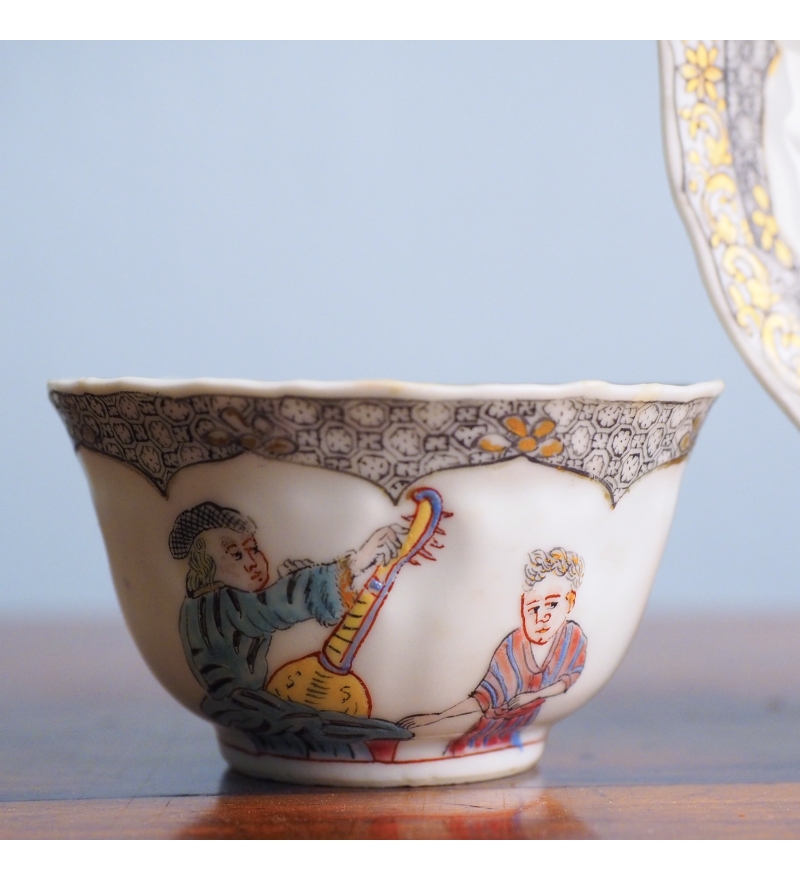
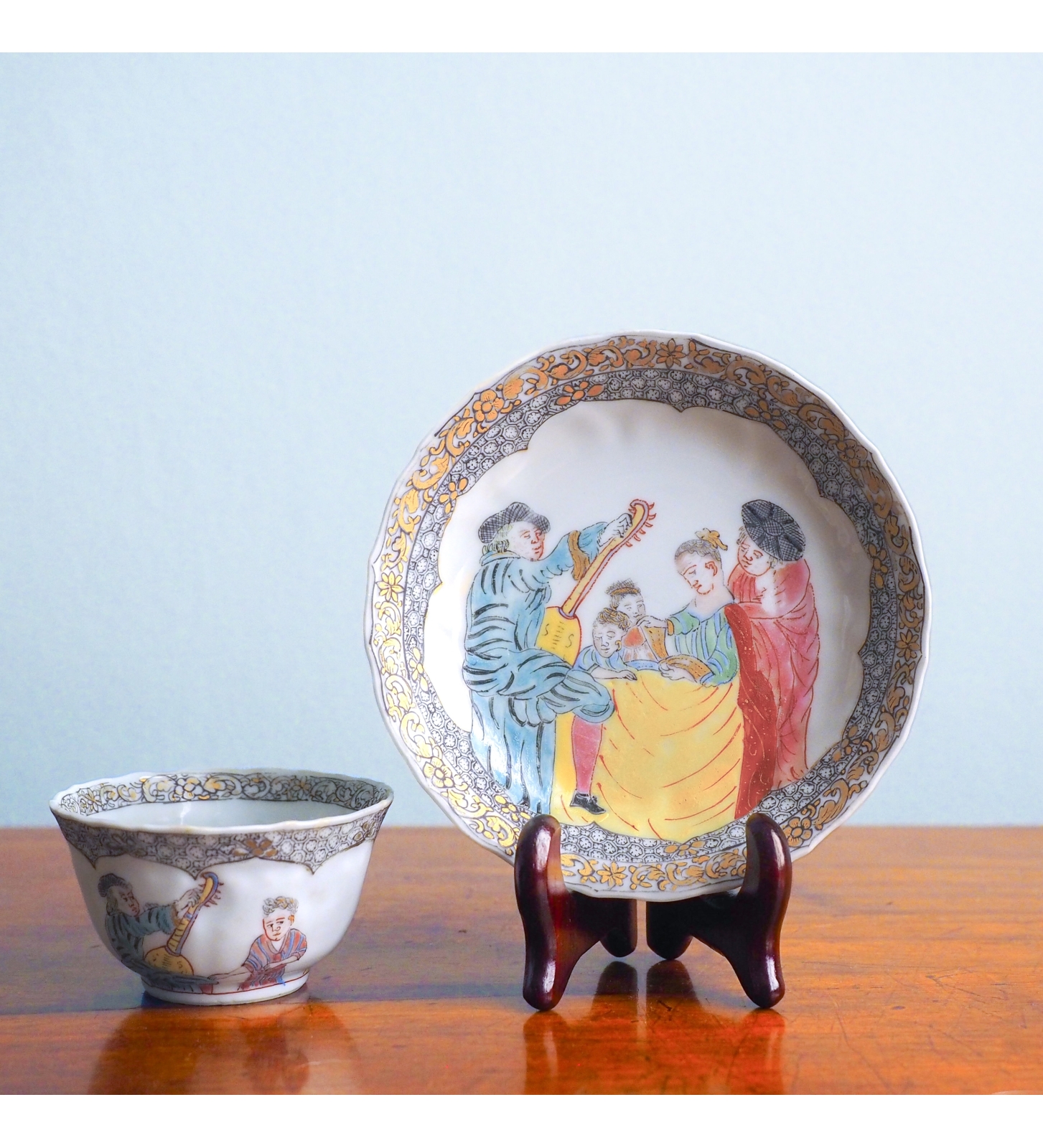
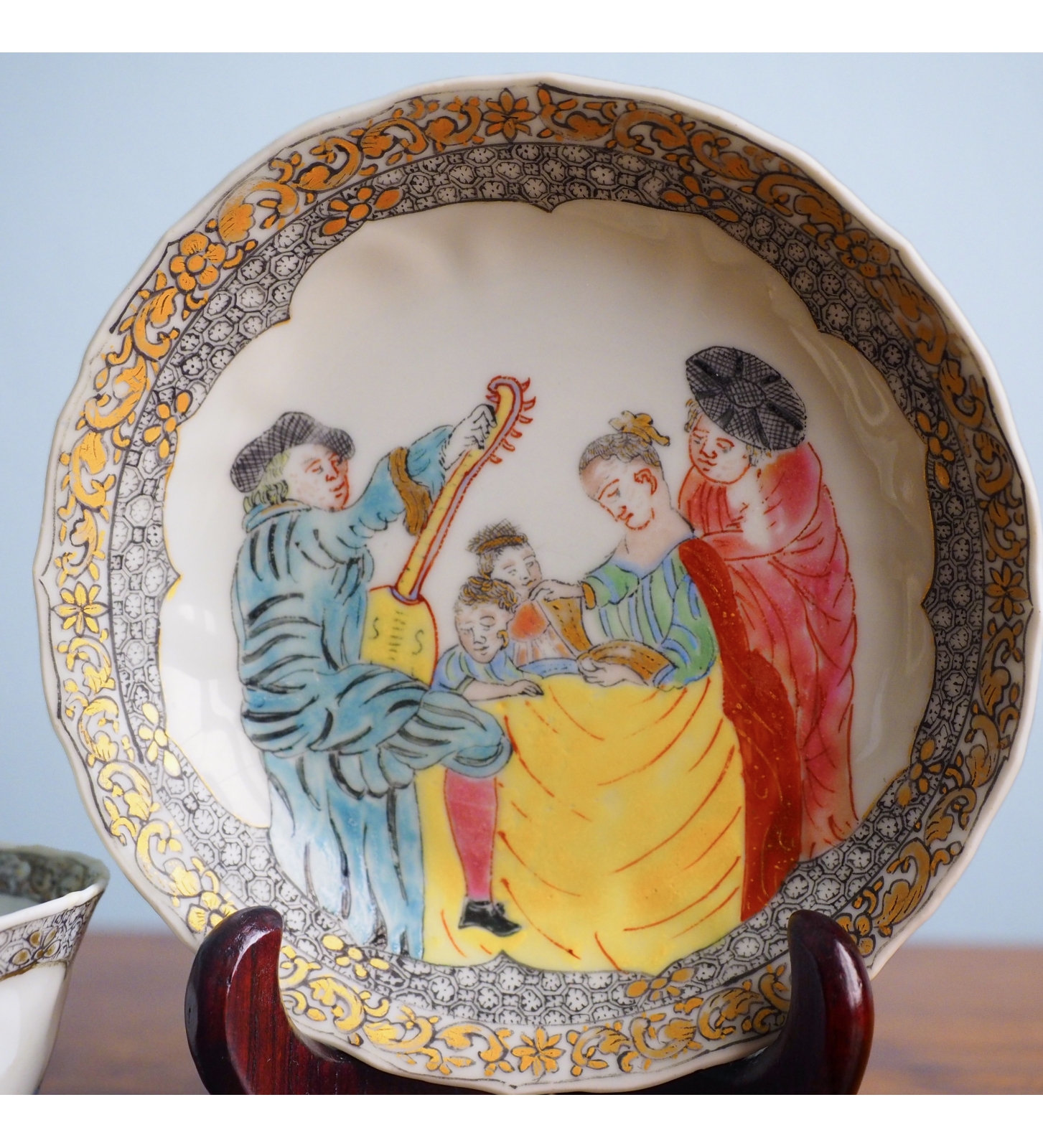
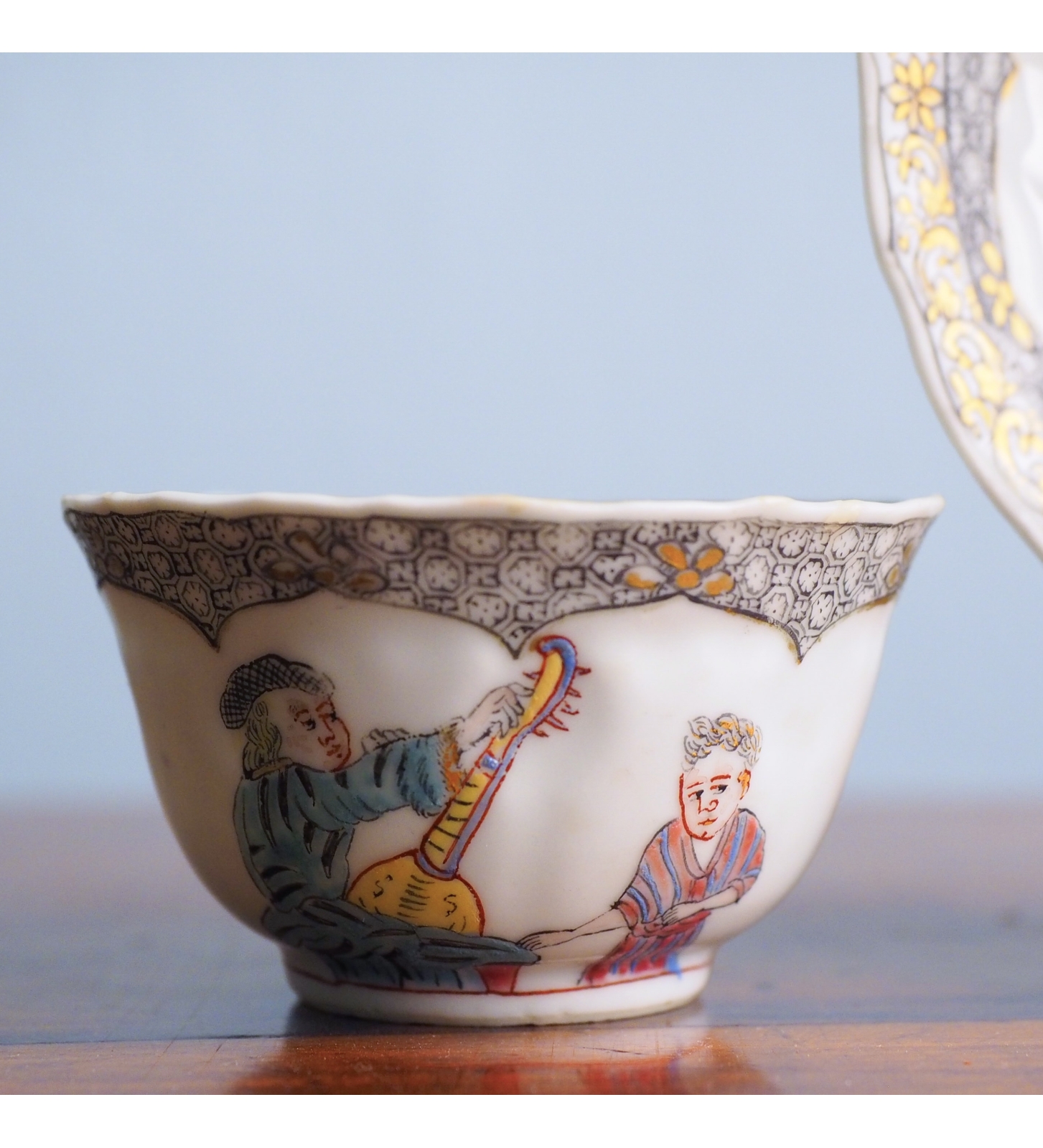
A Chinese Yongzheng Period (1723-1735) Dutch Decorated cup and saucer after a rococo print of a painting of Watteau, 18th century, around 1725-1735, Jingdezhen, China.
Dimensions: around 13,5 cm. diameter (saucer) ; 5x8 cm. (cup).
 Secure payment
100% secure payment
 Worldwide shipping
Fast delivery
 Free shipping in EU
On all orders
 Professional packaging
Professional order packaging
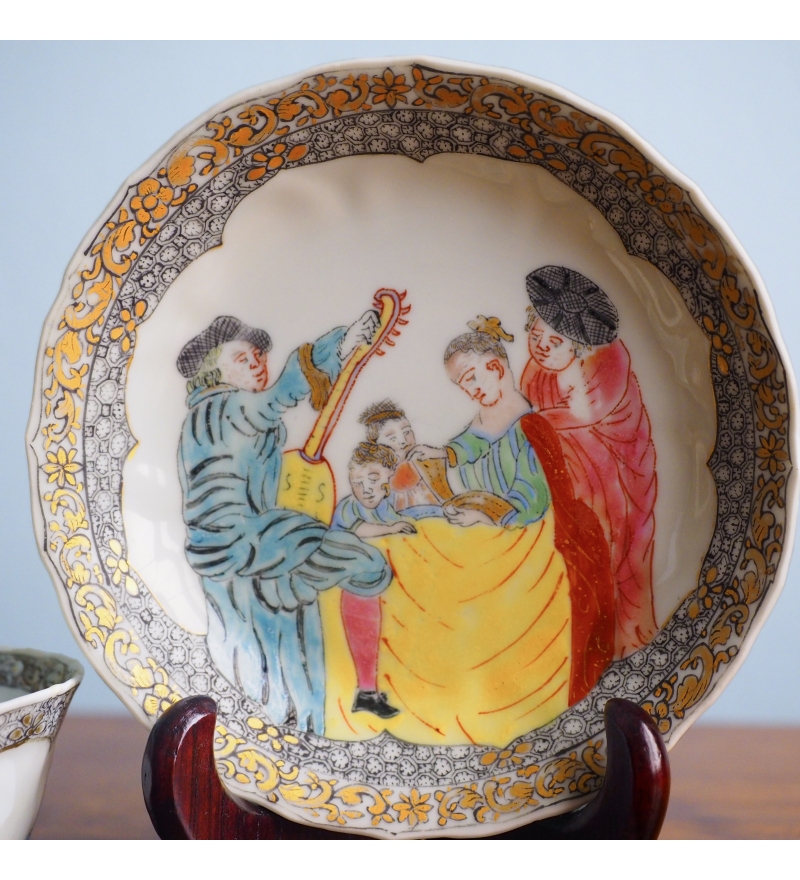
This musician rococo-scene is made after a print of Louis Surugue (1686–1762) that displays on its self an important painting of Jean-Antoine Watteau (1684–1721). Surugue was one of the leading French reproductive engravers of the early 18th century and frequently engraved works after Watteau and his contemporaries.
Normally those 'chine de commande' production are fully painted in China. The central decoration of this cup and saucer is most likely made in Amsterdam. The so called Dutch decoration 'Amsterdams Bont' was popular in the early 18th century. In the main city of Holland they sometimes overpainted and re-fired Chinese blue and white wares to maken them more colorful. They also decorated plain white Chinese porcelain dishes.
The border of this cup and saucer is made by a Chinese hand; a hybrid of Chinese and European enameling on Chinese porcelain!
We can see a seated young woman in fashionable dress holds a sheet of music, suggesting she is singing or preparing to sing. A musician on the right plays a long-necked lute, probably a theorbo or archlute, an instrument popular in the 17th and early 18th centuries. On the left there is probably an oriental figure depicted wearing a large turban, leans over the young woman. The two children watch the performance, in a leisurely family atmosphere.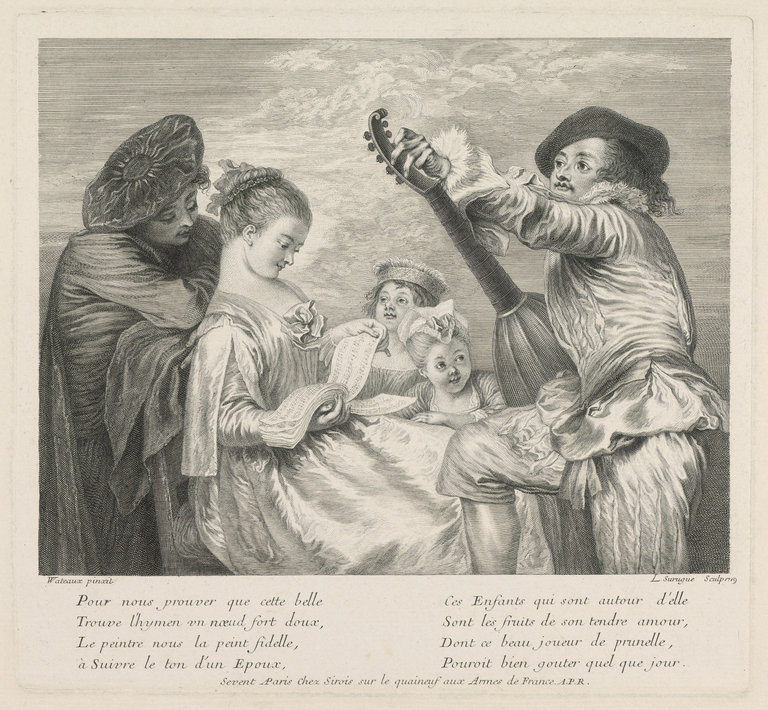
"Pour nous prouver que cette belle..." by Louis Surugue (1686-1762), intenter nr. 21772 LR/ Recto
Source: www.collections.louvre.fr
A Chinese Yongzheng Period (1723-1735) Dutch Decorated cup and saucer after a rococo print of a painting of Watteau, 18th century, around 1725-1735, Jingdezhen, China.
Dimensions: around 13,5 cm. diameter (saucer) ; 5x8 cm. (cup).
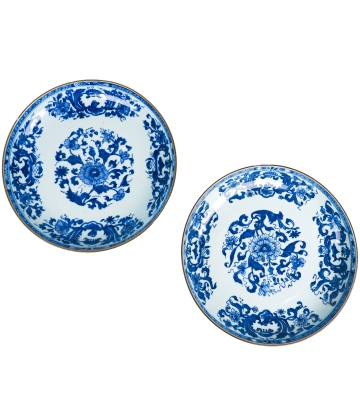
A beautiful pair of Qianlong period (1736-1795) Chinese export plates with ‘Madame de Pompadour’ decor, 18th century, around 1745, Jingdezhen, China.
Blue and white
Dimensions: 28 cm. diameter.
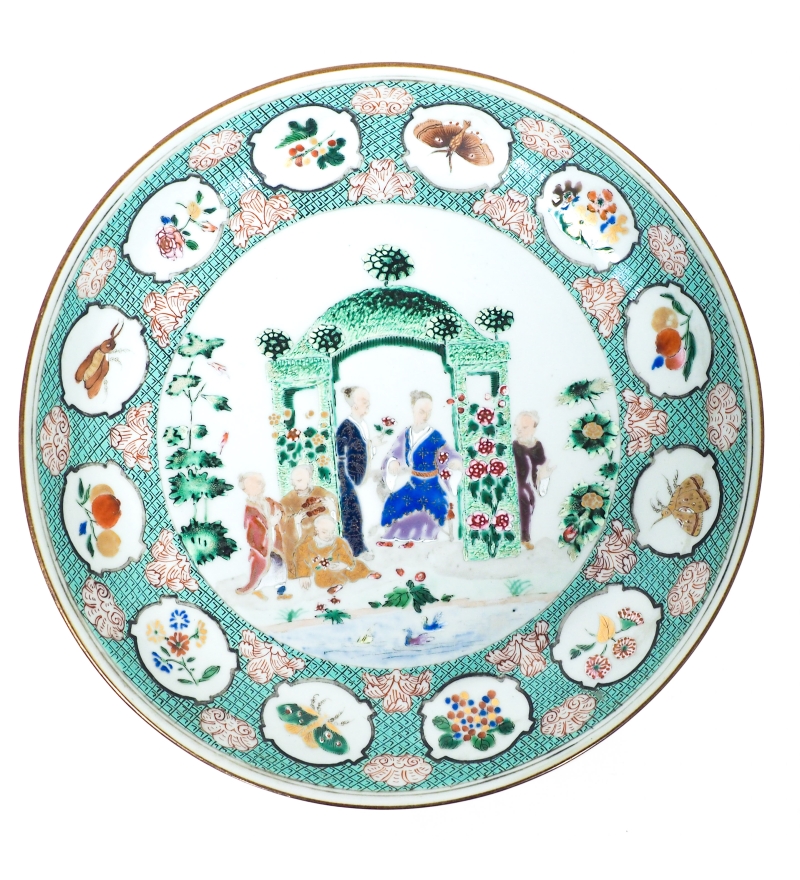
A Chinese verte deep plate after the 'Arbor' design of Cornelis Pronk on the instructions of the Dutch East India Company, 18th century, around 1739-40, China, Jingdezhen.
Dimensions: around 24,5 cm diamater.
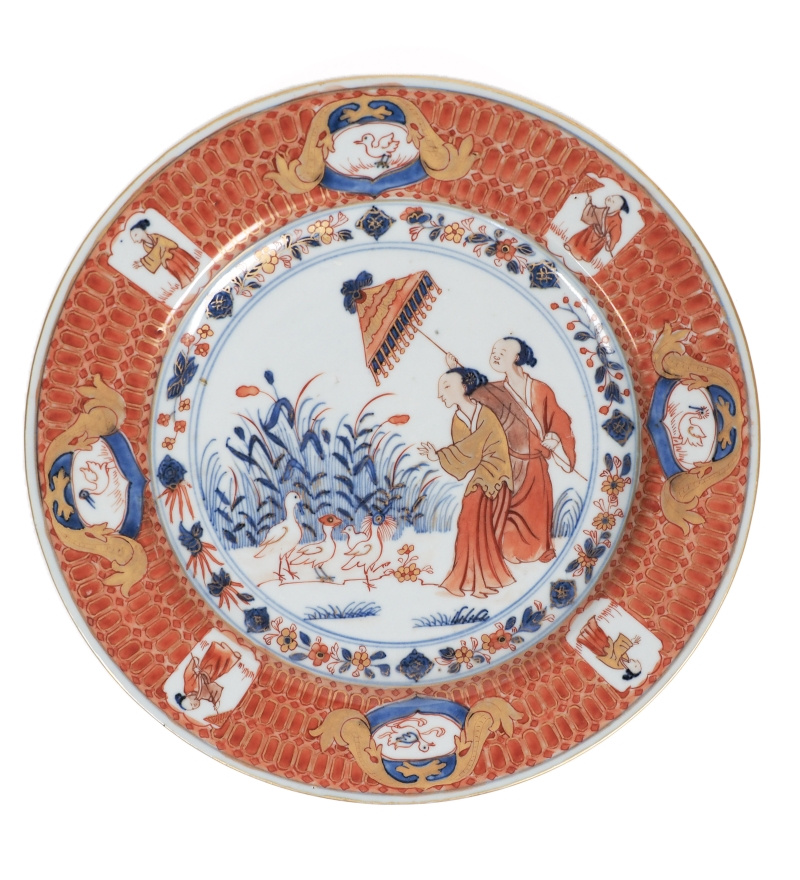
A Chinese Imari plate after the 'parasol ladies' design of Cornelis Pronk on the instructions of the Dutch East India Company, 18th century, around 1736-1738, China, Jingdezhen.
Dimensions: 23,5 cm. diameter.
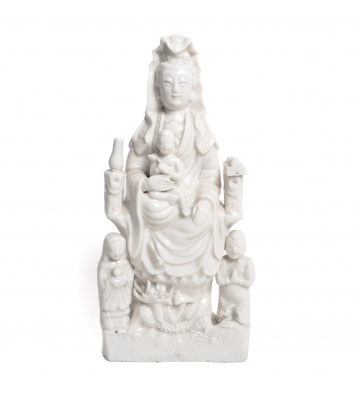
A Kangxi period (1662-1722) Blanc de Chine figure of a seated Guanyin holding a child surrounded by a girl (Longnü), a boy (Sudhana) and dragon, 17th century, around 1680-1700, Dehua, China.
Dimensions: 22 cm height.
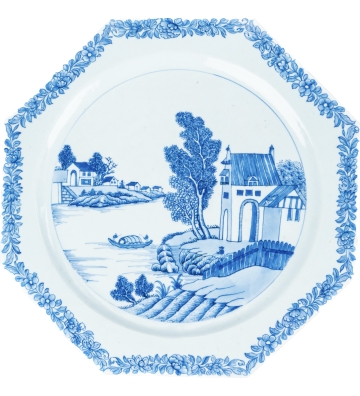
A large octangle shaped Chinese Qianlong period (1735-1796) plate with a Western subject after a design from Esaias van de Velde, 18th century, around 1750, Jingdezhen, China.
Blue and white
Dimensions: 38,5 x 38 cm.
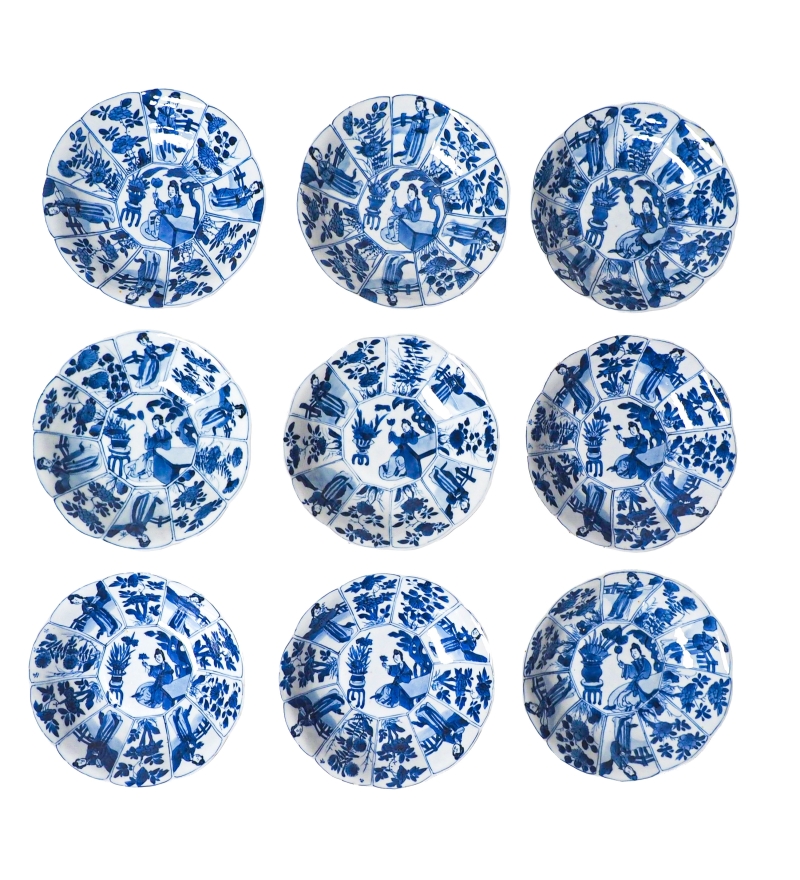
A set of 9 Chinese blue and white porcelain saucer dishes of the Kangxi period (1662–1722) with a Long Eliza figure, depicted seated beside a table and holding a lotus flower, 18th century, around 1700-1720, Jingdezhen, China.
Dimensions: ca. 15 cm. diameter
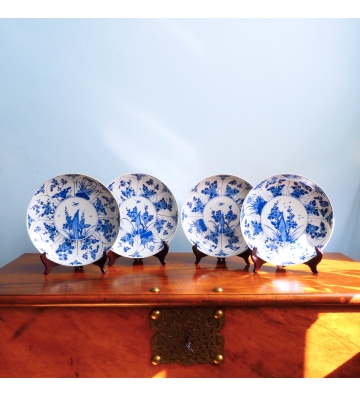
A set of 4 Chinese blue and white porcelain floral dishes of the Kangxi period (1662–1722) with divided in Persian-style panels filled with floral design, 17th-18th century, around 1690-1710, Jingdezhen, China.
Dimensions: ca. 27,5 cm. diameter.
A set of 12 Qianlong Period (1736-1795) Nanking cargo '"Lattice-fence pattern" plates out of the sunken ship VOC Ship Geldermalsen, 18th century, around 1750, Jingdezhen, China.
Dimensions: ca. 23,5 cm. diameter
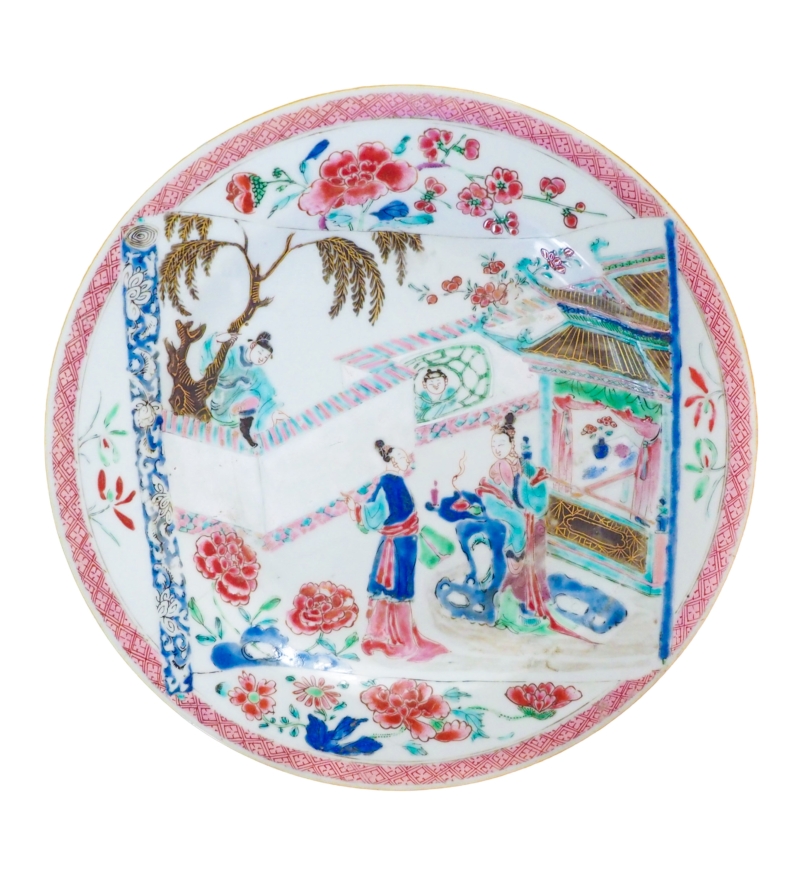
A Chinese Yongzheng period (1723-1735) Famille Rose plate depicting a scene from the ‘Romance of the Western Chamber’, 18th century, around 1730, Jingdezhen, China.
Famille rose
Dimensions: 22,5 cm diameter.
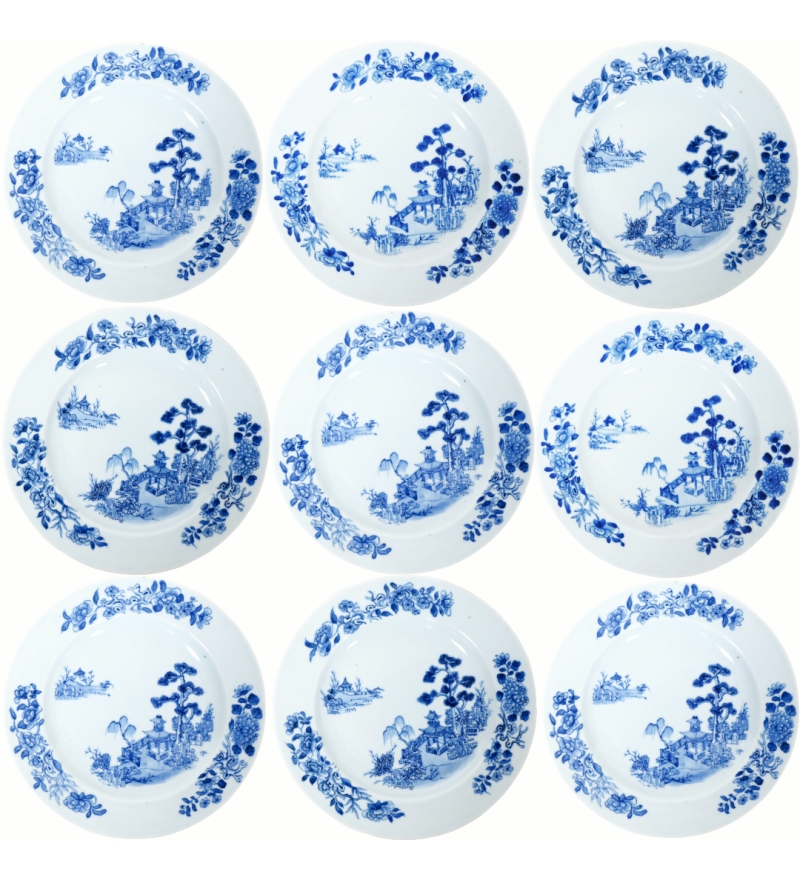
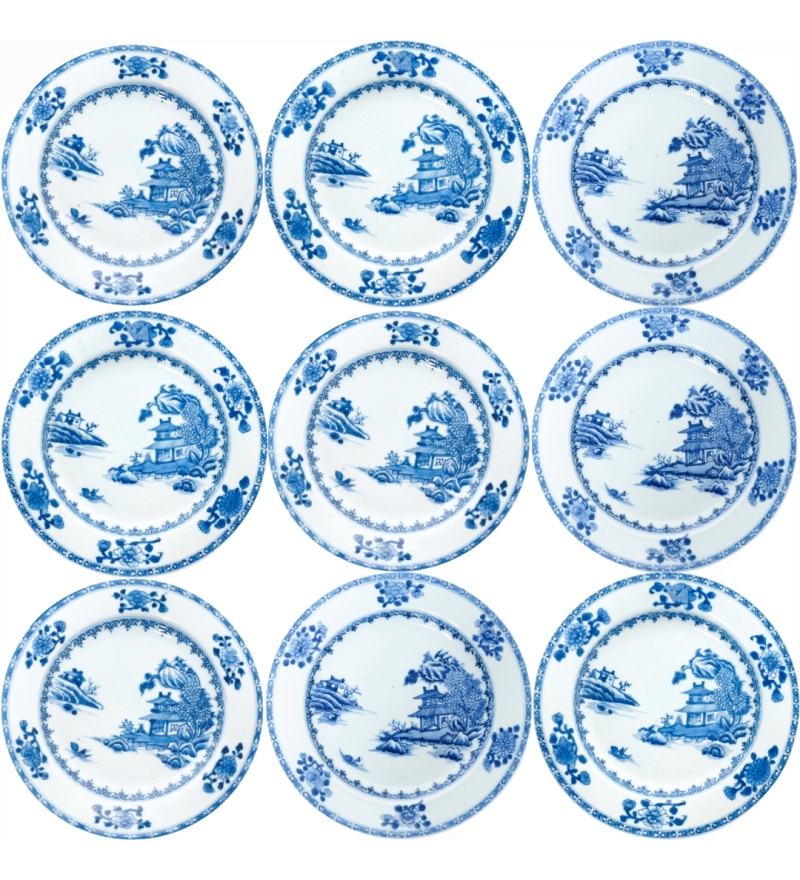
A set of 12 Qianlong Period (1736-1795) Nanking cargo '"Boatman and six-flower border" plates out of the sunken ship VOC Ship Geldermalsen, 18th century, around 1750, Jingdezhen, China.
Dimensions: ca. 23 cm. diameter
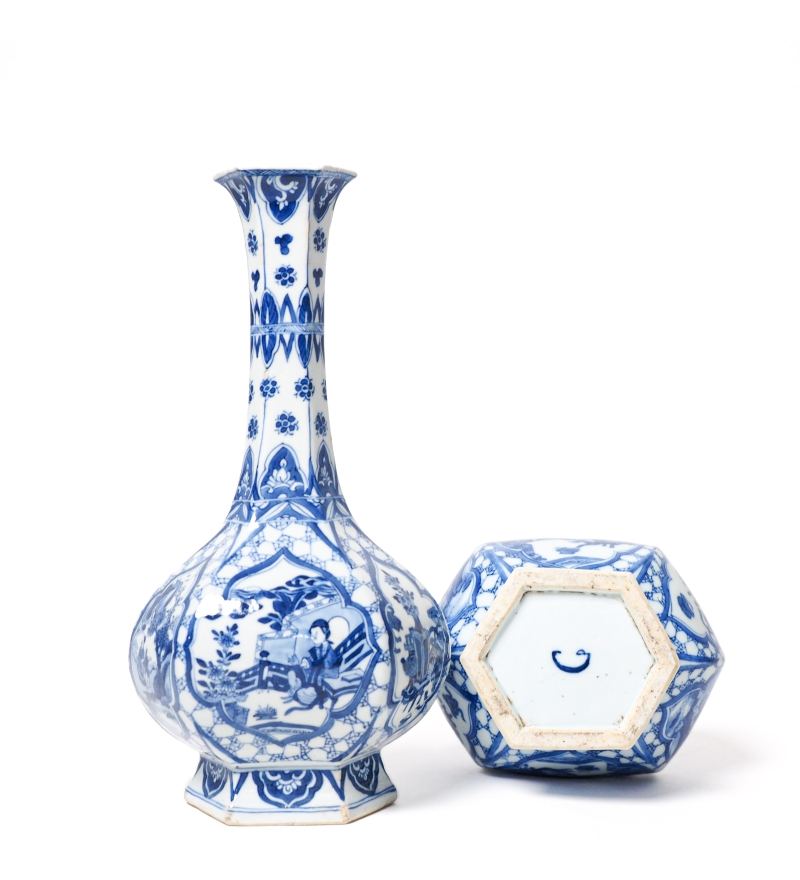
A pair of blue and white Kangxi Period (1662-1722) G-marked bottle vases with Persian panels depicting persons and treasures on a background of 'cracked-ice' motif, 17th century, around 1680-1700, Jingdezhen, China.
Blue and White
Dimensions: around 30 cm height. (2x)
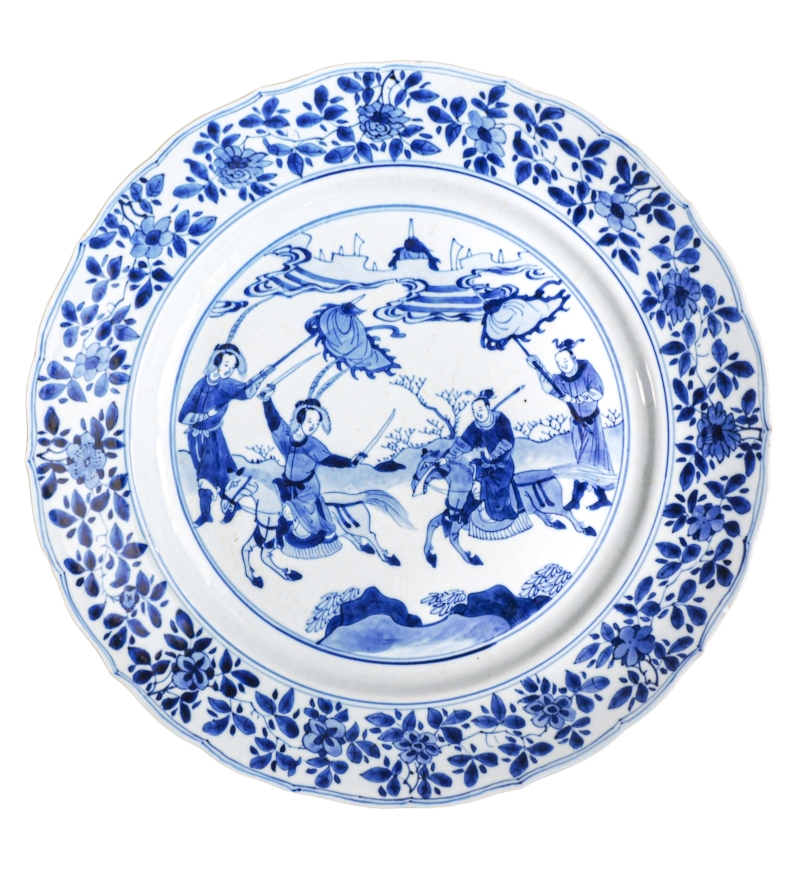
A large Kangxi Period (1662-1722) plate with scalloped rim depicting warriors on horseback accompanied by two standard-bearer with in the background the Chinese wall, 17th century, around 1700, Jingdezhen, China.
Dimensions: 36,5 cm diameter.
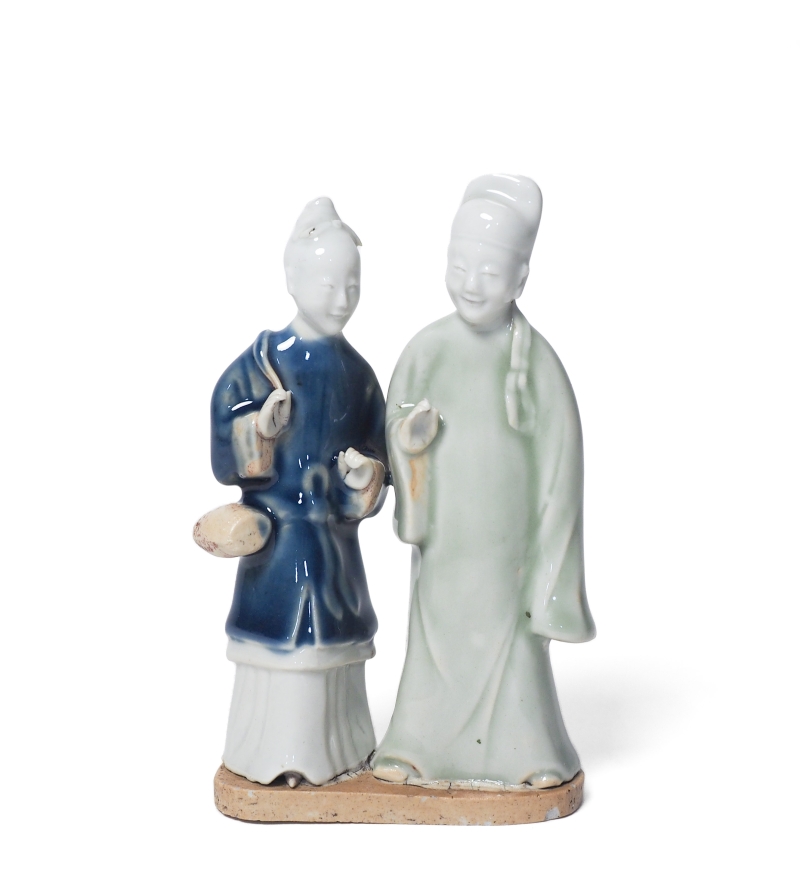
A finely modelled Qianlong period (1736-1795) Chinese biscuit porcelain group depicts a standing couple in conversation, 18th century, around 1740-1750, Jingdezhen, China.
Celadon and Blue
Dimensions: ca. 17 cm. height.
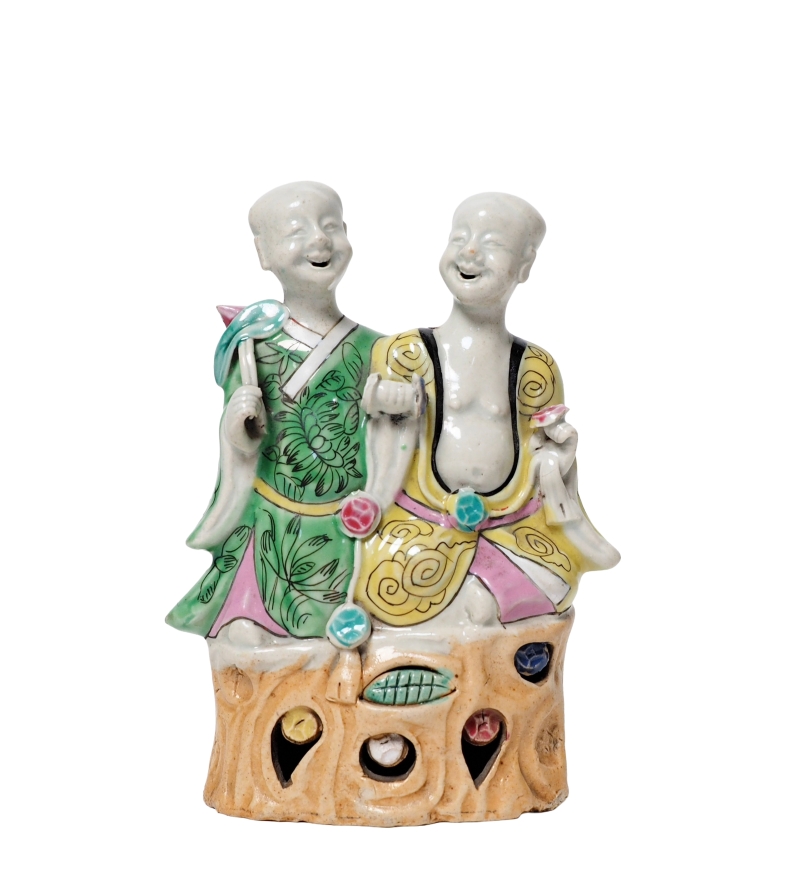
A famille rose Qianlong period (1736-1795) 'Hehe Erxian' or 'Two Immortals of Harmony and Union' group depicted on a rock wearing bright enamel robes, 18th century, around 1770-1790, Jingdezhen, China
Famille Rose
Dimensions: ca.16,5 cm height